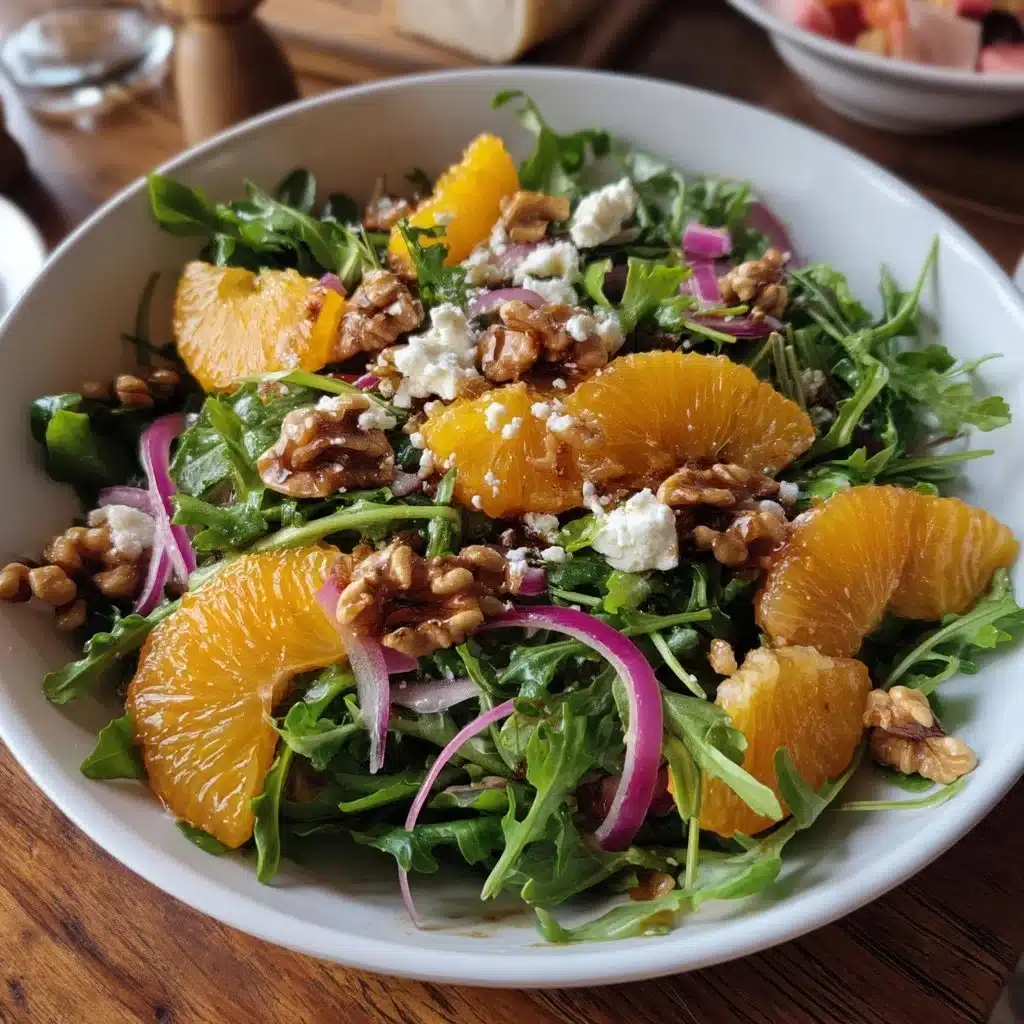
There’s something about a simple salad that feels like coming home. The peppery pop of arugula, the bright, juicy pull of orange segments, the crunch of toasted walnuts and a scatter of salty feta — together they make a dish that comforts without weighing you down. Serve it beside roasted chicken, tuck it under a flaky fish, or pile it onto a toasted baguette for a fast lunch that feels special. When friends crowd your kitchen table or a quiet weeknight needs a little lift, this salad answers with freshness and ease.
At DishGrub, we test every recipe until it earns its place in our rotation. We focus on cozy, practical meals that U.S. home cooks can pull off without fuss. This orange arugula salad lives up to that promise: it uses pantry basics, finishes in minutes, and keeps its flavor even when you make it for a crowd. If you want more hearty salads that pair well with this one, try our grilled chicken quinoa salad, which uses similar flavor-building steps you can borrow for other bowls.
Why this recipe works
Flavor balance drives every great salad. This recipe pairs bold, peppery arugula with bright citrus to cut through the greens, and it layers texture with toasted walnuts and crumbled feta. Olive oil and balsamic vinegar form a simple vinaigrette that binds the flavors without masking them. The key lies in timing: segment the oranges so each bite stays clean and juicy, toast the walnuts briefly to wake up their oil and crunch, and add the dressing at the last minute to keep the arugula crisp.
This salad also scales cleanly. Double the ingredients for a potluck or halve them for a light side. The components stay assertive on their own — you don’t need fancy techniques to coax out flavor. A sturdy arugula holds up to the dressing, so you can dress the bowl and serve immediately without sogginess. Small, deliberate steps deliver big payoff: segment the citrus carefully, toast the nuts until fragrant, and season the dressing to taste.
How to prepare Orange Arugula Salad
Treat the prep as a few focused tasks: segment the oranges, slice the onion thinly, toast the walnuts, and make the vinaigrette. Work on a clean board and keep the dressing separate until the last moment to preserve crunch. Use a sharp knife to segment citrus cleanly and a hot, dry skillet to toast nuts for 3 to 4 minutes, shaking the pan frequently so they brown evenly. Whisk the dressing in a small bowl and taste for balance — add a pinch of sugar if the orange variety runs tart, or a squeeze of extra orange juice if you want more brightness.
Assemble the salad in a large bowl so the leaves toss easily. Add the heavier components — orange segments and walnuts — first, then top with arugula so you can toss gently and evenly. Crumble the feta over the top for salty contrast. If you plan to serve this with grains for a heartier meal, consider pairing it with warm quinoa or farro; a cold grain such as our quinoa veggie salad would make a satisfying base.
Ingredients
- 4 cups arugula
- 2 oranges, segmented
- 1/2 red onion, thinly sliced
- 1/4 cup walnuts, toasted
- 1/4 cup feta cheese, crumbled
- 3 tablespoons olive oil
- 1 tablespoon balsamic vinegar
- Salt and pepper to taste
Instructions
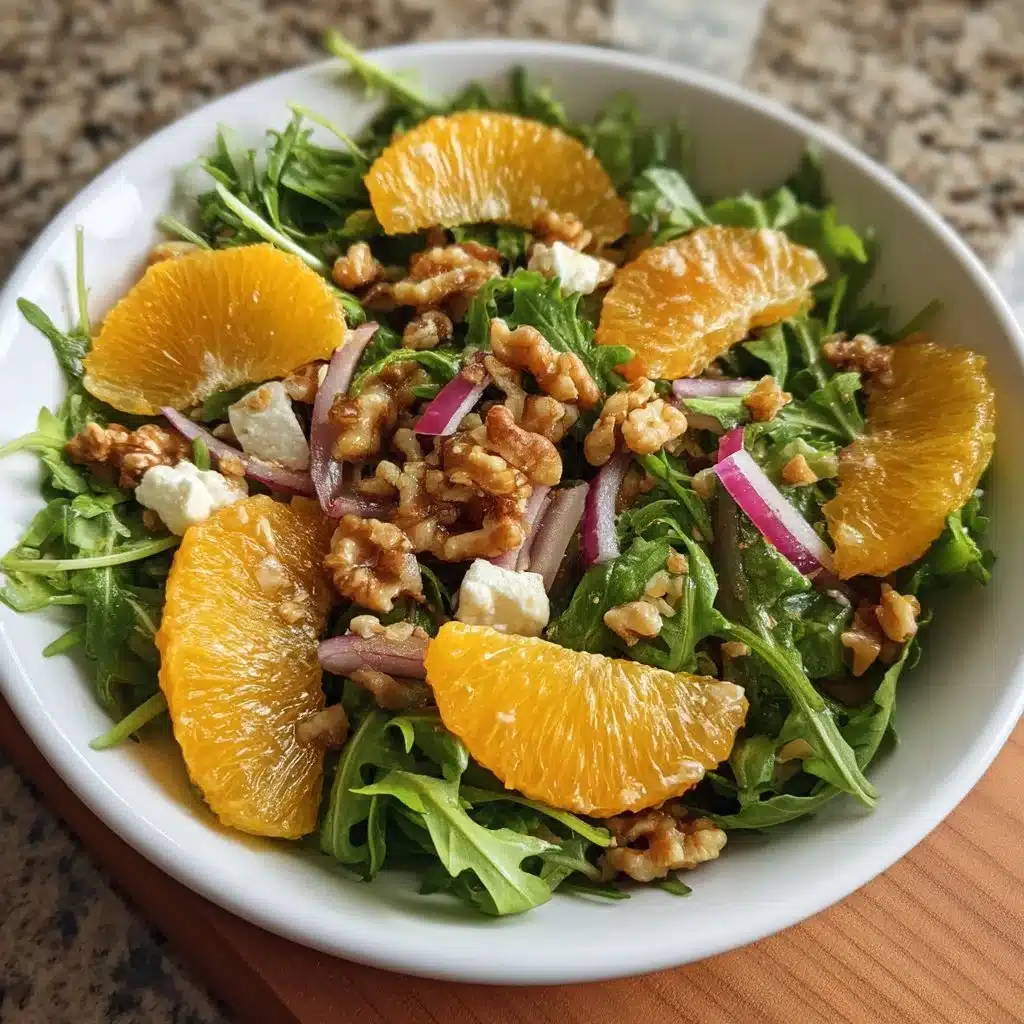
- In a large bowl, combine arugula, orange segments, red onion, walnuts, and feta cheese.
- In a small bowl, whisk together olive oil, balsamic vinegar, salt, and pepper.
- Drizzle the dressing over the salad and toss gently to combine.
- Serve immediately and enjoy!
Serving ideas
Serve this salad as a bright side for weeknight dinners or as a light main with added protein. Pair with roasted salmon or simple grilled chicken for an elegant, low-fuss plate. For a vegetarian main, toss the salad with warm roasted sweet potato cubes and a scoop of cooked farro to add heft while preserving the salad’s fresh flavors. If you want to turn this into a composed lunch, layer the arugula and orange on toasted sourdough, crumble extra feta on top, and add a drizzle of the vinaigrette.
For entertaining, arrange the salad on a platter so the oranges show through; the color makes it feel special. Offer the dressing on the side if you expect guests who prefer lighter seasoning. The salad complements rich mains like pork tenderloin and braised short ribs by cutting through fat with citrus brightness.
Storage tips
Store leftover salad components separately when possible. Stash extra arugula in a paper-towel-lined container in the fridge to keep it crisp for up to two days. Keep segmented oranges in an airtight container for one to two days; they stay juicy but will start to soften if stored longer. Toasted walnuts hold well in a sealed container at room temperature for a week, or refrigerate them to extend freshness.
If you already dressed the salad, eat it the same day for the best texture and flavor. Dressed arugula will soften within hours. If you must keep a dressed portion, store it in an airtight container and plan to eat it within a few hours — refresh the greens with a squeeze of fresh orange or a sprinkle of toasted walnuts before serving.
DishGrub Kitchen Tips
Use a sharp, non-serrated knife to segment the oranges cleanly; this reduces juice loss and gives you neat pieces that look attractive on the plate. When toasting walnuts, watch them closely — they can go from fragrant to burnt in seconds. Toast in a dry skillet over medium heat and shake the pan every 20 to 30 seconds.
Taste the vinaigrette before you dress the salad; different olive oils and vinegars vary in strength. If your balsamic tastes very sharp, balance it with a little extra olive oil or a small pinch of sugar. Slice the red onion as thinly as you can and soak it in cold water for 5 minutes if you want a milder, less bitey flavor. Pat the arugula dry thoroughly after washing to help the vinaigrette cling to the leaves.
Recipe variations
Swap feta for gorgonzola if you like a more pungent, creamier bite — the blue cheese plays well with citrus and walnuts. Replace walnuts with toasted pecans or almonds for a different nutty tone. For a Mediterranean twist, add a handful of pitted kalamata olives and a few chopped sun-dried tomatoes to the mix.
Make it heartier by stirring in cooked grains or legumes: warm quinoa, farro, or canned chickpeas transform the salad into a filling lunch. For a sweet-savory spin, substitute honey for part of the balsamic to make a honey-balsamic vinaigrette; that works especially well if your oranges run tart. If you prefer herb-forward flavors, add chopped mint or basil just before serving to keep their bright aroma intact.
Frequently asked questions
Q: Can I use other greens instead of arugula?
A: Yes. Substitute baby spinach, mixed spring greens, or peppery mizuna depending on your taste. Spinach brings a milder profile and holds up well under dressing, while mixed greens add variety in texture and color. Keep in mind that denser greens like spinach will change the overall flavor balance; you may want to add a touch more acid or orange juice to brighten the bowl.
Q: How do I segment an orange without wasting fruit?
A: Use a sharp chef’s knife. Cut off both ends of the orange so it sits flat. Standing the orange on a cut end, slice the peel away from top to bottom, following the curve to expose the flesh. Hold the peeled orange over a bowl to catch juice and slice between the membranes to release each segment. Save any juice for the dressing or a glass of water so nothing goes to waste.
Q: Can I prepare this salad ahead for a party?
A: Prep the components ahead but assemble at the last minute. Segment the oranges, thinly slice the onion, toast the walnuts, and crumble the feta up to a day in advance. Store each item in separate airtight containers. Wash and spin-dry the arugula and keep it in the refrigerator lined with paper towels. Whisk the dressing last and dress the salad right before serving to keep the leaves crisp and bright.
Q: What’s a good substitute for balsamic vinegar?
A: Use red wine vinegar with a touch of honey for a brighter, slightly sweeter vinaigrette. Sherry vinegar adds a nutty depth, and apple cider vinegar works in a pinch when balanced with extra olive oil and a small amount of sweetener. Taste and adjust as you whisk the dressing so the acidity balances the orange segments.
Conclusion
For a different take that swaps feta for gorgonzola and leans into bold, tangy contrasts, check out Orange and Arugula Salad with Red Onion and Gorgonzola for inspiration and plating ideas.