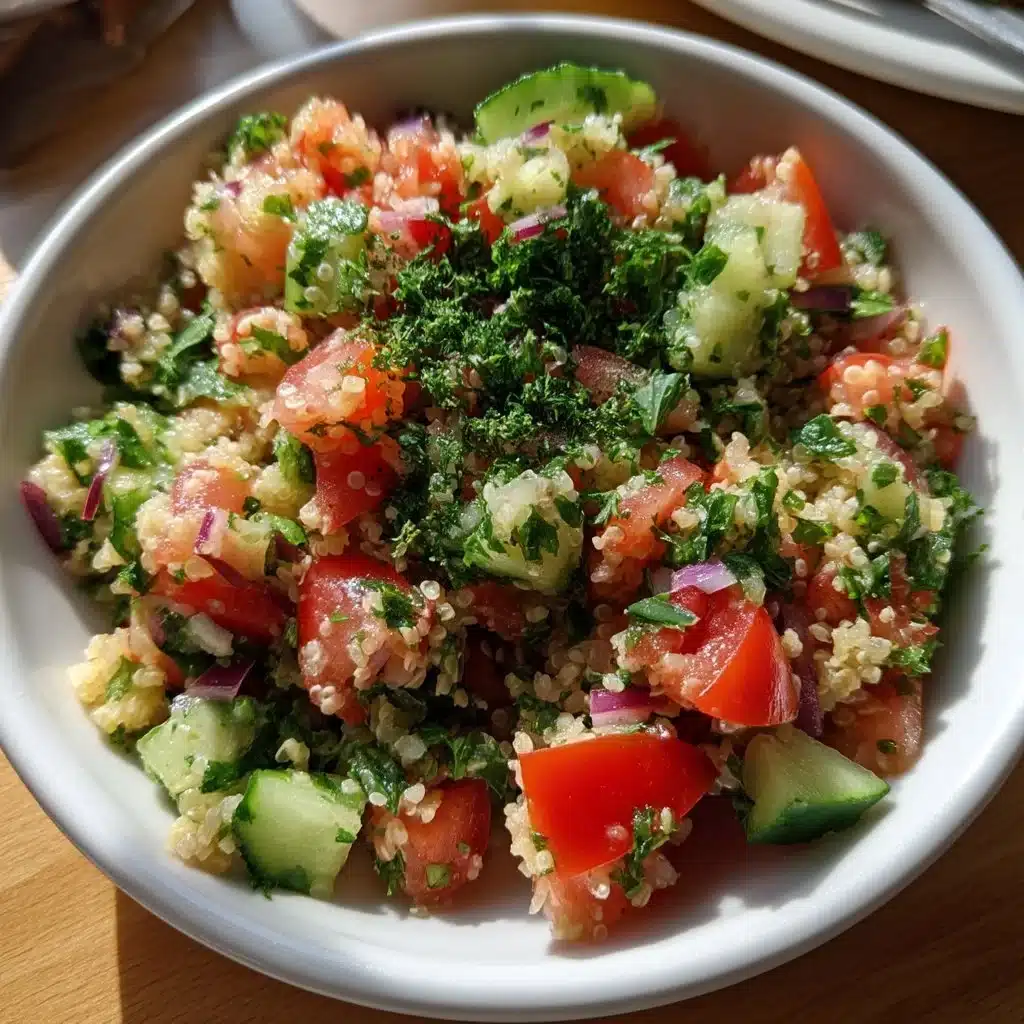
I pull a warm bowl of tabbouleh onto the table and watch how a simple mix of bright, lemony herbs and nutty quinoa makes everyone pause. A fork finds its way to a smiling face, and small talk drifts into stories about summer gardens and the one perfect tomato last season. This salad lives at the intersection of fresh and filling — it comforts without weighing down, and it invites sharing. On busy weeknights I scoop it into reusable containers for lunches, and on slow Sundays I pile it onto a platter with grilled chicken and crusty bread. It carries the same cozy reassurance whether I serve it for two or a small crowd.
Comfort food does not always mean heavy. This Hearty Quinoa Tabbouleh proves that simple ingredients prepared well can feel both homey and uplifting. The herbs sing, the quinoa gives satisfying texture, and a bright lemon-olive oil dressing ties everything together. I love how the salad sits happily at room temperature, which makes it perfect for picnics, potlucks, or last-minute guests. I cook with the aim of making real food approachable: shortcuts where they help, technique where it matters, and flavors that travel well. That approach keeps this dish on my weekly rotation.
At DishGrub we test recipes until they behave predictably in real kitchens. We favor cozy, practical recipes that fit common pantry items and standard U.S. cookware. Our goal stays simple: make one-dish comfort approachable and useful, with clear instructions and a few smart tips so you can cook without fuss. If you want a heartier plate, try the grilled chicken twist from our kitchen in this version of our quinoa bowls with protein: Grilled Chicken Quinoa Salad. We test, tweak, and share the results so you can get dinner on the table with confidence.
Why this recipe stands out
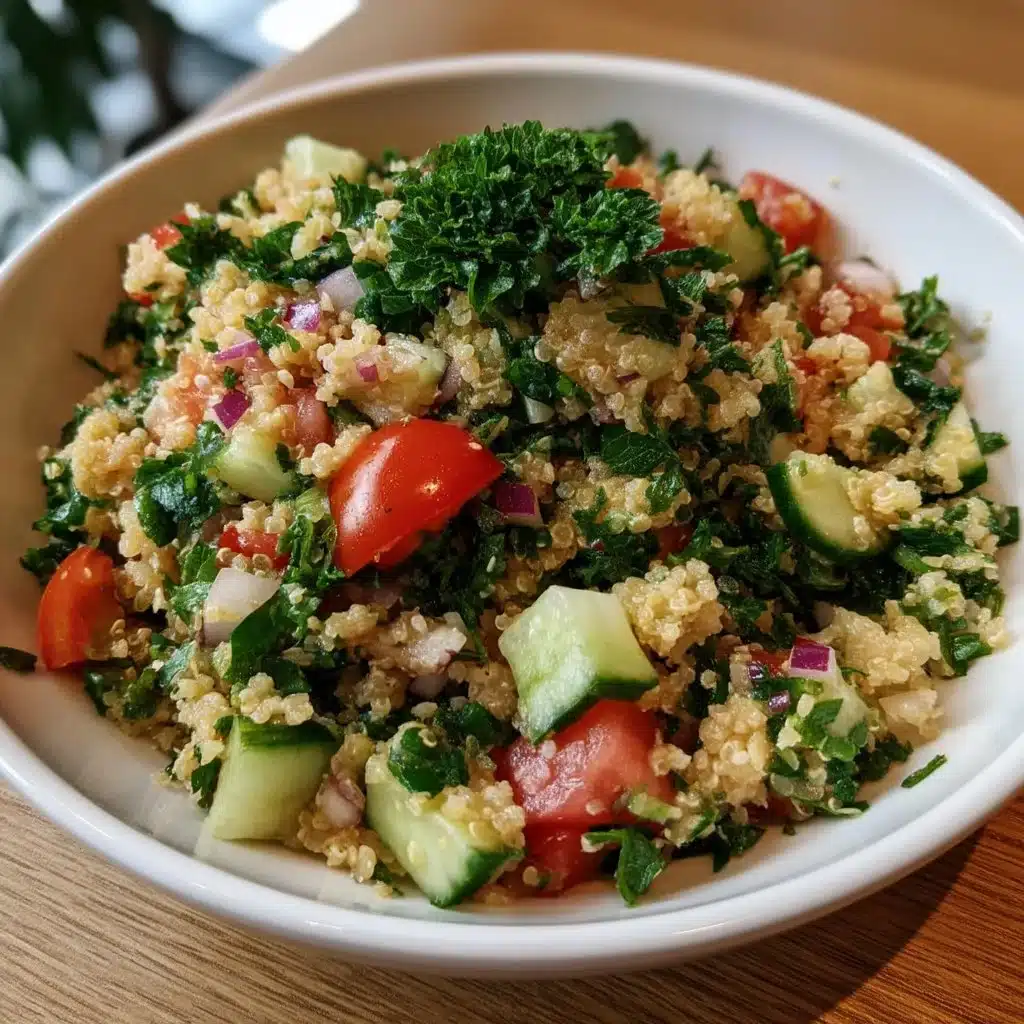
This Hearty Quinoa Tabbouleh balances freshness and substance. Quinoa adds chew and protein where classic bulgur would offer only grain, so the salad works as a side or a lighter main. Parsley and mint provide a bright, herbaceous backbone while diced tomatoes and cucumber add juicy contrast. Lemon and olive oil make the dressing bright without fuss. The recipe uses pantry-friendly steps and flexible seasoning, so you can scale it up and let it sit for a few hours without losing texture.
The recipe stays forgiving: overcook the quinoa a touch and you still get a pleasing soft bite; undercook it slightly and the salad keeps a light chew. You can make it a day ahead and still keep the flavors fresh, since the dressing keeps the herbs lively. This versatility makes the salad a dependable choice for lunches, potlucks, or a quick weeknight plate.
How to prepare Hearty Quinoa Tabbouleh
Ingredients
- 1 cup quinoa
- 2 cups water or vegetable broth
- 1 cup chopped fresh parsley
- 1/2 cup chopped mint leaves
- 2 medium tomatoes, diced
- 1 cucumber, diced
- 1/4 cup red onion, finely chopped
- 1/4 cup olive oil
- 1/4 cup lemon juice
- Salt and pepper to taste
Instructions
-
Rinse quinoa under cold water.
-
Add rinsed quinoa and water or broth to a saucepan.
-
Bring the mixture to a boil over medium-high heat.
-
Reduce heat to low.
-
Cover the saucepan.
-
Simmer for 15 minutes until the liquid absorbs.
-
Fluff the quinoa with a fork.
-
Allow the quinoa to cool.
-
Combine cooled quinoa, parsley, mint, tomatoes, cucumber, and red onion in a large bowl.
-
Drizzle olive oil and lemon juice over the salad.
-
Season with salt and pepper.
-
Toss the salad well to combine.
-
Serve chilled or at room temperature.
How to serve this dish
This salad performs well on a simple weeknight plate and on a spread for company. Spoon it alongside roasted vegetables, spread it on toasted pita, or pile it on top of mixed greens for a satisfying bowl. For a protein boost, add sliced grilled chicken, roasted chickpeas, or feta crumbles. When I serve it at gatherings, I set out bowls of extra lemon wedges and olive oil so guests can brighten their portions to taste.
The salad also pairs beautifully with warming soups and simple mains. Try serving it with a bowl of seasonal vegetable soup for a balanced, comforting meal — it complements both light and hearty broths without overwhelming them, so the textures contrast nicely with each spoonful. A good pairing I often return to is a robust winter vegetable soup to turn the plate into a full dinner: Hearty Winter Vegetable Soup.
Serve the salad at room temperature to let the herb flavors open, or chill it for an hour to let the dressing mellow. Either way, garnish with a few extra mint leaves or a sprinkle of sumac if you have it for a bright finish.
How to store it properly
Store the quinoa tabbouleh in an airtight container in the refrigerator. The salad keeps well for up to 4 days, and it usually tastes best by day two, when the flavors meld. If you plan to keep it for several days, underdress slightly at first and add a bit more lemon and oil when you serve leftover portions to freshen the flavors.
Avoid freezing tabbouleh; the fresh herbs and cucumber lose their texture and release too much water when thawed. If you expect leftovers, store the dressing separately from the salad ingredients for the first day. When you reheat components like grilled chicken to serve alongside, keep the salad chilled and serve it cold to maintain contrast.
When you transport the salad, pack it in a rigid container to protect the herbs. If you bring the dish to a picnic, place a small cooler pack underneath to keep it fresh for several hours.
Recipe tips for success
Choose quality quinoa and rinse it well. Quinoa carries a natural coating that can taste slightly bitter if you skip the rinse; a good rinse under cold running water removes that surface. Use vegetable broth instead of water if you want extra savory depth; the broth also helps the grains feel more substantial when you eat the salad as a main.
Chop the herbs and vegetables uniformly so every bite tastes balanced. Fine chopping also helps the herbs release their aroma into the dressing. When you measure lemon juice, taste and adjust — lemons vary widely, so balance acidity with olive oil until the dressing feels bright but not sharp.
Make the quinoa ahead and cool it quickly on a rimmed baking sheet to speed day-of prep. Cooling the grains quickly prevents steam from wilting the herbs and keeps the salad lively. If you like a softer texture, dress the salad right after the quinoa cools; if you prefer a firmer bite, wait an hour before adding the dressing.
Use fresh, cold olive oil for the cleanest flavor. If you want a nuttier twist, substitute half the oil with toasted walnut oil, but add lightly so the flavor does not overwhelm the herbs.
Make it your own
Customize this tabbouleh to match your pantry and cravings. Add toasted pine nuts or slivered almonds for crunch. Swap half the parsley for arugula for peppery notes, or fold in diced avocado just before serving for creaminess. For a Mediterranean twist, stir in a few chopped kalamata olives or a generous crumble of feta.
To add more plant protein, toss in rinsed canned lentils or roasted chickpeas. For higher heat, sprinkle in crushed red pepper flakes or a diced jalapeño. If you prefer grains other than quinoa, use cooked farro or bulgur — just adjust the cooking method and volume. Keep in mind bulgur will absorb the dressing differently than quinoa and will yield a more traditional tabbouleh texture.
If you want to prep ahead for a meal train or potluck, pack herbs and vegetables in one container and the dressed quinoa in another. Combine them an hour before serving so everything tastes freshly tossed.
Frequently asked questions
Q: Can I make this gluten-free?
A: Yes. Quinoa is naturally gluten-free, so this salad suits gluten-free diets as written. If you substitute grains, choose another certified gluten-free option such as buckwheat or certified gluten-free oats if you want a different texture. Always check labels if you serve someone with celiac disease.
Q: Will the salad get soggy if I make it the night before?
A: The salad holds up well overnight if you follow a couple of simple steps. Cool the quinoa completely before mixing it with the dressing and vegetables. If you expect to store it for more than a day, dress lightly and add a touch more lemon and oil when you serve to refresh the flavors. Keep the container airtight in the fridge to preserve texture.
Q: Can I use dried herbs or substitutes if I don’t have fresh parsley and mint?
A: Fresh herbs deliver the best flavor and texture in tabbouleh, but if you must, use a small amount of dried herbs as a last resort — start with one-third the amount of dried parsley and add to taste. For a quick substitute, finely chopped scallions or a few tablespoons of chopped cilantro can provide fresh notes, though the flavor profile will shift. If you use dried herbs, add them to the dressing earlier so they hydrate before you toss the salad.
Q: How can I make this salad more filling for meals?
A: Make the salad heartier by adding a cooked protein such as grilled chicken, baked salmon, or roasted chickpeas. Fold in cooked lentils or a can of rinsed beans. A sprinkle of toasted nuts or seeds also increases satiety and adds pleasing texture. For dairy lovers, a crumble of feta or a scoop of plain yogurt on the side adds richness.
Conclusion
If you want another tested, hearty quinoa salad with similar comforting appeal, consider trying this version developed for meatless meals: Hearty Quinoa Salad – Meatless Monday Recipe.