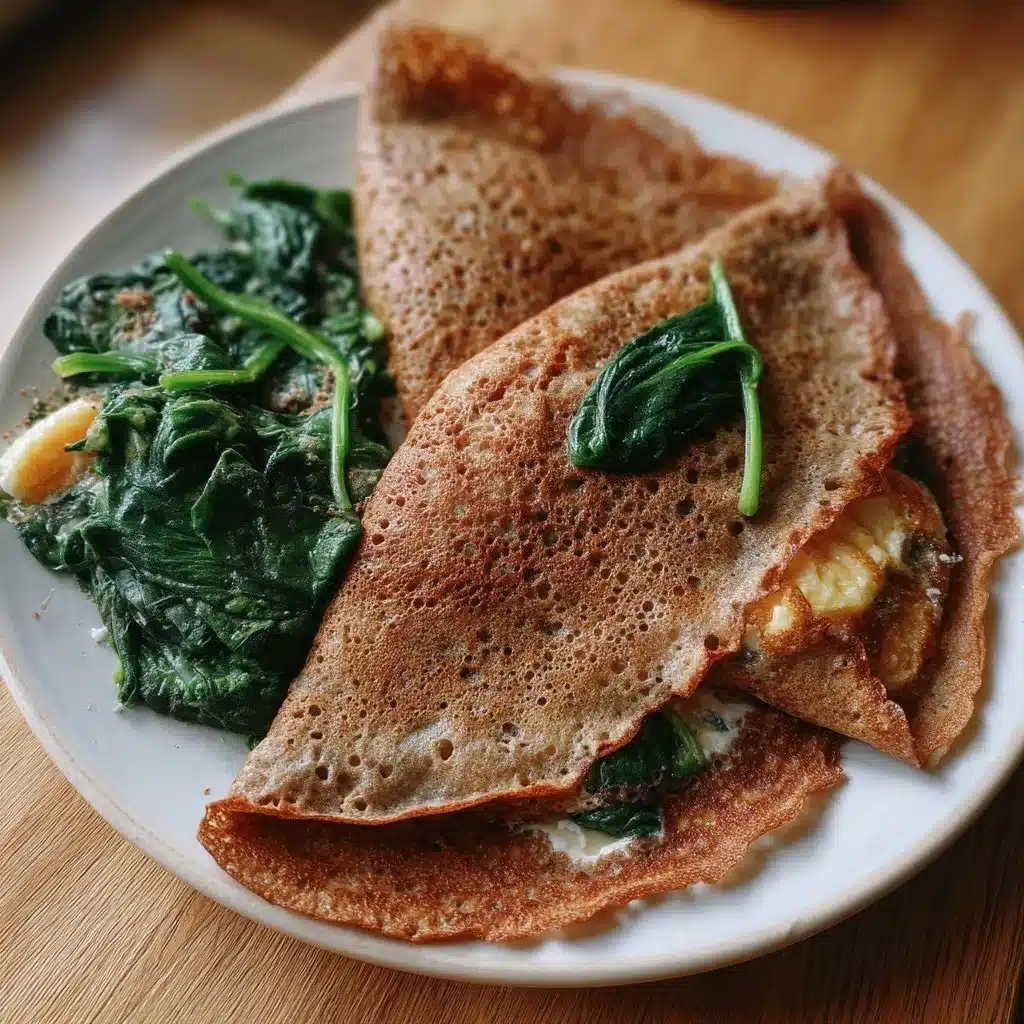
Warm, nutty buckwheat crepes filled with tender sautéed spinach feel like a small, everyday celebration. They fold up neatly for breakfast plates, a light lunch, or a cozy weeknight supper. When I make these, I think of simple rituals: the quiet of early morning, the hiss of batter hitting a hot pan, the little steam cloud when you fold a warm crepe over melty cheese. Comfort lives in those small, repeatable moments. Share a stack with family or plate a single filled crepe with a crisp salad and the room seems to settle into a gentler pace.
At DishGrub, we test recipes until they work reliably for busy home cooks. We focus on approachable techniques, pantry-friendly ingredients, and flavors that read as familiar but a little elevated. This buckwheat crepe recipe highlights minimal fuss — a short rest for the batter, quick pan work, and a fast spinach sauté — so you get restaurant-style results without the stress. If you like cozy, practical dishes, you’ll also enjoy our take on classic sweets and dips; for an indulgent dessert, see our carrot cake with cream cheese frosting for a tested crowd-pleaser that bakes perfectly every time.
Why this recipe works
Buckwheat brings an earthy, toasty flavor that pairs naturally with greens, and the thin crepe shape keeps the filling light without feeling like a heavy sandwich. The batter’s short rest hydrates the flour and lets any small clumps relax, which yields a smoother pour and fewer tears when you flip. Eggs add structure so the crepes hold together, while a touch of oil keeps them supple and browning evenly.
Sautéing the spinach concentrates its flavor and removes excess moisture that could sog the crepes. A little feta adds salt and creaminess, but the dish stands strong even without cheese if you want a dairy-free option. Overall, the recipe balances texture and flavor: tender edges, a gentle buckwheat tang, bright spinach, and an optional salty finish.
How to prepare Buckwheat Crepes with Spinach
This recipe divides into three short tasks: mix and rest the batter, cook the crepes, and prepare the filling. Keep a clean plate ready for finished crepes and a towel nearby to wipe any excess oil from the pan between batches; that keeps each crepe evenly colored. Use a 7- to 9-inch non-stick skillet for a medium crepe; larger pans make handling trickier.
Ingredients
- 1 cup buckwheat flour
- 1 1/2 cups milk (or non-dairy alternative)
- 2 large eggs
- 1/4 teaspoon salt
- 2 tablespoons olive oil
- 2 cups fresh spinach
- 1/2 cup feta cheese (optional)
- Salt and pepper to taste
Instructions
- Combine buckwheat flour, milk, eggs, and salt in a mixing bowl.
- Whisk the batter until smooth.
- Let the batter rest for 30 minutes.
- Heat a non-stick skillet over medium heat.
- Add a little olive oil to the skillet.
- Pour a ladleful of batter into the skillet, swirling to coat the bottom evenly.
- Cook for 1-2 minutes until the edges lift.
- Flip the crepe and cook for an additional 1-2 minutes.
- Repeat with the remaining batter.
- Add a bit more olive oil to the same skillet.
- Sauté the fresh spinach until wilted.
- Mix in feta cheese if using and season with salt and pepper.
- Fill each crepe with the spinach mixture.
- Fold the crepes and serve warm.
Serving ideas
Serve these crepes warm right off the pan for the best texture. For breakfast, stack two crepes and top with a runny fried egg and a sprinkle of cracked pepper. For a light lunch, pair a filled crepe with a lemon-dressed green salad or roasted cherry tomatoes. If you want to lean into indulgence, add a dollop of crème fraîche or plain Greek yogurt and a scattering of chopped fresh herbs like dill or parsley.
You can also make a savory brunch board: arrange crepes filled with spinach and feta next to smoked salmon, sliced cucumbers, and olives. For a sharing plate, cut folded crepes into thirds and serve them alongside a bowl of warm tomato soup. If you enjoy warm, cheesy dips as a companion to simple greens, try our creamy cheesy spinach artichoke dip recipe as a contrasting appetizer.
How to store it properly
Cool crepes completely on a wire rack before storing. Stack them with small sheets of parchment between each crepe to prevent sticking. Store unfilled crepes in an airtight container in the refrigerator for up to 3 days. For longer storage, slip the stacked crepes into a freezer bag and freeze for up to 2 months; thaw in the fridge overnight before reheating.
Store the spinach filling separately in a sealed container for up to 3 days. When you reheat, warm the crepes briefly in a dry non-stick skillet over low heat, then fill and fold. To reheat filled crepes, place them seam-side down in a skillet over low heat and cover for a few minutes until warmed through, or finish them under a hot broiler for a minute to crisp the edges and melt any cheese.
DishGrub Kitchen Tips
Use a blender for an ultra-smooth batter if you have small lumps; pour the batter through a fine-mesh sieve if you prefer to strain by hand. Letting the batter rest really helps with texture: it hydrates the buckwheat and gives you an easier pour. Maintain medium heat; too hot and the crepes brown too quickly and tear when flipping, too low and they won’t develop a light set.
Brush or wipe the pan lightly between crepes so you use the minimum oil necessary. If you get a crepe with a hole, use it as a test crepe and put it at the bottom of a stack, or make a folded starter for someone who likes lacy edges. For even cooking, swirl the pan immediately after pouring the batter; the faster you get an even film, the more uniform the crepe.
Make it your own
Substitute part of the buckwheat flour with all-purpose flour if you want a milder flavor and a more elastic crepe. Swap the spinach for sautéed kale, chard, or a mix of wild mushrooms and thyme. Try ricotta instead of feta for a creamier filling, or toss in toasted pine nuts for crunch. For a Middle Eastern twist, stir in a teaspoon of za’atar into the spinach or finish the plated crepe with a squeeze of fresh lemon and a drizzle of olive oil.
To turn crepes into handheld pockets, fold one side over the filling and roll tightly; wrap in parchment for a portable lunch. You can also make a sweet version by leaving out the salt, adding a tablespoon of sugar and a splash of vanilla to the batter, and filling with ricotta sweetened with honey and berries.

Common questions
Q: Can I make the batter ahead of time?
A: Yes. You can make the batter up to 24 hours ahead and keep it covered in the refrigerator. The batter may thicken slightly after chilling; give it a quick whisk or a splash of milk to loosen it before cooking. Resting still helps, so if you mix the batter in advance, let it sit for at least 20 minutes before you start cooking to hydrate the flour evenly.
Q: My crepes tear when I flip them — what am I doing wrong?
A: Tears usually happen because the crepe stuck to the pan, the heat is too high, or the batter is too thick. Use a non-stick skillet and enough oil to coat the surface lightly. Maintain medium heat so the crepe sets before you flip it. If the batter feels thick, whisk in a tablespoon of milk to thin it slightly. Use a thin spatula or your fingers to gently loosen the edges before flipping to check whether they lift cleanly.
Q: Can I make these gluten-free?
A: Buckwheat flour is naturally gluten-free, but some brands process it on shared equipment. If you require strict gluten-free cooking, buy certified gluten-free buckwheat flour and check all labels. If you need a gluten-free mix with extra elasticity, blend buckwheat with a spoonful of tapioca or a gluten-free all-purpose mix to improve pliability.
Q: How do I prevent watery fillings?
A: Spinach and other greens release moisture when they cook. Sauté spinach until it just wilts and any liquid evaporates, then let it cool slightly in the pan so you can squeeze out excess moisture if needed. If you add fresh tomatoes or high-moisture vegetables, roast or drain them first. For cheese fillings, use crumbly or well-drained cheeses rather than overly wet curds.
Q: Can I freeze filled crepes?
A: You can freeze filled crepes, but you risk a change in texture when thawing if the filling contains high-moisture ingredients. If you plan to freeze, store unfilled crepes and fillings separately, then assemble after thawing. For convenience, freeze filled crepes with a dry-ish filling (like olive tapenade or well-drained ricotta) and wrap each individually before bagging.
Conclusion
If you want a rustic, gluten-friendly crepe with flexible meal options, these buckwheat crepes with spinach deliver every time; they work for quick breakfasts, relaxed dinners, or an elegant brunch course. For another green-forward pancake-style recipe with bright flavors, check out Spinach, Scallion Buckwheat Pancakes | Dishing Up the Dirt.