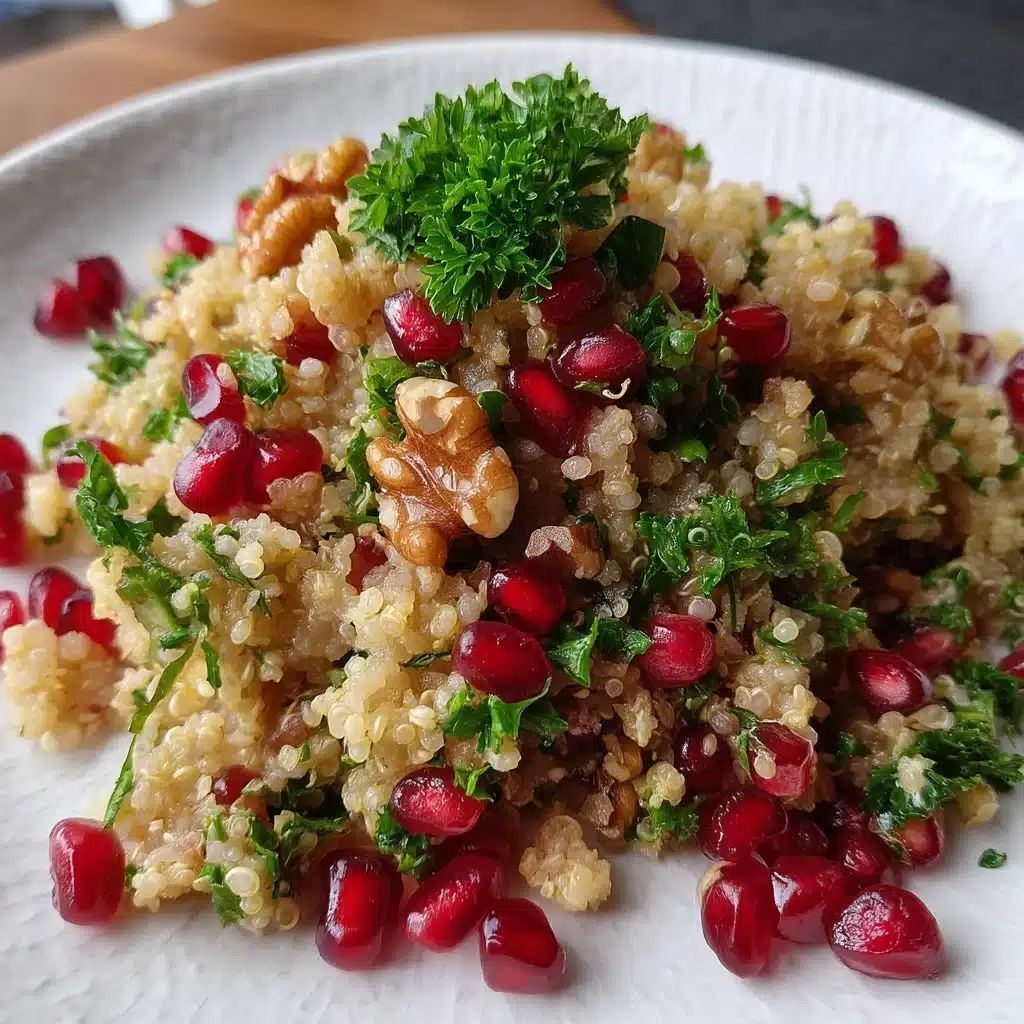
Comfort food doesn’t have to mean heavy or fussy. Imagine a bowl of warm, nutty quinoa flecked with jewel-bright pomegranate seeds, the little pops of sweetness offset by lemony brightness and a scattering of fresh parsley. It feels like sitting around a kitchen table where someone just set down a simple dish that makes you breathe a little easier. That’s the kind of food that gathers people—a dish you can bring to a weeknight dinner, a potluck, or a holiday spread and trust to work every time. This quinoa pomegranate pilaf tastes like care: bright, balanced, and full of texture, and it pairs beautifully with roasted proteins or a crisp green salad.
I test recipes the way home cooks do—over and over, with small, real-world tweaks so the method works in any ordinary kitchen. The first time I made this pilaf, I served it alongside a roast chicken and watched everyone reach back for seconds. I’ve since pared the technique down so you can make it on a busy weeknight: rinse, simmer, cool, toss. That small, confident set of steps makes the dish reliable but still homey. If you like hearty grains, you’ll find it a versatile base for leftovers; it keeps well and brightens meals throughout the week. For ideas that stretch quinoa beyond a side dish, you might enjoy the flavor combos in our guide to a grilled chicken quinoa salad, which uses the same sturdy base with a protein-forward twist.
At DishGrub we keep recipes cozy, tested, and practical. We aim for straightforward instructions and real flavors so a home cook can come away confident. Our tests focus on common kitchen tools and simple timing so you don’t need special equipment to get great results. This pilaf is one of those recipes that rewards clean technique: good quinoa, a solid simmer, and a quick toss at the end. It plays well with other dishes, and it scales easily when you’re feeding a crowd or planning lunches for the week.
Why you’ll love this dish
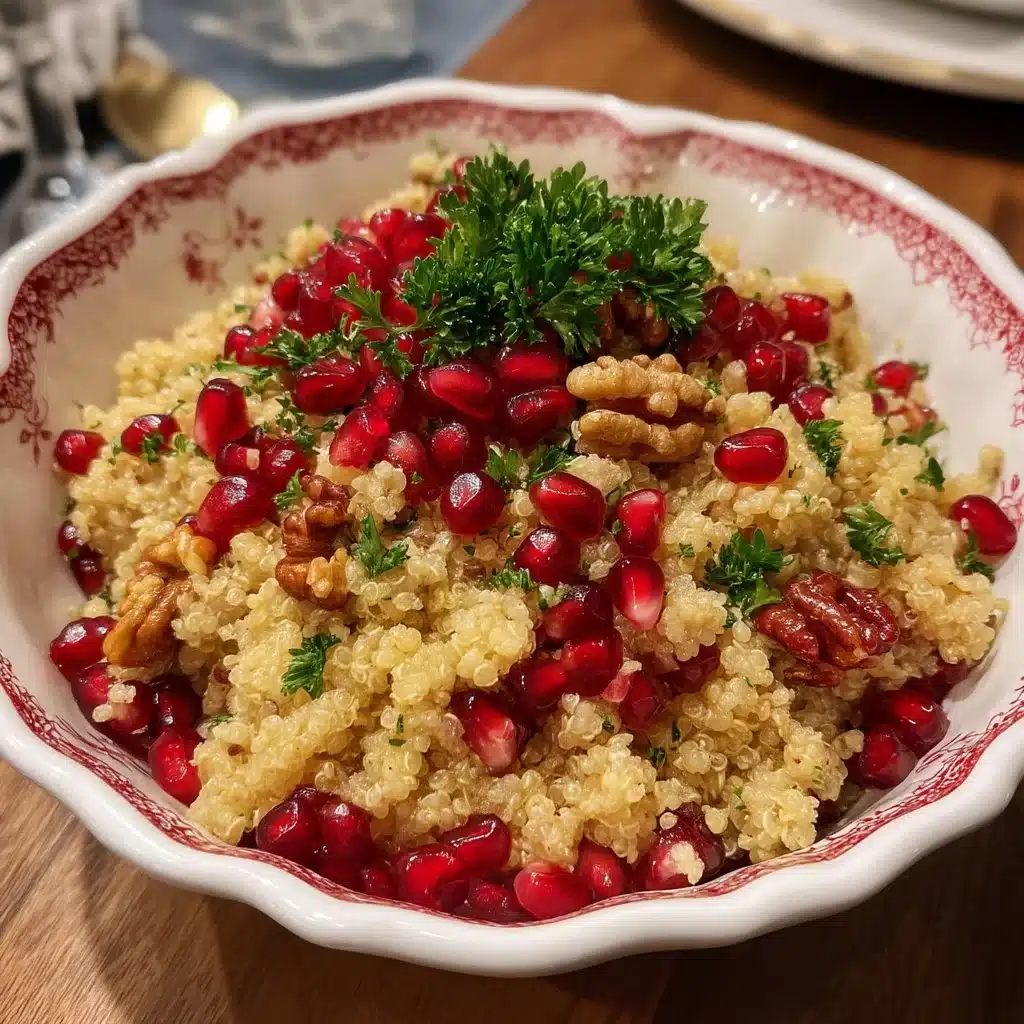
This pilaf balances texture and flavor in a way that feels both nourishing and celebratory. Quinoa gives you a satisfyingly grainy base that soaks up lemon and olive oil, while pomegranate seeds add a bright, juicy pop that keeps each bite lively. The walnuts lend a toasty crunch and a hint of richness, and parsley adds a fresh, herbaceous lift. The seasoning is intentionally simple so you can taste each element working together: salt, pepper, and lemon highlights the natural flavors without masking them.
Beyond the flavor, this dish shines for its versatility. Make it warm as a side with roasted vegetables, or let it cool for a picnic or lunchbox. It’s naturally vegetarian and easy to make vegan. If you want to build a full meal, pair it with a roasted salmon or tuck it into lettuce cups as a light main. If you like the idea of hearty salads that travel well, try our take on a Mediterranean-style quinoa veggie salad for more inspiration that uses similar pantry staples.
How to prepare Quinoa Pomegranate Pilaf
You’ll find the method deliberate but uncomplicated: rinse the quinoa, simmer it in flavorful liquid, let it cool just enough so the seeds and greens don’t wilt, then toss everything together. Take one careful step at a time and the results will be fluffy, not gummy. Using vegetable broth adds depth, but plain water keeps it light and lets the lemon and pomegranate shine. If you want to speed things up, cook the quinoa the night before and toss everything together when you’re ready to serve.
Ingredients
- 1 cup quinoa
- 2 cups vegetable broth or water
- 1 cup pomegranate seeds
- 1/2 cup chopped fresh parsley
- 1/4 cup chopped walnuts (optional)
- 1/2 teaspoon salt
- 1/4 teaspoon black pepper
- Juice of 1 lemon
- 2 tablespoons olive oil
Instructions
-
Rinse quinoa under cold water.
-
Combine quinoa and vegetable broth or water in a pot and bring to a boil.
-
Reduce heat to low, cover, and simmer for about 15 minutes until quinoa is cooked and liquid is absorbed.
-
Fluff cooked quinoa with a fork and let it cool slightly.
-
In a large bowl, combine the cooked quinoa, pomegranate seeds, parsley, walnuts, salt, and pepper.
-
Drizzle with lemon juice and olive oil, then toss to combine.
-
Serve warm or at room temperature.
How to serve this dish
Serve the pilaf warm beside roasted or grilled proteins: chicken, fish, or lamb all work well. For a vegetarian meal, spoon it over a bed of wilted greens or add a scoop to roasted vegetable bowls. It also shines chilled as part of a mezze spread—place bowls of olives, hummus, and warm pita nearby for a balanced table. For a quick weeknight plate, top the pilaf with crumbled feta and a drizzle of extra olive oil. The lemon and pomegranate make a natural bridge to Mediterranean flavors, so think simple, bright sides when you plan the rest of the meal.
How to keep leftovers
Cool the pilaf to room temperature before refrigerating to avoid condensation that makes grains soggy. Transfer it to an airtight container and store in the fridge for up to 4 days. When you reheat, warm gently on the stove with a splash of water or broth to revive the quinoa’s texture, or serve cold straight from the fridge—cold quinoa salads hold their texture well and often taste even better after flavors meld. For longer storage, freeze in meal-sized portions up to 3 months; thaw overnight in the fridge before using.
DishGrub Kitchen Tips
Choose good quinoa: look for a fairly recent package and rinse it under cold water until the water runs clear to remove any bitter coating. Use a measured 2:1 liquid-to-quinoa ratio and resist lifting the lid while it simmers; a steady gentle simmer gives you the best texture. If you use vegetable broth, reduce added salt slightly because broths vary in sodium. Toast walnuts in a dry skillet for a couple of minutes until fragrant to deepen their flavor, and chop them roughly so you get crunchy bits without overpowering the mouthfeel.
Keep the pomegranate seeds fresh by deseeding just before tossing if possible; they can be fragile and bleed juice when stored too long. If you want to prep ahead, cook the quinoa and store it separately from seeds and herbs for up to two days—then combine at serving for the freshest bite. A small squeeze of lemon at the end brightens everything, so taste before you add extra salt.
Make it your own
Swap ingredients based on what you have: pistachios or toasted almonds stand in nicely for walnuts, and mint can replace some or all of the parsley for a cooler herb note. Add diced cucumber or roasted sweet potato for heartier texture, or fold in crumbled goat cheese or feta for creamy, tangy contrast. For a spiced version, stir in a quarter teaspoon of ground cumin and a pinch of cinnamon at the toss stage to complement the pomegranate’s sweetness. If you want a grain swap, short-grain brown rice or farro work, though cooking times will differ.
Adjust the acid and oil to taste—if the lemon seems shy, add a touch more; if it feels too bright for a child’s plate, tone it down and add a drizzle of honey for balance. This recipe plays well with proteins: fold in chopped roasted chicken for a one-bowl meal or spoon alongside a pan-seared fillet for a complete dinner.
Common questions
How do I prevent quinoa from becoming mushy?
Quinoa turns mushy when it absorbs too much liquid or gets stirred while cooking. Use a 2:1 liquid-to-quinoa ratio, bring the pot to a boil, then lower the heat to a gentle simmer and cover. Do not lift the lid during the cooking time—steady steam is what cooks the grains evenly. After about 15 minutes, check that the liquid is absorbed and use a fork to fluff rather than stir. Fluffing lets steam escape and separates the grains so they retain their texture.
Can I make this gluten-free and vegan?
Yes. Quinoa is naturally gluten-free and the rest of this recipe uses plant-based ingredients, so it’s vegan as written. If you add extras like feta or a dressing containing dairy, those would change the vegan status. When serving to people with celiac disease or gluten sensitivity, verify that your vegetable broth is labeled gluten-free, as some commercial broths can include flavors that contain gluten.
What is the best way to seed a pomegranate quickly?
Work over a bowl to catch stray jewels. Cut off the crown, score the skin into sections from top to bottom without cutting through to the seeds, then gently pry the fruit open into sections. Hold a section over the bowl and tap the back firmly with a wooden spoon; the seeds will fall out easily. Another method is to submerge sections in a bowl of water and rub out the seeds—the pith floats and seeds sink, making separation simple. Either approach saves time and keeps the kitchen cleaner.
How can I scale the recipe for a crowd?
This pilaf scales linearly. Multiply the quinoa and liquid by the number of servings, keeping the same 2:1 liquid ratio. Cook large batches in a wide, shallow pot for even cooking and fold in the seeds and herbs just before serving so they stay bright. If you’re feeding a crowd, prepare the quinoa and store it warm in an oven set to a low temperature, and add pomegranate seeds and parsley right before service to preserve texture and color.
Conclusion
For a reference and another chef’s take on this flavor combination, see the Pomegranate Quinoa Pilaf Recipe | Kelsey Nixon | Food Network.