I grew up in a house where the kitchen acted like the living room — a place where people gathered to talk about the day, share a snack, and linger over second helpings. Food meant company and comfort, and simple meals that let conversation flow won every time. This Caprese Pasta Salad sings the same song: it brings together sweet cherry tomatoes, pillowy mozzarella, fragrant basil, and a sticky balsamic glaze over twirly fusilli, and it does so without fuss. I lean on it for potlucks, weeknight sides, and easy lunches that feel like a treat. It assembles in minutes, travels well, and looks inviting on the table, so it fills that rare space where both flavor and convenience meet.
DishGrub develops recipes the same way we cook at home: we test them until they behave, then write them plainly so you can rely on the outcome. You’ll find our recipes steeped in comfort and scaled for real life — whether you’re serving a crowd or feeding a family between activities. We favor hands-on tips, reachable swaps, and friendly timing notes so you spend less time guessing and more time enjoying the meal. If you enjoy simple pasta dinners that make weeknights easier, you might also like our pasta with homemade meat sauce, which follows the same small-kitchen, big-flavor approach.
Why this recipe stands out
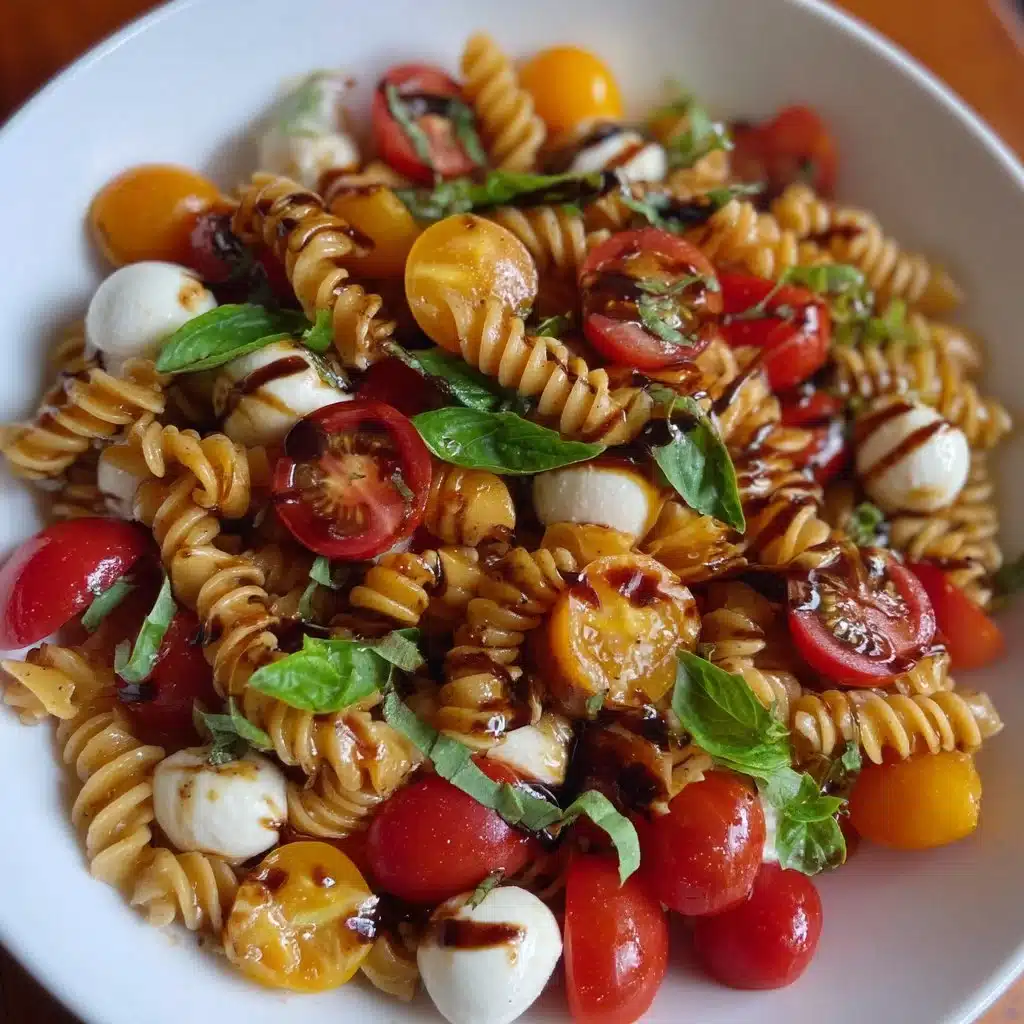
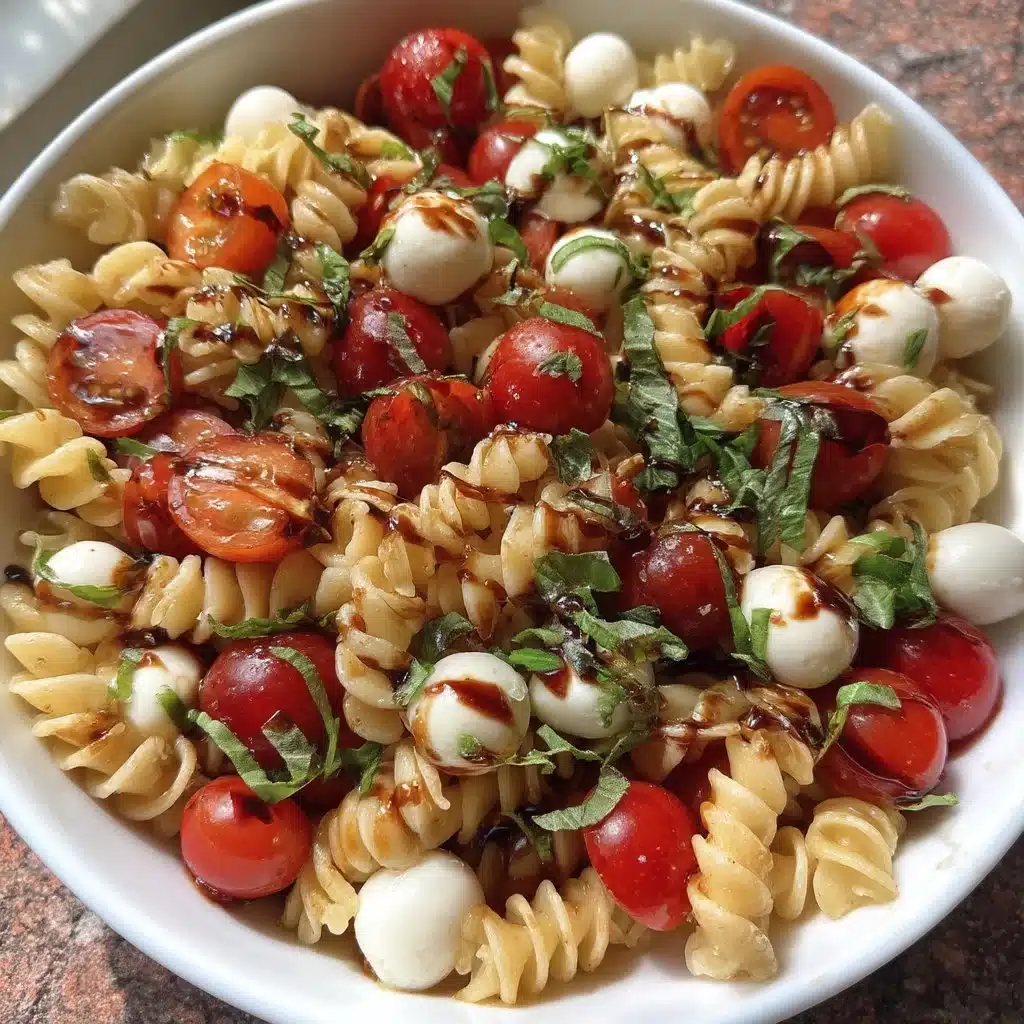
This Caprese Pasta Salad stays true to the classic Caprese while giving it pasta’s comfort. The short, twisted shapes of fusilli or rotini trap the glaze and olive oil, so each bite carries tomato sweetness and basil aroma. Fresh mozzarella brings a creamy pop that balances acidic tomatoes and glossy balsamic. The recipe requires no cooking beyond boiling pasta, which keeps it approachable and fast for busy evenings.
It also scales wonderfully. Double it for parties, and halve it for a light lunch. The components hold up in the fridge for a day or two if you avoid overdressing it immediately, so you can prep parts ahead — toast the idea of cooking the pasta and cooling it well, then toss everything moments before serving to preserve the cheese’s texture and basil’s color. This dish shines when the ingredients are fresh and simple: ripe tomatoes, fragrant basil, a good balsamic glaze, and real mozzarella.
How to prepare Caprese Pasta Salad with Balsamic Glaze
This section outlines the practical flow so you can prep confidently. Start by cooking and cooling the pasta. While it cooks, halve the cherry tomatoes, tear or cut the mozzarella to bite-size pieces, and chiffonade the basil. If you plan to eat the salad later in the day, keep the dressing separate and toss just before serving to keep ingredients bright. Use a light hand with the glaze at first; you can always add more for sweetness and sheen. If you like, toss the salad briefly with olive oil and salt first, taste, then add glaze to finish — that layered approach gives you control.
Ingredients
- 8 oz pasta (fusilli or rotini)
- 1 pint cherry tomatoes, halved
- 8 oz fresh mozzarella balls, halved or quartered
- 1/2 cup fresh basil leaves
- 1/4 cup balsamic glaze
- 2 tablespoons olive oil
- Salt and pepper to taste
Instructions
- Cook the pasta according to package instructions.
- Drain the pasta.
- Rinse the pasta under cold water to cool it quickly.
- Place the cooled pasta in a large bowl.
- Add the halved cherry tomatoes to the bowl.
- Add the halved or quartered mozzarella to the bowl.
- Add the basil leaves to the bowl.
- Drizzle the pasta with the balsamic glaze.
- Drizzle the pasta with the olive oil.
- Season with salt and pepper.
- Toss the salad gently to combine all ingredients.
- Serve the pasta salad chilled or at room temperature.
Serving ideas
This salad functions as a main on warm nights and a handsome side at gatherings. For a quick weeknight meal, serve it with grilled chicken breasts or rotisserie chicken slices. For summer picnics, pack it alongside crusty bread and a bowl of olives for an easy, Mediterranean-style spread. If you want a heartier plate, add a can of drained chickpeas or a scoop of cooked shrimp.
Pairing it with a warm vegetable like glazed carrots feels comforting and seasonal; try serving a batch with brown sugar glazed carrots for a colorful, family-friendly spread. When you plate for company, spoon a little extra balsamic glaze over the top at the table so each portion gets a glossy finish.
How to store it properly
Store the salad properly to keep textures bright. If you plan to eat within a few hours, toss everything together and refrigerate in an airtight container. For longer storage, keep the dressing separate: store the pasta mixture in one container and the balsamic glaze and olive oil in a small jar. Combine them 20 to 30 minutes before serving so the mozzarella doesn’t soften too much and the basil keeps its color.
Refrigerate leftovers for up to 2 days. The salad will absorb more dressing as it sits, so you may need to refresh it with a splash of olive oil and a few torn basil leaves before serving. Avoid freezing; fresh tomatoes and mozzarella become watery when frozen and ruin the texture.
DishGrub Kitchen Tips
Use the right-size pasta. Short, ridged shapes or twists hold flavor better than thin tubes or long strands, and they help the glaze cling to the salad. Don’t overcook the pasta; aim for just tender so it maintains some bite after cooling.
Tear the basil with your fingers rather than shredding it with a knife. Tearing releases natural oils and preserves more aroma. If you buy mozzarella balls packed in liquid, drain them well and pat lightly with paper towels so they don’t dilute the dressing. Taste as you go: season with a little salt before adding the glaze, then finish with additional pinches of salt and black pepper after tasting.
If your balsamic glaze runs very thick, warm it gently in a microwave-safe bowl for a few seconds so it pours smoothly. For a brighter salad, add a squeeze of lemon when mixing to lift the flavors, especially if your tomatoes seem a touch flat.
Make it your own
This recipe welcomes variations. Add thinly sliced red onion or small capers for a briny contrast, or toss in chopped roasted red peppers for smoky sweetness. Swap the balsamic glaze for a quick vinaigrette of 3 parts olive oil to 1 part balsamic vinegar if you prefer a lighter coating.
To add protein, stir in grilled shrimp, seared tofu, or shredded rotisserie chicken. For a grainier texture, replace half the pasta with cooked farro or chickpeas. If you want more heft and an Italian twist, crumble a little prosciutto over the top just before serving. For a dairy-free version, use marinated tofu cubes or omit the mozzarella and increase the basil and nuts like toasted pine nuts or almonds for richness.
Common questions
Q: Can I make this salad ahead of time?
A: Yes. You can prepare the components ahead, but keep the dressing separate and combine everything no more than a few hours before serving for the best texture. If you dress it too early, the mozzarella and tomatoes release moisture and the basil will wilt. If you must dress it early, drain extra liquid from the mozzarella and add a handful of fresh basil just before serving.
Q: What pasta works best?
A: Short, twisted shapes like fusilli and rotini work best because they trap sauce and bits of tomato and cheese. Small shells and farfalle also do well. Avoid thin pasta like angel hair because it won’t hold the glaze, and avoid large tubes that can trap too much water and dilute the flavor.
Q: How can I keep the mozzarella from getting watery?
A: Drain mozzarella balls well and pat them dry with paper towels before adding them to the salad. If they come packed in brine, give them an extra minute in a colander to shed liquid. Gentle handling helps too: fold the cheese into the pasta at the end rather than smashing or squeezing it.
Q: Is balsamic glaze the same as balsamic vinegar?
A: No. Balsamic glaze is a reduced balsamic vinegar, often sweetened and thicker, which gives the salad a glossy, concentrated pop of flavor. If you only have balsamic vinegar, mix 3 parts olive oil to 1 part balsamic vinegar and toss lightly, or reduce the vinegar on the stove to thicken it — but watch closely to avoid burning.
Q: Can I use dried basil or other herbs?
A: Fresh basil gives this salad its signature brightness. Dried basil won’t provide the same aroma or texture and can taste flat. If you lack fresh basil, consider using a mix of fresh parsley and a small squeeze of lemon to restore some brightness, but plan to pick up fresh basil next time; it transforms this dish.
Conclusion
For another take on this idea and a slightly different dressing approach, check out Balsamic Caprese Pasta Salad – Yes to Yolks, which offers helpful variations and plating inspiration.