When the week wears on and you want something that feels like a hug on a plate, a simple sweet-and-tangy grilled chicken fits the bill. I think of late summer evenings, the grill humming, and the way maple syrup caramelizes on skin while mustard keeps the flavor bright. You can sit at the table with people who matter and let the kitchen do the heavy lifting. That kind of comfort means food that arrives bold, homey, and uncomplicated — the kind of dinner you make when you want everyone to relax and talk, not fuss.
Comfort food also means food that brings people together. This maple mustard grilled chicken tastes like the sort of meal you pass around, cutting into juicy pieces and sharing shoulders-to-elbow conversation. It pairs well with simple sides: buttered corn, a crunchy slaw, or roasted potatoes. It works for weeknights because the marinade slings flavor at a low prep cost, and it works for weekend gatherings because it scales easily when company arrives.
DishGrub tests every recipe to keep the approach practical and forgiving. We aim for straightforward steps, pantry-friendly ingredients, and techniques that home cooks can rely on night after night. Our recipes come from real kitchens where we test timing, tweak seasonings, and confirm that the directions hold up under everyday conditions. If you loved our roasted chicken ideas, try a different flavor angle like our baked honey garlic chicken thighs for more talismanic weeknight comfort. We write with confidence so you can cook with ease, serve with pride, and come back to the table for seconds.
Why this recipe works
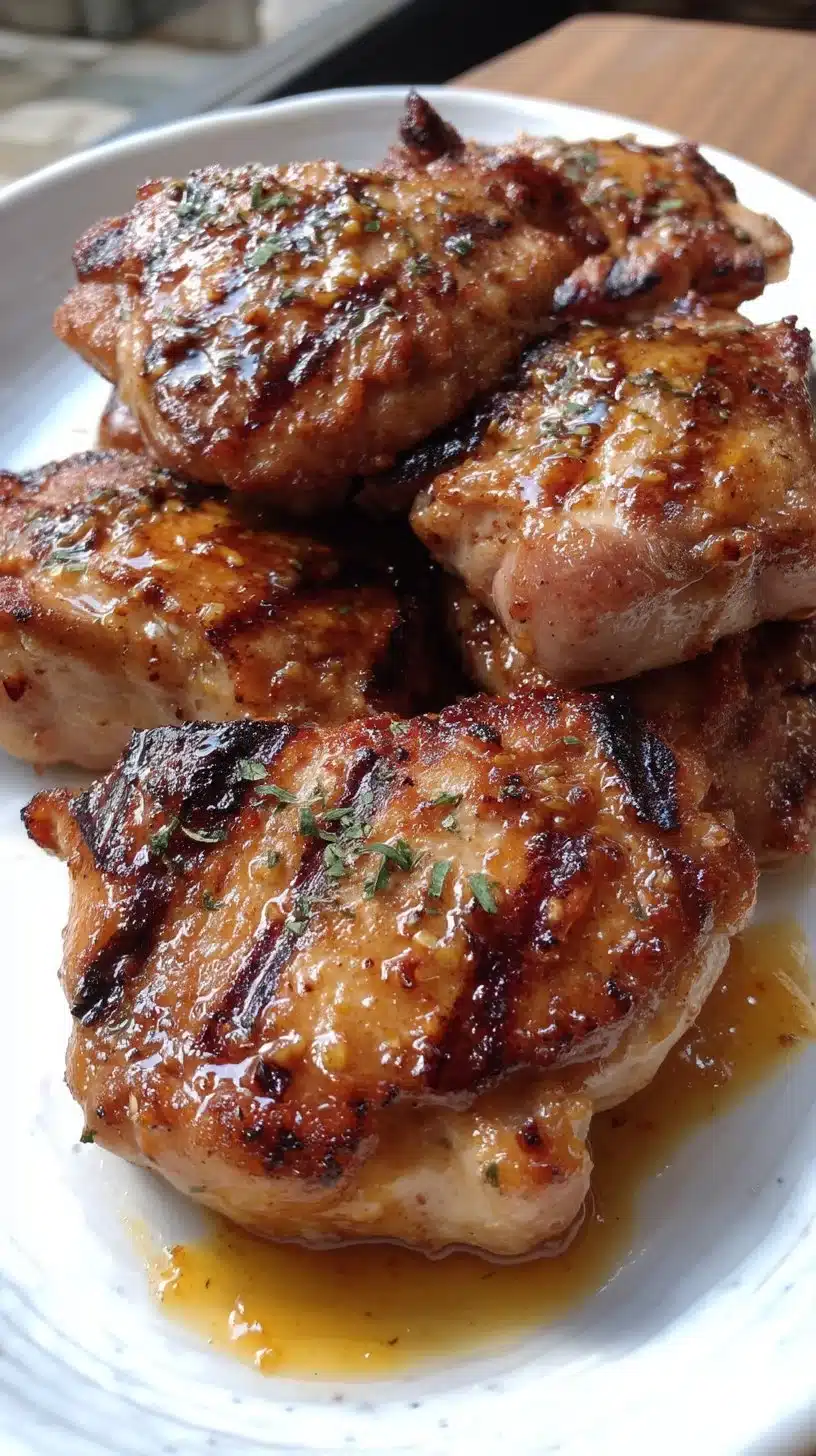
Maple syrup and Dijon mustard create a straightforward balance of sweet and sharp that clings to chicken thighs and caramelizes without burning quickly. Thighs offer forgiving fat content that resists drying, so the meat stays juicy even when you aim for a crisped exterior. Marinating for at least 30 minutes gives the garlic and mustard time to mellow and infuse the surface of the meat while the syrup draws in heat-friendly sugars that brown beautifully on the grill.
The recipe uses basic, predictable steps so you can build trust with timing and flavor. Olive oil helps the marinade coat the meat evenly and prevents sticking to the grates, and a simple rest after grilling allows the juices to redistribute so your first cut doesn’t run dry. This combination makes the dish reliably satisfying for both casual weeknights and small gatherings.
How to prepare Maple Mustard Grilled Chicken Thighs
Ingredients
- 4 chicken thighs
- 1/4 cup maple syrup
- 2 tablespoons Dijon mustard
- 2 cloves garlic, minced
- Salt and pepper to taste
- 1 tablespoon olive oil
- Fresh herbs for garnish (optional)
Instructions
- In a bowl, mix together maple syrup, Dijon mustard, minced garlic, salt, and pepper.
- Add the chicken thighs to the marinade and let them sit for at least 30 minutes.
- Preheat the grill to medium-high heat and lightly oil the grates.
- Remove the chicken from the marinade, letting the excess drip off.
- Grill the chicken thighs for about 6-7 minutes per side or until cooked through and juices run clear.
- Remove from the grill and let rest for a few minutes.
- Serve garnished with fresh herbs if desired.
Serving ideas
Serve these maple mustard grilled chicken thighs with straightforward sides that echo the flavor profile. A buttered, lemony green bean or steamed broccoli adds a fresh counterpoint to the sweet glaze. Roast baby potatoes with garlic and thyme for a hearty plate that soaks up leftover juice. For a lighter plate, slice the warm chicken and toss it into a grain salad with quinoa, cucumber, and cherry tomatoes; try pairing it with our tangy grilled chicken quinoa salad to mix textures and keep the meal balanced.
For family-style dinners, set the thighs on a cutting board and let people serve themselves, with bowls of slaw, pickles, or a simple grain pilaf around the board. The glossy, caramelized skin makes the dish feel special while the technique stays relaxed.
Storage tips
Cool the chicken to room temperature before you store it to keep condensation out of the container; then refrigerate in an airtight container for up to four days. If you cut the meat into slices before storing, you save reheating time later and protect the exterior from overcooking when you reheat.
To freeze, place the cooled thighs in a single layer on a rimmed sheet pan and flash-freeze for an hour, then transfer to a freezer bag or airtight container. Frozen cooked thighs keep best for up to three months. Thaw overnight in the refrigerator, and reheat gently to preserve moisture.
When you reheat, use a low oven (around 300°F) for 10–15 minutes covered with foil to prevent drying, or warm slices in a skillet with a tablespoon of water or oil and a lid on to trap steam and heat through without toughening.
DishGrub Kitchen Tips
Trim the thighs lightly if they have large chunks of fat that will flare on the grill; leave some fat for moisture and flavor. Marinade time matters: 30 minutes gives flavor without changing texture, but you can marinate up to 2 hours for more depth. Avoid long marinating with acidic ingredients; this Maple Mustard recipe uses minimal acidity, so it stands up to a couple hours without turning mushy.
Keep a two-zone fire on the grill if you can: direct heat for searing the skin, and indirect heat to finish cooking through. If you don’t have a grill, a hot cast-iron skillet or oven broiler can replicate the caramelized exterior—sear on the stovetop for 3 minutes per side, then finish in a 425°F oven until juices run clear.
Watch the sugars in the maple syrup as the thighs cook. If the glaze begins to blacken, move the chicken to indirect heat and lower the temperature. Basting once or twice with reserved marinade near the end of cooking adds shine, but avoid continuous basting from early on because dripping sugars can create flames and bitter char.
Recipe variations
Swap the Dijon for whole-grain mustard for extra texture and a nuttier bite. Add a splash of soy sauce or Worcestershire to the marinade for umami depth that balances the sweetness. Stir in a pinch of smoked paprika or cayenne to introduce a warm smokiness or gentle heat.
For a citrus lift, add a teaspoon of lemon or orange zest to the marinade before grilling; the zest brightens the overall profile without adding liquid that could dilute caramelization. If you prefer a glaze with herbs, fold in a tablespoon of chopped fresh rosemary or thyme right before brushing on the last minute of cooking.
Make this recipe kid-friendly by dialing back any heat and shredding the cooked thighs for sandwiches or tacos with slaw and pickles. To turn it into a weeknight meal prep, cook several thighs and portion them over rice, roasted vegetables, and a wedge of lemon for quick lunches.
Common questions
Q: Can I use bone-in, skin-on chicken thighs as written?
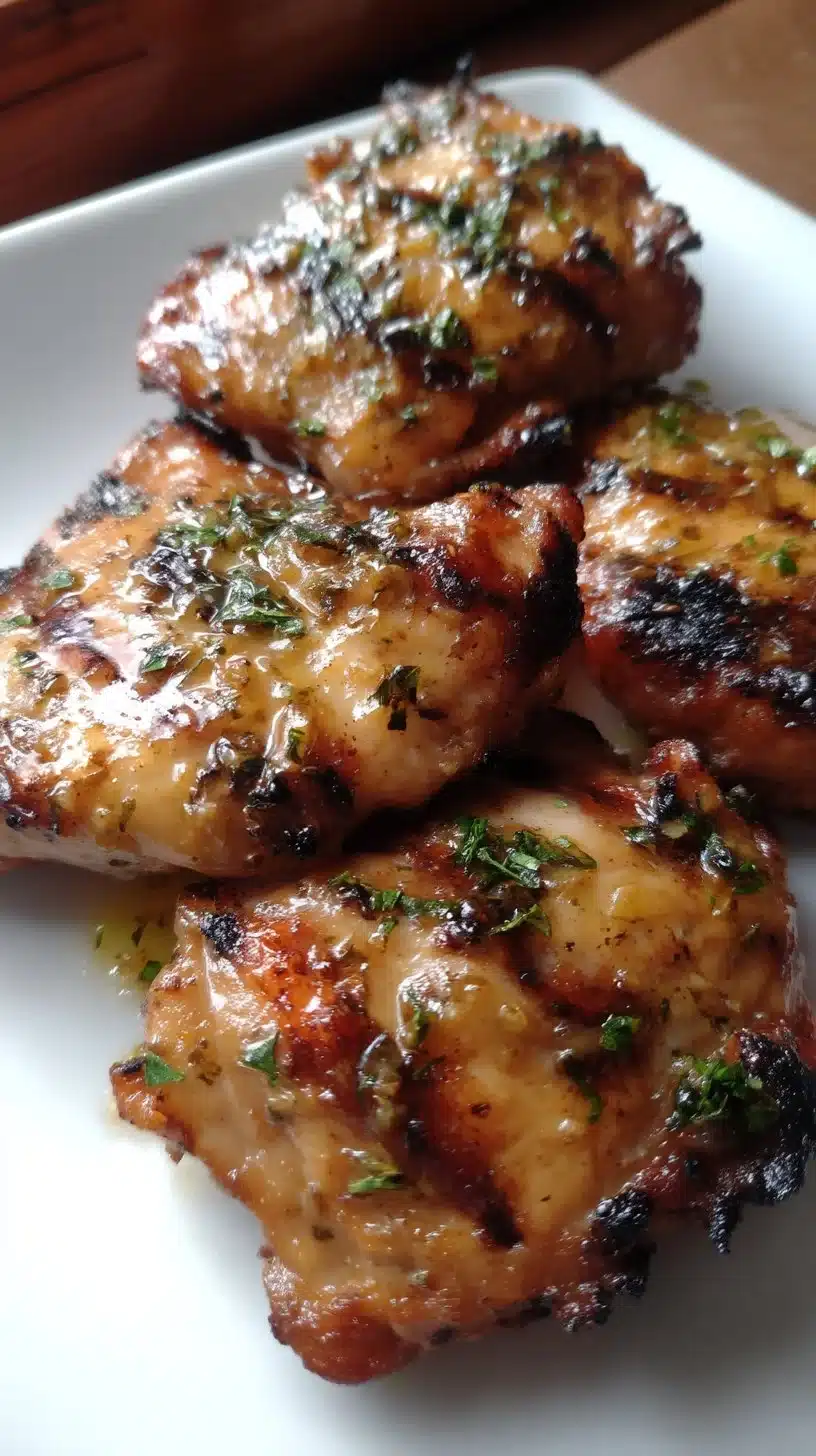
A: Yes. Bone-in, skin-on thighs work best because they deliver flavor and stay moist during grilling. The bone helps conduct heat through the meat while the skin crisps and caramelizes. Adjust your cook time slightly if the thighs are larger—aim for an internal temperature of 165°F, checking near the bone. Let the chicken rest after grilling for the juices to redistribute so the meat stays juicy when you cut into it.
Q: Can I make the marinade ahead of time or double it?
A: You can make the marinade ahead and store it in the refrigerator for up to three days. If you plan to double the recipe, double all ingredients and marinate in a larger container. Do not reuse marinade that has touched raw chicken unless you boil it for several minutes to make a sauce. To keep things simple, reserve a small portion of the marinade before adding raw chicken if you want a ready-to-serve sauce.
Q: What if I don’t have a grill—what’s the best alternative?
A: Use a heavy skillet or a broiler. Preheat a cast-iron skillet until very hot and add just enough oil to coat the bottom; sear thighs skin-side down until deeply browned, about 3–5 minutes, then flip and finish in a 400°F oven for 10–15 minutes. If you broil, place thighs skin-side up on a foil-lined tray about 6 inches from the element and broil until the skin caramelizes, turning or moving to lower heat if the glaze begins to char.
Q: How do I avoid burning the maple syrup glaze while still getting a nice crust?
A: Control your heat and time. Start on medium-high only long enough to get good sear marks, then move thighs to a cooler part of the grill to finish cooking. If any flare-ups happen, shift the chicken to indirect heat. Brush glaze on during the last few minutes so the sugars do not scorch, and flip just once or twice to encourage even caramelization.
Q: Can I substitute another sweetener for maple syrup?
A: You can substitute honey or agave, but each sweetener behaves slightly differently. Honey tends to brown faster and has a thicker consistency; you may use a touch less and watch the grill temperature closely. Agave has a thinner consistency and milder flavor, so you might add a little less oil or an extra clove of garlic to keep the flavor profile robust.
Conclusion
For a trusted, tested variation on this flavor combination, check the detailed recipe inspiration at Maple Mustard Chicken Thighs – Our Best Bites.