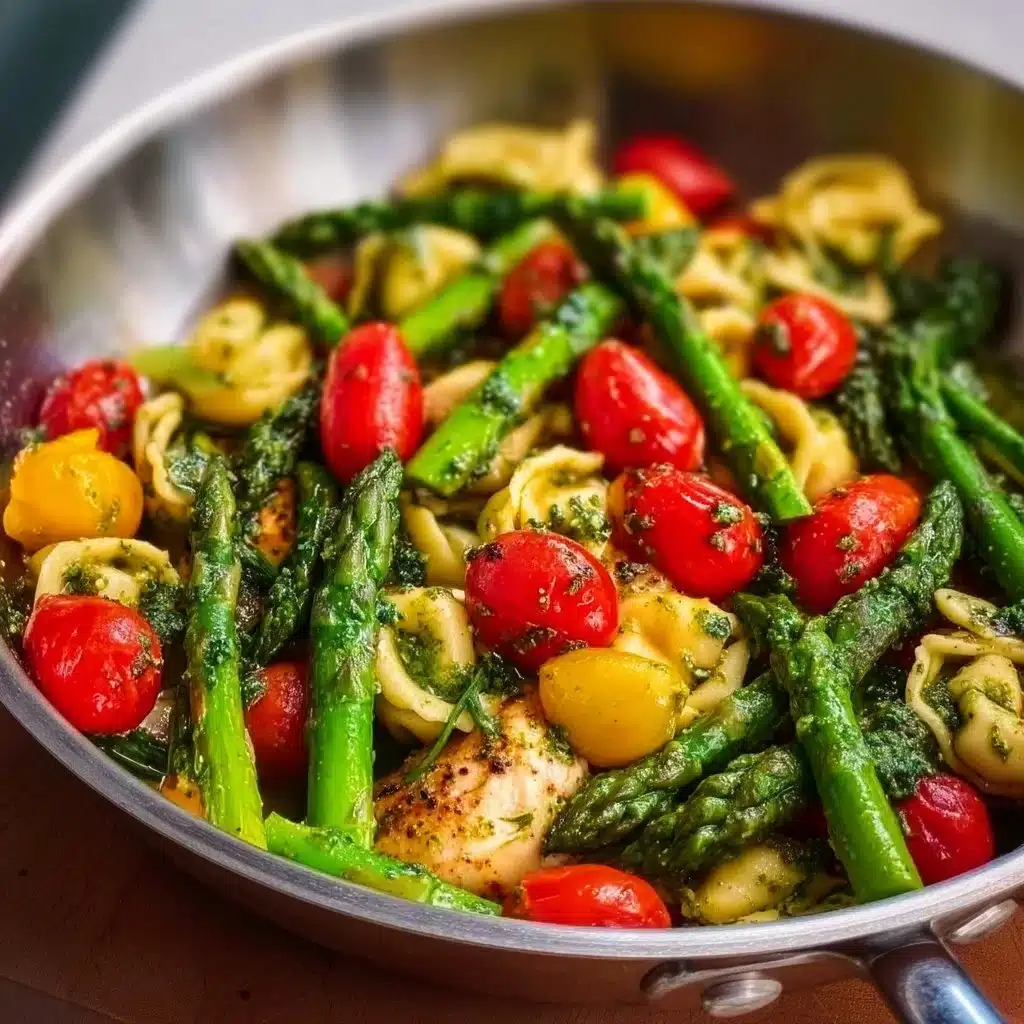
Weeknight dinners rarely get the spotlight, but they deserve it. This one-pan pesto chicken with tortellini and veggies fits right into that quiet charm: it cooks fast, looks bright on the plate, and tastes like the sort of comfort you remember from family dinners without the fuss. I first made this on a sun-warmed Thursday when the calendar read “late meeting” and the fridge offered two lonely chicken breasts, a jar of pesto, and a bag of frozen tortellini. The whole thing came together in under 30 minutes and everyone at the table agreed we should make it again the next week.
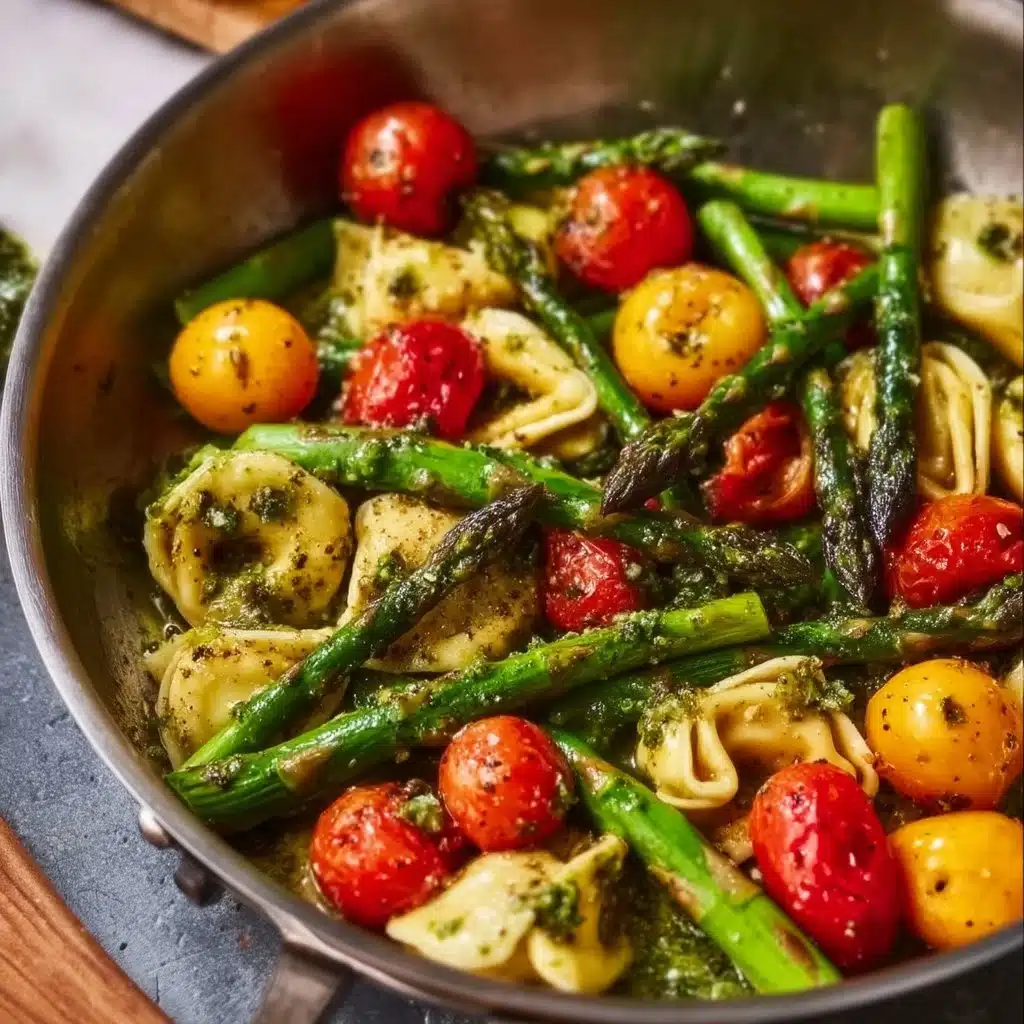
I love how the pesto dresses every bite without heavy sauce, how cherry tomatoes burst with sweet juice, and how asparagus keeps a snap that balances the pillowy tortellini. One pan means fewer dishes and more kitchen counter time to prep a simple salad or slice a baguette. The chicken gets a light sear for flavor and texture, then finishes tender when it lands back in the skillet with everything else. This is comfort food that feels casual and a little elevated at once.
At DishGrub we test recipes through real weeknight scenarios so you get practical methods and reliable timing. Our goal stays the same: cozy flavors, fuss-free steps, and pantry-friendly ingredients that make family meals simple. If you want another tried-and-true weeknight favorite to rotate in with this dinner, try our baked mac and cheese recipe for nights when the kids (or you) need extra cheese and nostalgia on the menu.
Why this recipe works
This dish works because it balances speed and flavor without overcomplicating the skillet. Fresh or frozen tortellini cooks quickly and soaks up pesto flavor fast, so you don’t need a long simmer. Pesto brings a concentrated hit of herbs, garlic, and Parmesan that seasons the whole pan, letting simple sautéing create a satisfying dinner. Cooking the chicken first creates a fond—the browned bits left in the pan—that layers savory depth into the tortellini and vegetables when you return the chicken to the skillet.
The vegetables add color, texture, and freshness. Asparagus keeps a pleasant bite when cooked briefly; cherry tomatoes soften and lend acidity that brightens the pesto. This method limits hands-on time and keeps cleanup minimal because everything ends up in the same pan. You get roast-like texture on the chicken, pasta that carries sauce, and veggies that aren’t overdone.
How to prepare One-Pan Pesto Chicken, Tortellini, and Veggies
Ingredients
- 2 boneless, skinless chicken breasts
- 1 cup tortellini (fresh or frozen)
- 1 cup asparagus, trimmed and cut into pieces
- 1 cup cherry tomatoes, halved
- 1/2 cup pesto sauce
- 2 tablespoons olive oil
- Salt and pepper to taste
- Parmesan cheese for serving (optional)
Instructions
-
Heat olive oil in a large skillet over medium heat.
-
Season the chicken breasts with salt and pepper, then add them to the skillet.
-
Cook for about 6-7 minutes on each side, or until cooked through.
-
Remove the chicken from the skillet and set aside.
-
In the same skillet, add the tortellini, asparagus, and cherry tomatoes.
-
Stir in the pesto sauce and a splash of water if needed.
-
Cook for about 5-7 minutes, or until the tortellini is warmed through and the veggies are tender.
-
Slice the cooked chicken and return it to the skillet.
-
Toss everything together to combine and heat through.
-
Serve hot, garnished with Parmesan cheese if desired.
Serving ideas
Serve this skillet straight from the stove for a rustic, family-style presentation. Spoon portions onto warmed plates and sprinkle fresh grated Parmesan and a few torn basil leaves for bright, fresh aromatics. If you like a little crunch, toast sliced baguette with olive oil and garlic and use it to mop up the sauce. For a lighter side, a simple mixed-green salad with a lemon vinaigrette adds brightness and cuts the richness.
Pair this with a veg-forward side on nights when you need more greens—roasted broccoli or a quick arugula salad complements the pesto’s herbal notes. You can also serve this with extra steamed asparagus or a bowl of olives for a Mediterranean touch. For a kid-friendly pairing, our creamy comfort recipes work well alongside this skillet; another DishGrub favorite is our baked mac and cheese when you want extra cheesy comfort on the table.
How to keep leftovers
Cool leftovers quickly and store them in airtight containers within two hours of cooking. Keep the chicken and tortellini together to retain flavor; the pesto helps preserve freshness because of the oil. Refrigerate for up to 3 days. To reheat, gently warm on the stovetop over low heat with a splash of water or a drizzle of olive oil to loosen the sauce and prevent drying. Stir frequently until heated through.
You can freeze portions for longer storage: place cooled portions in freezer-safe containers and freeze for up to 2 months. Thaw overnight in the refrigerator before reheating. Note that asparagus softens after freezing and thawing, so if you plan to freeze, you can leave the asparagus out and add fresh steamed asparagus when you reheat for best texture.
DishGrub Kitchen Tips
Use the right skillet. A 12-inch skillet with a heavy bottom gives even heat for a good sear on the chicken and enough room to toss everything at the end. Pat chicken dry before seasoning; moisture prevents a proper sear and leads to steaming. If your chicken breasts are thick, pound them to an even thickness or slice them in half horizontally so they cook evenly and quickly.
Reserve a little pasta water or use a splash of water when you add the pesto—this helps the sauce coat tortellini and cling to veggies. Taste and adjust seasoning at the end because pesto can vary in saltiness between brands or homemade batches. If you prefer more brightness, squeeze a little lemon over the finished skillet before serving.
When time’s tight, use pre-cooked rotisserie chicken in place of seared breasts. Shred the chicken and stir it into the warmed tortellini and veggies with the pesto. This shortcut saves about 15 minutes while still keeping the one-pan feel.
Recipe variations
-
Swap proteins: Substitute shrimp (cook 2–3 minutes per side) or thinly sliced pork chops for a different flavor profile. If you use shrimp, add them after the tortellini so they don’t overcook.
-
Go vegetarian: Skip the chicken and add chickpeas or extra tortellini for protein. Crispy baked tofu cubes also work—season and pan-fry them separately, then stir into the skillet at the end.
-
Change the pasta: Use cheese ravioli, gnocchi, or small shells instead of tortellini. Fresh pasta cooks faster; frozen may take a few extra minutes.
-
Make it smoky: Add a pinch of red pepper flakes and a splash of smoked paprika to the skillet when sautéing to introduce a smoky warmth.
-
Dairy-free: Use a dairy-free pesto and skip the Parmesan, or sprinkle with toasted pine nuts for a crunchy finish.
Common questions
What’s the best tortellini to use—fresh or frozen?
Fresh tortellini cooks faster and has a tender texture that pairs nicely with pesto, while frozen tortellini gives you convenience and consistent results. Both work well; if you use frozen, add a couple of extra minutes when cooking in the skillet. If the package recommends boiling first, you can follow that, but direct-pan warming works when the tortellini are thawed or small enough to heat through in the skillet.
Can I make this gluten-free?
Yes. Use gluten-free tortellini or gluten-free ravioli to keep the dish safe for gluten-sensitive diners. Check pesto labels for hidden gluten in additives or cross-contamination. You can also swap in a gluten-free grain like quinoa, but the texture will differ from pasta—cook the grain separately and fold it into the skillet at the end.
How do I prevent the chicken from drying out?
Start with room-temperature chicken and pat it dry. Preheat the skillet so the chicken sears quickly, forming a crust that locks in juices. Don’t overcrowd the pan; give each breast space. If your breasts are thick, pound them to an even thickness or butterfly them so they cook evenly in the recommended time.
Can I make this ahead for a potluck?
Partially—cook the chicken and tortellini and store them separately from the pesto and fresh tomatoes if possible. Reheat gently and toss with pesto and fresh tomatoes right before serving to preserve texture and brightness. If you need to transport the whole dish, reheat it briefly on low heat at your destination and add a splash of water or olive oil to refresh the sauce.
Is this recipe kid-friendly?
Yes. Most kids respond well to the familiar shapes and cheesy flavor of tortellini. Reduce or omit the cherry tomatoes if your child prefers simpler textures, or chop them very small and cook until very soft. Serve with a side of simple buttered bread or roasted carrots for a complete meal they’ll enjoy.
Conclusion
If you want another take on this one-pan approach or to compare techniques and photos, see the original inspiration and step-by-step notes at Pesto Chicken Tortellini and Veggies – Julia’s Album.