Warm summer afternoons make me reach for meals that feel like a hug and finish before the sun goes down. This pasta does exactly that: bright tomatoes, tender zucchini, and quick-cooking chicken come together with a spoonful of basil pesto for something simple, lively, and deeply satisfying. I first made this dish on a weeknight when the farmers market bounty begged for a quick, unfussy pan dinner. We ate on the porch, trading stories and stealing seconds, and the bowl went empty faster than I expected.
Comfort comes from familiar flavors, and togetherness comes from a plate that invites passing bowls and second helpings. This recipe keeps both in mind: it moves fast on the stove, plays well with whatever you have on hand, and leaves room at the table for conversation. It works when you need a no-fuss family meal and when you want something a little elevated for guests. You can dress it up with extra Parmesan and fresh basil or keep it rustic and bright right from the pan.
At DishGrub, we test each recipe in a real home kitchen until it earns its spot on the site. We focus on cozy, practical cooking that fits busy lives without sacrificing flavor. That means clear steps, sensible ingredient lists, and tips that help you get great results every time. If you love a chicken-and-parmesan vibe, you might also enjoy our take on our easy chicken Parmesan, which uses similar pantry-friendly techniques to deliver big flavor with minimal fuss.
Why you’ll love this dish
This recipe hits the sweet spot between fast and comforting. It relies on a handful of fresh ingredients that you can change with the seasons, and the basil pesto does heavy lifting—it adds aromatic depth in a single spoonful. The chicken cooks quickly when diced small, which keeps the overall time to about 25–30 minutes from stove to table. The zucchini and tomatoes bring a fresh contrast to the warm pasta and Parmesan, making each bite both light and satisfying.
The method uses one pan for the protein and vegetables and a pot for the pasta, so cleanup stays reasonable. You’ll also appreciate its flexibility: make it with store-bought pesto to save time, swap in whole-wheat spaghetti for a nuttier finish, or use leftover roasted chicken when you want an even faster weeknight meal. This dish scales easily, so you can double the recipe for leftovers or halve it for two.
How to prepare Summer Pasta: Parmesan Zucchini Tomato Chicken Spaghetti
This section walks you through the flow: pasta cooks while the chicken sautés, then vegetables join the pan and everything comes together with pesto and Parmesan. Prepare the chicken and vegetables before you start the pasta so the finish goes smoothly. Use a large skillet so the pasta mixes easily without spilling; that step is key for even coating.
If you prefer extra sauce, reserve 1/2 cup of the pasta cooking water before you drain the spaghetti. Add it to the skillet at the end to loosen the pesto and make a glossy coating that clings to every strand. For a shortcut, use pre-sliced zucchini and cherry tomatoes when you want to shave minutes off prep time. If you want inspiration for other simple chicken dinners, try our Parmesan garlic chicken tenders—they share the same comforting cheese-and-herb profile and work well alongside this pasta.
Ingredients
- spaghetti
- chicken breast
- zucchini
- tomatoes
- basil pesto
- Parmesan cheese
- olive oil
- salt
- pepper
- basil
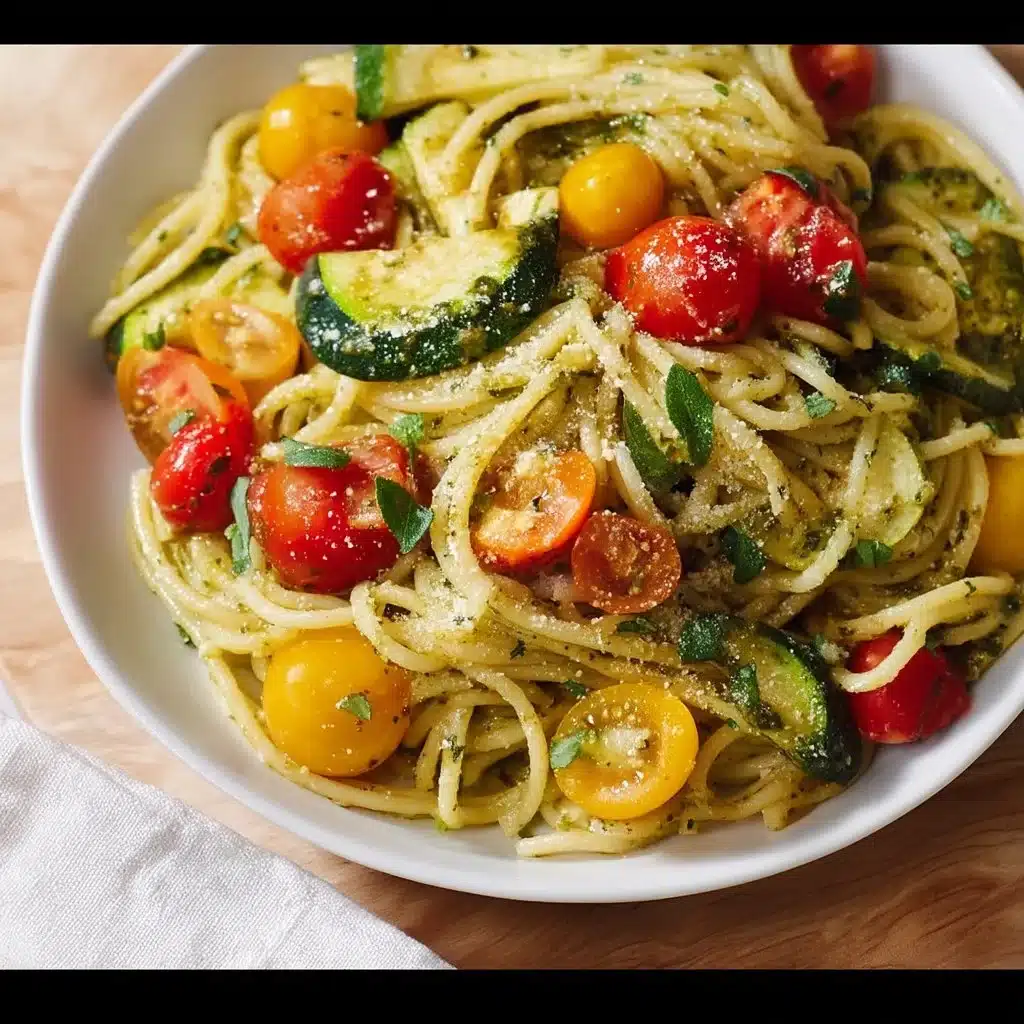
Instructions
-
Cook the spaghetti according to package instructions.
-
In a pan, heat olive oil over medium heat.
-
Add diced chicken breast and cook until browned and cooked through.
-
Add sliced zucchini and chopped tomatoes to the pan, sauté for 3-4 minutes.
-
Stir in the basil pesto and cooked spaghetti until well combined.
-
Season with salt and pepper to taste.
-
Top with grated Parmesan cheese and fresh basil before serving.
Serving ideas
Serve this pasta straight from the skillet for a laid-back family meal or spoon it onto warmed plates for an easy weeknight dinner that looks intentional. Pair it with a simple green salad dressed with lemon and olive oil to add brightness, or offer crusty bread to soak up the pesto-slicked sauce. A light side of roasted asparagus or a bowl of marinated olives complements the dish’s Italian-inspired flavors without competing.
For entertaining, place extra Parmesan and torn basil on the table so guests can customize. Add a squeeze of lemon for people who prefer more acidity. If you want a heartier plate, toss in a handful of toasted pine nuts or serve with garlic-roasted mushrooms on the side. For a wine pairing, reach for a chilled Sauvignon Blanc or an easygoing Pinot Grigio; both balance the fresh herbs and tomato brightness.
Storage tips
Cool leftovers to room temperature for no more than two hours, then store them in an airtight container in the refrigerator. The pasta will keep well for up to three days. When you reheat, add a splash of water or chicken broth to revive the texture and stir over low heat until warmed through to prevent drying out.
For longer storage, freeze the pasta in a shallow, freezer-safe container for up to two months. Thaw overnight in the refrigerator before reheating. Note that zucchini softens after freezing and thawing; if texture matters to you, portion remaining pasta for quick eating rather than freezing. When reheating from frozen, cover the dish and heat gently on low so the chicken stays tender.
DishGrub Kitchen Tips
Cut the chicken into uniform pieces so it cooks evenly and finishes at the same time as the vegetables. Use medium heat to brown the chicken without overcooking; you want a golden exterior and juicy interior. Keep your zucchini slices about 1/4 inch thick so they soften quickly but still hold a slight bite.
Don’t skip seasoning at each stage: salt the pasta water well, season the chicken while it cooks, and taste before serving to adjust salt and pepper. If the pesto tastes very salty, balance it with a splash of lemon juice. Save a little shredded Parmesan to add at the table so the cheese melts just a touch on warm pasta.
If you have leftover pesto, freeze it in ice cube trays so you always have single portions ready. A reserved bit of pasta water helps the pesto emulsify into a silky sauce, so measure a small ladleful before you drain the spaghetti. Use a large skillet to combine everything; cramped pans steam vegetables instead of sautéeing them, which changes texture.
Recipe variations
Make it vegetarian: skip the chicken and toss in a can of drained cannellini beans or a cup of chickpeas for protein. Roast the zucchini and tomatoes first for a deeper, caramelized flavor. Add heat with a pinch of red pepper flakes or make it citrus-forward with extra lemon zest stirred into the pesto before combining.
Swap proteins: use shrimp instead of chicken—cook it briefly until pink and finish as in the recipe—or slice leftover grilled chicken and fold it through at the end. Change the pasta shape: bucatini or penne both carry pesto well and offer a different mouthfeel.
Cheese and herb upgrades: finish with a handful of fresh arugula for a peppery lift, or sprinkle flaky sea salt on top before serving for a restaurant-style finish. Try a different cheese like Pecorino Romano for a saltier, tangy edge. For a creamier finish, stir a dollop of ricotta into the pasta just before serving.
Common questions
Q: Can I use store-bought pesto, and how much should I add?
A: Yes, store-bought pesto works well and saves time. Start with about 1/3 to 1/2 cup depending on your taste and the quantity of pasta—add more if you like a pronounced basil flavor. Remember that some bottled pestos contain a fair amount of salt, so taste after you mix and adjust seasoning. If the sauce feels too thick, stir in reserved pasta water a tablespoon at a time until it reaches a glossy, coating consistency.
Q: How can I keep the chicken tender and avoid dryness?
A: Cut the chicken into even, bite-size pieces and brown them over medium heat rather than high heat. Cook just until the meat loses its pink center; carryover heat will finish a few residual pink spots without overcooking. If you have a quick thermometer, remove the chicken at about 160°F; it will reach the safe temperature of 165°F as it rests briefly. Also avoid overcrowding the pan—if pieces sit too close they steam instead of sear.
Q: Can I make this ahead, and what parts reheat best?
A: You can prepare most of the components ahead. Cook the pasta and toss it lightly with a touch of olive oil so it doesn’t stick, and keep the sautéed chicken and vegetables in a separate container. Reheat gently on the stove, combine with pesto, and finish with Parmesan. If you plan to meal-prep lunches, store pasta and sauce separately and reheat together for best texture. Avoid freezing if you prefer the zucchini’s fresh bite; freezing changes its texture noticeably.
Q: What can I do if I don’t have fresh basil for garnish?
A: Fresh basil adds brightness, but it’s optional. Substitute with a small sprinkle of dried basil mixed with lemon zest for aroma, or chop a few parsley leaves for freshness. A light drizzle of good-quality olive oil right before serving also elevates the dish when fresh herbs are scarce.
Conclusion
For a complete reference and a slightly different take on this recipe, see the original inspiration on Parmesan Zucchini Tomato Chicken Spaghetti – Julia’s Album.