Warm bowls, bright flavors, and pantry ingredients that come together in minutes—that’s the kind of food that invites friends and family to the table without fuss. This orzo salad does exactly that: it tastes like summer, but it comforts like a bowl of something homey. When I make it, people linger. They scoop another forkful, trade stories between bites, and somehow the simple act of sharing a salad becomes the evening’s highlight.
I learned to lean on dishes like this when weeknights felt busy and weekends felt stretched. Orzo cooks fast, keeps well, and plays nicely with whatever you have on hand. Cherry tomatoes burst with sweet acidity, cucumber cools, and feta adds that familiar tang that makes every bite feel complete. I love recipes that work for potlucks, quick lunches, and easy dinners—you can double the batch, toss in extra herbs, or make it a main by adding grilled chicken or beans.
At DishGrub we test recipes until they behave predictably in a real home kitchen. We keep things cozy, practical, and forgiving. This orzo salad fits that mission: it comes together with a few ingredients, doesn’t demand perfect knife skills, and rewards you with bright, balanced flavor. If you like a heartier meal, try pairing this salad with a simple protein like our grilled chicken quinoa salad for a satisfying weeknight spread. We write for cooks who want straightforward instructions, reliable results, and a little warmth on the plate—this recipe gives you all three.
Why this recipe works
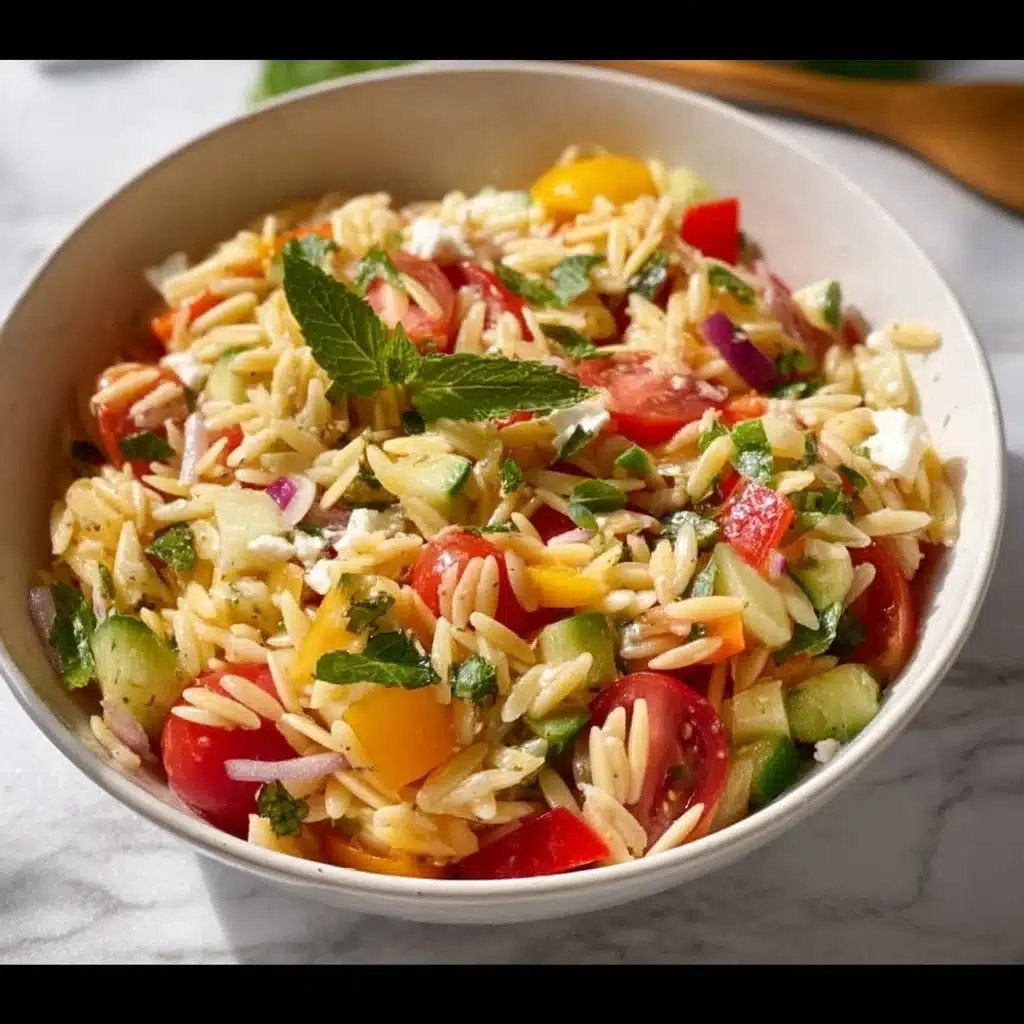
This orzo salad singles out a few reasons it turns out reliably delicious every time. Orzo absorbs dressing and flavor without getting gummy, so the pasta keeps a pleasing bite after cooling. The combination of crisp cucumber and sweet cherry tomatoes gives texture contrast, while red onion and parsley add a bright, herbal lift. Feta supplies salt and creaminess, balancing acidity from lemon.
The dressing is intentionally simple—olive oil and fresh lemon juice—so it highlights the ingredients rather than masking them. You control the seasoning easily: a touch more lemon brightens the whole dish, and a tiny pinch of good salt will make flavors pop. Because the salad benefits from a short rest in the refrigerator, flavors meld and the whole bowl tastes more cohesive after 30 minutes. That short wait rewards you with a fresh-tasting, make-ahead side or light main that travels well and keeps its texture.
How to prepare Orzo Salad
Start with well-cooked and cooled orzo so the grains remain distinct. Chop vegetables uniformly so every bite mixes tomato, cucumber, and pepper. Whisk the dressing until it emulsifies slightly—this helps olive oil cling to the orzo and vegetables. Toss gently to avoid crushing the tomatoes, and let the salad chill so citrus softens the feta and the parsley releases its aroma.
If you need to save time, consider cooking the orzo a day ahead and storing it in the fridge in a sealed container. Bring the pasta to room temperature before dressing to avoid oil solidification in cold air. Assemble the salad close to serving time if you prefer extra-crisp vegetables, or make it a couple hours ahead when you want a salad that sits at room temperature for a picnic or potluck.
Ingredients
- 1 cup orzo pasta
- 1 cup cherry tomatoes, halved
- 1 cucumber, diced
- 1 bell pepper, diced
- 1/4 red onion, diced
- 1/4 cup fresh parsley, chopped
- 1/4 cup feta cheese, crumbled
- 1/4 cup olive oil
- 2 tablespoons lemon juice
- Salt and pepper to taste
Instructions
- Cook the orzo pasta according to package instructions.
- Drain the orzo and let it cool to room temperature.
- In a large bowl, combine the cooked orzo, cherry tomatoes, cucumber, bell pepper, red onion, parsley, and feta cheese.
- In a small bowl, whisk together the olive oil, lemon juice, salt, and pepper.
- Pour the dressing over the salad and toss gently to combine.
- Chill the salad in the refrigerator for at least 30 minutes before serving.
Serving ideas
Serve this orzo salad warm, at room temperature, or chilled; each temperature highlights different elements. For a casual family meal, plate it alongside grilled chicken, fish, or a roasted pork tenderloin. For a vegetarian main, pile the orzo on a bed of mixed greens and add a scoop of roasted chickpeas or a handful of toasted nuts for crunch.
Turn the salad into a lunch bowl by topping it with slices of avocado and a soft-boiled egg. For a picnic or potluck, spoon it into a wide shallow dish so guests can help themselves and the salad breathes. Garnish with extra parsley or a drizzle of good olive oil just before serving to refresh the flavors. If you want to present it as a side to Mediterranean mains, add a few lemon wedges and a small bowl of extra crumbled feta on the table.
Storage tips
Store leftover orzo salad in an airtight container and refrigerate promptly. It keeps well for up to 3 days; after that the vegetables may soften and the orzo can absorb more dressing. If you plan to store for a couple of days, slightly under-dress the salad at first and keep extra dressing on the side to refresh it when serving.
Avoid freezing this salad because dairy and cucumber don’t thaw well. If you cook the orzo ahead, cool and drain it thoroughly before refrigerating to prevent excess moisture. When reheating, serve cold or at room temperature rather than heating—this salad shines without warming, and reheating can make the feta grainy and vegetables limp.
DishGrub Kitchen Tips
Use these small habits to get reliable results every time. Salt the orzo water well; it should taste like the sea and season the pasta from the inside out. Cut tomatoes and cucumbers into similar-sized pieces so every forkful tastes balanced. If your feta comes in a brine, rinse and crumble it to control salt levels.
Taste as you go. Add salt and pepper after you toss the dressing, then taste again after chilling—lemon and oil mellow while the salad rests, so final seasoning at the end helps you hit the right balance. If you want a flavor lift, add a teaspoon of Dijon mustard to the dressing and whisk; it emulsifies the oil and lemon and brings gentle tang. For a heartier plate, serve the salad with a bowl of warm soup like our lemon chicken orzo soup for a comforting, cohesive meal.
Recipe variations
Lean on substitutions to match what you have or to suit dietary needs. Swap feta for goat cheese or omit cheese entirely for a dairy-free option; add a splash of caper brine for brightness. Stir in chopped fresh basil or mint for a different herbal profile. For proteins, fold in cooked shrimp, cubed grilled chicken, or roasted chickpeas.
Make it Mediterranean by adding sliced olives and sun-dried tomatoes, or give it an Italian spin with diced salami and a handful of arugula. To make a creamy version, whisk in two tablespoons of plain Greek yogurt to the dressing, but add it sparingly so the salad remains fresh. Adjust the lemon to taste—more lemon brightens, while extra olive oil softens acidity.
Common questions
Q: Can I make this salad ahead of time?
A: Yes. You can prepare the orzo and chop the vegetables a few hours or a day ahead. Store them separately and toss with dressing just before serving for maximum freshness. If you assemble the full salad in advance, under-dress slightly and add the remaining dressing just before serving. The salad will hold well in the refrigerator for up to 3 days, though tomatoes and cucumbers will soften over time.
Q: How do I prevent soggy orzo salad?
A: Drain the orzo thoroughly and spread it on a rimmed baking sheet to cool quickly and release steam. Avoid overdressing; start with about three-quarters of the dressing and add more if needed after chilling. Salt the vegetables sparingly at first—some release water as they sit, which can make the salad watery. Keep extra dressing on the side if you plan to store the salad overnight.
Q: Can I use a different grain or pasta?
A: You can substitute other small pasta shapes like ditalini or small shells, or use grains such as farro or barley for a chewier texture. If you choose whole grains, note that their cooking time and water absorption differ from orzo, so cook them separately and adjust cooking time according to package directions. Cool grains completely before tossing to maintain texture.
Q: What if I don’t have fresh lemon juice?
A: Fresh lemon juice gives the brightest flavor, but you can use a mild white wine vinegar or sherry vinegar in a pinch. Use about half the amount of vinegar and taste as you go, because vinegar can be more concentrated than fresh lemon juice.
Conclusion
For a tested, everyday side that feels special, try this orzo salad and adapt it to what’s in your pantry. If you want another take on orzo from a favorite food blog, see the Orzo Salad Recipe – Love and Lemons for inspiration and alternate mix-ins.