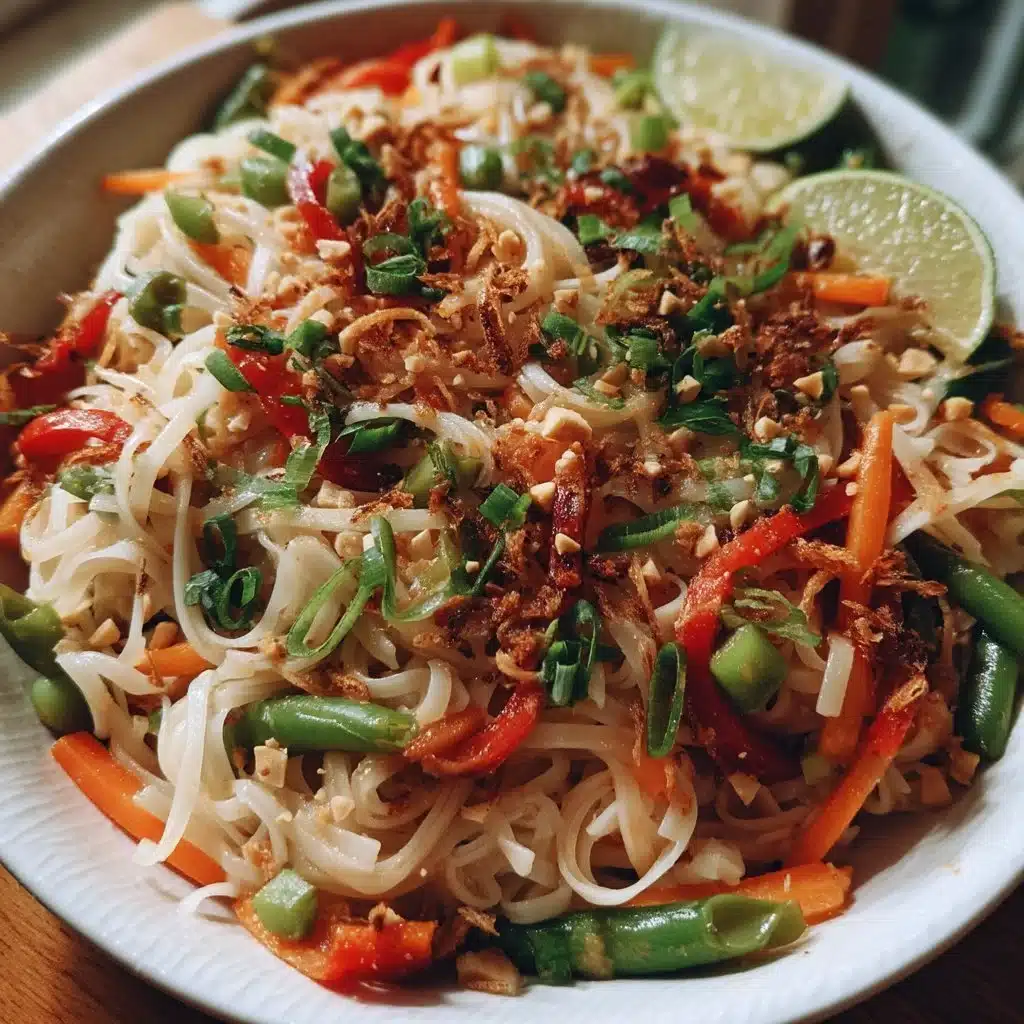
I remember the first time I tried a homemade pad thai that didn’t come from a takeout box. I stood at my tiny apartment stove, doubled over a bowl of soaked rice noodles and a mess of sliced vegetables, and thought, this could either be a disaster or the best meal I’ve ever made. It turned into the best meal. The noodles soaked up a tangy, slightly sweet sauce, the vegetables kept a little snap, and the crushed peanuts gave each bite a satisfying crunch. That night I called a friend, and we ate off paper plates on my couch, laughing and trading stories. Food that transforms an ordinary weeknight into something cozy and memorablethat’s the reason I cook.
Comfort food looks different in every kitchen, but the spirit stays the same: easy, hearty, and sharable. This spicy vegetable pad thai brings that spirit into a weeknight-ready dish. It balances heat and tang so the flavor never overwhelms the bright vegetables. It cooks fast, which saves time for the people or the shows you want to spend time with. If you love simple meals that reward you with big flavor, this is the kind of recipe you’ll return to again and again.
At DishGrub we test every recipe until it works in a real home kitchen, not a studio. We keep ingredient lists short and steps practical so you can cook confidently on a busy night. If you like swapping in seasonal produce, try it the same way we test our other vegetable-forward recipes like this hearty winter vegetable soup, which follows the same no-fuss philosophy and home-cook friendly approach.
Why this recipe stands out
How to prepare Spicy Vegetable Pad Thai
Ingredients
- 8 oz rice noodles
- 2 tablespoons vegetable oil
- 2 cloves garlic, minced
- 1 cup bell peppers, sliced
- 1 cup carrots, julienned
- 1 cup snap peas
- 1 cup bean sprouts
- 3 green onions, chopped
- 2 tablespoons soy sauce
- 1 tablespoon tamarind paste
- 1 tablespoon sriracha (adjust to taste)
- 1 tablespoon peanut butter (optional)
- 1/4 cup crushed peanuts for garnish
- Fresh lime wedges for serving
Instructions
- Cook the rice noodles according to package instructions, then drain and set aside.
- In a large pan or wok, heat vegetable oil over medium heat.
- Add minced garlic and sauté until fragrant, then add bell peppers, carrots, and snap peas.
- Stir-fry the vegetables for about 3-4 minutes until crisp-tender.
- Add the cooked rice noodles to the pan.
- Stir in the soy sauce, tamarind paste, sriracha, and peanut butter if using.
- Toss everything together until heated through and well coated.
- Stir in bean sprouts and green onions.
- Cook for an additional 1-2 minutes to soften the sprouts slightly.
- Serve hot, garnished with crushed peanuts and lime wedges.
Simple serving suggestions
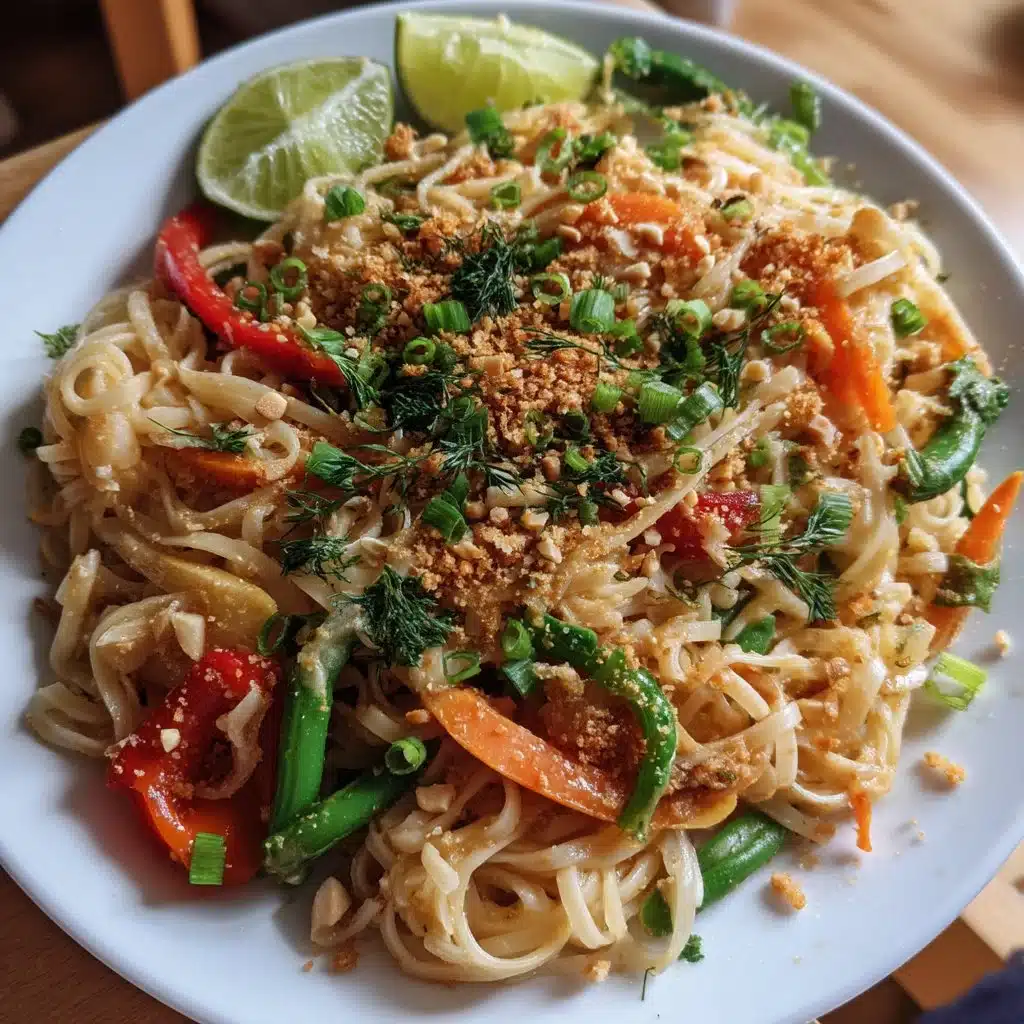
Serve this spicy vegetable pad thai straight from the wok for an informal family meal. Offer lime wedges on the side so everyone can brighten their bowl to taste. Sprinkle extra crushed peanuts and thinly sliced green onions at the table for added crunch and color. For a heartier plate, add a fried egg on top of each serving; the runny yolk makes the sauce silkier and stretches the dish further for hungry eaters. If you want to present it nicely for guests, mound the noodles in the center of each plate, arrange a handful of bean sprouts and herbs at the edge, and place lime wedges artfully around the rim.
How to keep leftovers
Cool leftover pad thai quickly to keep texture and flavor. Transfer leftovers into shallow, airtight containers within two hours of cooking. Store in the refrigerator for up to three days. To reheat, warm a skillet over medium heat, add a splash of water or a teaspoon of oil, then add the noodles and stir frequently until just heated throughthis revives the noodles without turning them mushy. If frozen, keep in a freezer-friendly container for up to two months; thaw overnight in the fridge before reheating. Note that bean sprouts and fresh greens soften when stored, so consider adding a fresh handful of sprouts and green onions when you reheat to restore snap and brightness.
Recipe tips for success
Use room-temperature soaked rice noodles for the best texture; they cook faster and avoid clumping. If your noodles arrive brittle, run them under warm water and let them sit until pliable, then cook just until tender. Heat the pan well before stir-frying the vegetables so they sear quickly and retain crunch. Measure the sauce ingredients ahead of time and mix them in a small bowl so you can add everything at oncethis keeps the cooking process moving and ensures even coating. Taste and adjust seasoning at the end: add a splash more soy sauce for saltiness, a squeeze of lime for brightness, or a pinch of sugar if the tamarind tastes too tart. For inspiration on simple vegetable-forward meals that translate well to family dinners, try pairing techniques from our spring pasta approach in this spring vegetable pasta primavera, which emphasizes quick cooking and bold, balanced seasoning.
Make it your own
Swap vegetables freely based on what you have. Broccoli florets, thinly sliced zucchini, or thin cabbage strips all work well. To add protein, toss in cubed tofu, sliced tempeh, or pre-cooked shrimp during the final toss so they heat through without overcooking. For nut-free households, skip the peanut butter and peanuts and use toasted sunflower seeds or a sprinkle of sesame seeds for crunch. If tamarind paste proves hard to find, use a mix of lime juice and a touch of brown sugar as a substitutestart with equal parts lime and a half teaspoon of sugar and adjust to taste. Control heat by adjusting the sriracha: add a small drizzle to each individual bowl rather than stirring it all into the whole pan when serving people with different spice tolerances.
Frequently asked questions
Q: Can I use dried noodles other than rice noodles?
A: You can substitute flat wheat noodles like linguine in a pinch, but rice noodles give authentic texture and cook quickly. If you use wheat noodles, reduce stir-frying time slightly and keep an eye on the sauce absorption to avoid a gummy texture. Cook wheat noodles al dente before adding them to the pan.
Q: What if I can’t find tamarind paste?
A: If you don’t have tamarind paste available, recreate its sweet-tart flavor by combining lime juice with a little brown sugar or a splash of rice vinegar. Start with one tablespoon of lime juice and 1/2 teaspoon of brown sugar, taste, and adjust until you hit a balanced sweet-and-sour note. Tamarind gives a distinct depth, so the substitute won’t be identical, but it will keep the dish lively.
Q: How do I keep the vegetables crisp without undercooking the noodles?
A: Stir-fry the vegetables first until they reach crisp-tender, then remove them briefly while you heat the noodles and sauce together. Add the vegetables back at the end to combine; this sequence maintains both noodle tenderness and vegetable crunch. Use high heat and rapid movement in the pan to preserve texture.
Q: Can I make this gluten-free?
A: This recipe already uses rice noodles, which are gluten-free, but check your soy sauce label; many soy sauces contain wheat. Use tamari or a gluten-free soy sauce alternative to keep the dish fully gluten-free. Also verify any packaged ingredients like sriracha for hidden wheat-containing additives.
Q: How spicy is this dish, and can I tone it down for kids?
A: The heat comes from sriracha, so adjust that to taste. For milder versions, reduce the sriracha to half a tablespoon or omit it entirely and let each person add a dash at the table. You can also balance heat with more lime juice and a touch of sweetness to make the flavors accessible for children.
Conclusion
For a reliable take on spicy vegetable pad thai that fits a busy evening and feeds a crowd with minimal fuss, consider this recipe your go-to. For another version with similar bold flavors and vegetable focus, check out this detailed Vegetable Pad Thai Recipe – WhitneyBond.com which offers additional technique notes and ingredient ideas.