Comfort food matters most when it brings people together around one simple pan and a warm table. This Spring Vegetable Pasta Primavera does exactly that: bright, seasonal vegetables meet cozy pasta in a skillet you can pass around. The flavors feel fresh but familiar, and the dish cooks fast enough to turn a hectic weeknight into a relaxed shared meal.
Serve it at the end of a sun-drenched day, or tuck it into a lunch that reminds you of home. Let the tomatoes pop, the asparagus snap, and the garlic scent fill your kitchen those little moments make dinner feel like more than just food. Invite a friend, place a loaf of crusty bread on the table, and watch the small things laughter, seconds, a quick debate over Parmesan transform a meal into memory.
At DishGrub we test every recipe until it sings. We aim for cozy, practical dishes that fit real life: short ingredient lists, straightforward techniques, and results you can count on. This Primavera uses a handful of fresh vegetables and pantry basics so you can make it any night. We test batches to get the timing right and suggest tweaks that keep the dish flexible swap a veggie, add protein, or stretch it for company. If you like flavor you can cook without fuss, our recipes will become part of your weekly rotation.
If you want a heartier vegetable option for colder nights, try our hearty winter vegetable soup to keep your meal planning cozy through the seasons.
Why you’ll love this dish
This pasta primavera balances freshness with comfort. The vegetables cook quickly so they keep a tender-crisp texture that brightens every bite. Garlic and olive oil form a simple, aromatic base that lets the natural sweetness of cherry tomatoes and peppers shine. Parmesan adds salty creaminess without heavy sauce, which keeps the dish light yet satisfying.
You’ll love how fast it comes together: boiling the pasta gives you a cooking timer for the vegetables, so you finish everything hot and plated in under 30 minutes. The recipe highlights seasonal produce, so you can tweak it as markets shift through spring and summer. Plus, it scales easily double it for friends or halve it for solo meals. Leftovers reheat well, and the flavor actually improves after a day as the ingredients meld.
How to prepare Spring Vegetable Pasta Primavera
Start with timing: get salted water boiling for the pasta first, then prep vegetables while pasta cooks. Use a large skillet to keep everything loose and easy to toss. Heat the oil until it shimmers, then sauté garlic just until fragrant overcooked garlic turns bitter, so watch it closely.
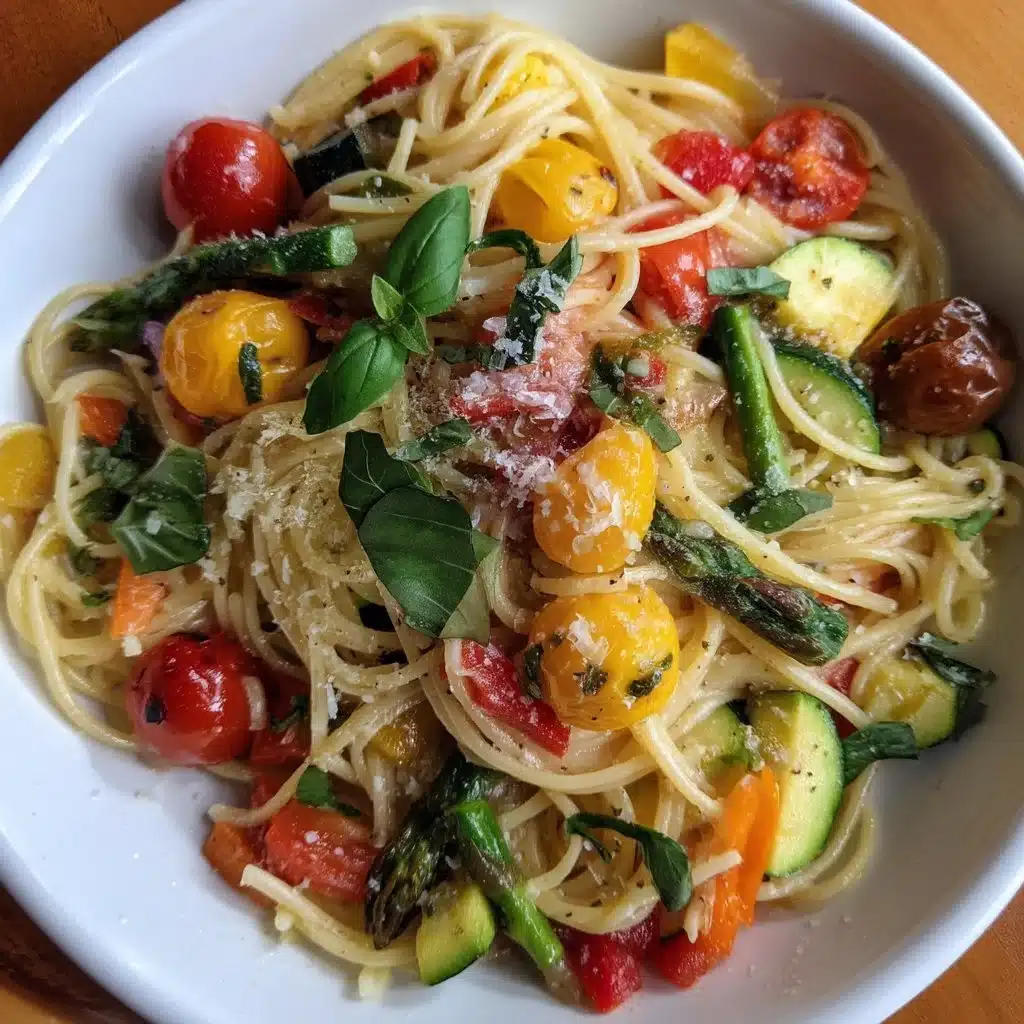
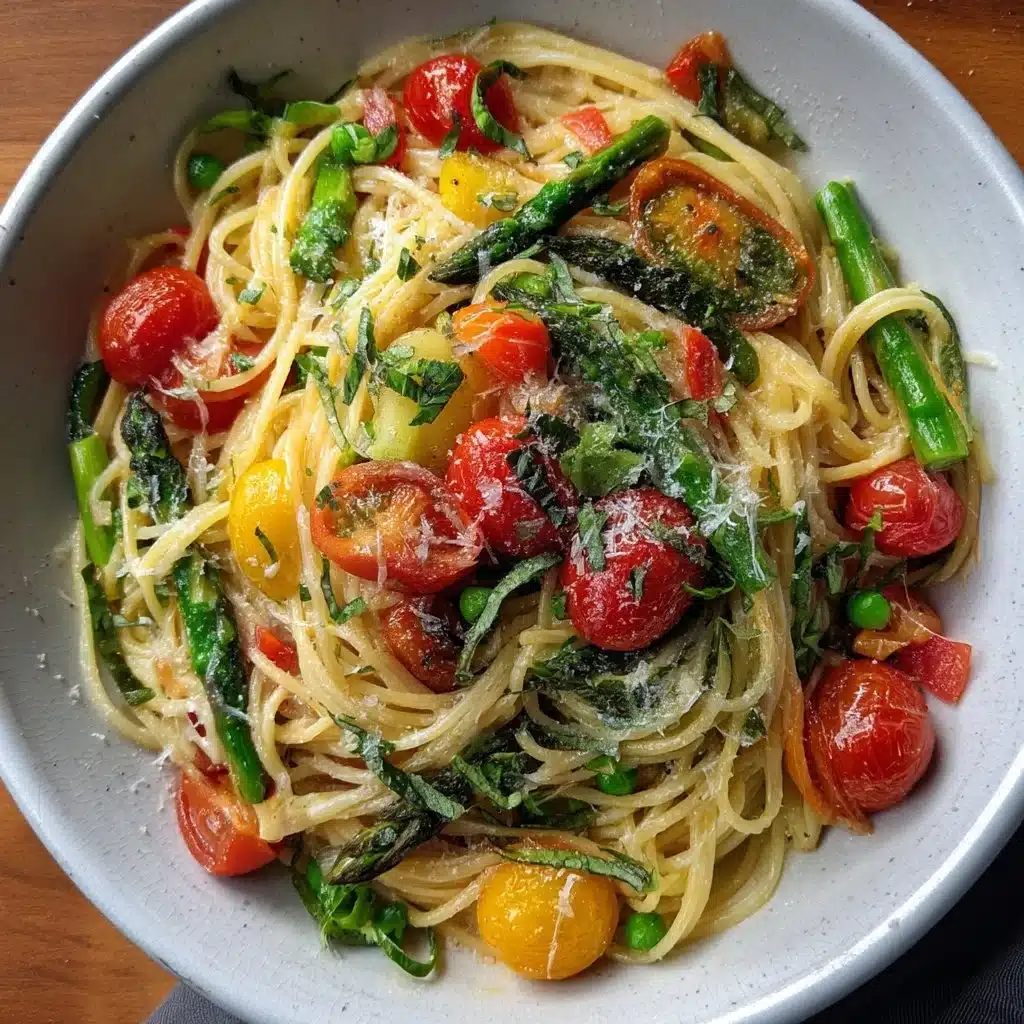
Cook the firmer vegetables first. Bell peppers, zucchini, and asparagus need a few minutes to soften but should still hold a little bite. Add cherry tomatoes at the end so they warm through and release a touch of juice without dissolving into sauce. Toss the drained pasta into the skillet with the veggies and finish with grated Parmesan, salt, and pepper; the cheese melts into the mix and binds the ingredients without heavy cream.
If you want an extra silky finish, reserve a little pasta cooking water and stir in a tablespoon at a time until you reach a glossy, saucy texture. Garnish with fresh basil for bright herbal notes. Serve immediately so the pasta stays tender and the vegetables keep their color and snap.
Ingredients
- 8 oz pasta (e.g., spaghetti or penne)
- 2 tbsp olive oil
- 1 cup cherry tomatoes, halved
- 1 cup bell peppers, sliced
- 1 cup zucchini, sliced
- 1 cup asparagus, chopped
- 2 cloves garlic, minced
- 1/2 cup grated Parmesan cheese
- Salt and pepper to taste
- Fresh basil for garnish
Instructions
- Cook the pasta according to package instructions until al dente. Drain and set aside.
- In a large skillet, heat olive oil over medium heat.
- Add garlic and sauté for about 1 minute.
- Add bell peppers, zucchini, and asparagus, and cook for about 5-7 minutes until tender.
- Stir in cherry tomatoes and cook for another 2 minutes.
- Add the cooked pasta to the skillet and toss to combine.
- Sprinkle with Parmesan cheese, salt, and pepper.
- Garnish with fresh basil before serving.
How to serve this dish
Serve this primavera straight from the skillet family-style, or plate individual portions with a sprinkle of extra Parmesan and a few basil leaves on top. Add a wedge of lemon on the side to brighten the flavors at the table. Offer crusty bread or garlic bread to soak up any juices, and a simple green salad balances the meal with extra crunch and acidity.
For a heartier main, top each portion with grilled chicken, seared shrimp, or pan-roasted tofu. A light drizzle of good olive oil or a few shavings of Pecorino Romano adds depth. If you serve this for a casual dinner party, set out bowls of extra cheese, chili flakes, and lemon wedges so guests can customize.
How to store it properly
Cool leftover pasta to room temperature within an hour, then transfer to an airtight container. Refrigerate and use within 3 to 4 days for the best texture and flavor. Reheat gently on the stove over low heat with a splash of water or broth to loosen the pasta and revive the vegetables, or warm in the microwave in 30-second intervals, stirring between sessions.
Avoid freezing this dish; the vegetables develop a mushy texture after thawing. If you want to freeze components, store cooked pasta and blanched vegetables separately in freezer-safe containers and thaw them together when you plan to reheat.
DishGrub Kitchen Tips
Use any pasta shape you like long strands or short tubes both work because the vegetables mix in easily. Salt the pasta water generously; it seasons the pasta itself and lifts the whole dish. Slice veggies uniformly so they cook evenly, and keep the heat at medium so the garlic softens without burning.
If you want a slightly creamier sauce without heavy cream, scoop a tablespoon of the starchy pasta water into the skillet and stir; it helps the Parmesan cling to the pasta. Taste and adjust salt and pepper at the end because the cheese adds sodium. Fresh basil makes a big flavor difference; add most of it at the end so it doesn’t lose color or aroma.
Make it your own
Swap vegetables freely. Peas, green beans, mushrooms, or baby spinach fit beautifully. Add protein by stirring in cooked chickpeas, diced grilled chicken, or leftover roasted salmon. For a little heat, toss in crushed red pepper flakes with the garlic or drizzle harissa into the mix.
Turn this into a one-pan meal by adding thinly sliced sausage to the skillet first and browning it before the vegetables. If you prefer a lemony twist, zest and juice half a lemon into the finished dish to brighten the flavors. For a vegan version, skip the Parmesan and stir in a tablespoon of nutritional yeast and a splash of olive oil for umami.
Common questions
How do I prevent soggy vegetables?
Cook vegetables over medium heat and keep their pieces uniform so they finish at the same time. Add firmer vegetables first and softer ones, like cherry tomatoes, last. Sauté until they are tender-crisp; they should still hold their shape and color. High heat wilts vegetables quickly but can brown them unevenly, so medium heat gives you control and good texture.
Can I make this ahead for a party?
You can prep components ahead: slice vegetables and grate the Parmesan, then store them in containers in the fridge. Par-cook the firmer vegetables for a minute less than usual so they stay crisp when you finish them. Cook pasta al dente, toss it with a little oil, and refrigerate up to a day. Reheat everything in a large skillet, add tomatoes toward the end, then finish with cheese and basil so the dish feels fresh.
What pasta shapes work best?
Any shape works, but choose one that holds sauce and vegetables well. Penne, rigatoni, or fusilli catch bits of vegetable and Parmesan between their ridges and grooves. Long pastas like spaghetti or linguine work nicely too; they make a lighter plate and are easy to toss with the vegetables. Pick what you have on hand the recipe adapts easily.
How do I add protein without losing the veggie-forward feel?
Add cooked, diced chicken or shrimp right at the end so you warm it through without overcooking. For plant-based protein, stir in canned chickpeas warmed in the skillet with the vegetables. Pan-seared tofu cubes or tempeh also work; press and brown them first for texture, then add them back in with the pasta.
Conclusion
If you want another take on bright, veggie-forward pasta, check this well-tested Pasta Primavera Recipe – Love and Lemons for extra inspiration and serving ideas.
Print
Spring Vegetable Pasta Primavera
- Total Time: 30 minutes
- Yield: 4 servings
- Diet: Vegetarian
Description
A bright and cozy pasta dish featuring seasonal vegetables, perfect for quick weeknight meals.
Ingredients
- 8 oz pasta (e.g., spaghetti or penne)
- 2 tbsp olive oil
- 1 cup cherry tomatoes, halved
- 1 cup bell peppers, sliced
- 1 cup zucchini, sliced
- 1 cup asparagus, chopped
- 2 cloves garlic, minced
- 1/2 cup grated Parmesan cheese
- Salt and pepper to taste
- Fresh basil for garnish
Instructions
- Cook the pasta according to package instructions until al dente. Drain and set aside.
- In a large skillet, heat olive oil over medium heat.
- Add garlic and sauté for about 1 minute until fragrant.
- Add bell peppers, zucchini, and asparagus, and cook for about 5-7 minutes until tender.
- Stir in cherry tomatoes and cook for another 2 minutes.
- Add the cooked pasta to the skillet and toss to combine.
- Sprinkle with Parmesan cheese, salt, and pepper.
- Garnish with fresh basil before serving.
Notes
Serve this primavera straight from the skillet or plate individual portions with extra Parmesan. Add lemon wedges for brightness.
- Prep Time: 10 minutes
- Cook Time: 20 minutes
- Category: Main Course
- Method: Sautéing
- Cuisine: Italian