Comfort food has a way of gathering people around the table without fuss. A steaming bowl of pasta tossed with sweet, caramelized vegetables feels like a hugsimple, honest, and instantly satisfying. This version of roasted vegetable pasta keeps things easy: no heavy sauces, no long lists of ingredients, just vibrant oven-roasted veggies, a pot of perfectly cooked pasta, and a sprinkle of cheese if you like. It shines when you want something homey on a weeknight or something relaxed for friends who drop by with little notice.
I test recipes with real kitchens in mind: limited time, limited tools, and hungry families. DishGrub recipes focus on small, practical choices that make dinner feel doable. That’s why this pasta uses pantry staples and one hot oven to turn humble produce into something special. If you like grain bowls, try our roasted vegetable quinoa bowls for a similar flavor profile with a different texture. You’ll find that swapping components between recipes keeps weeknight cooking fresh without extra effort.
I write for cooks who want warmth and flavor without a long list of steps. You will learn how to coax sweetness out of zucchini and peppers, how to time pasta so it finishes right when the vegetables come out of the oven, and how a little olive oil and oregano translate into deep, familiar flavors. This recipe stays forgiving: swap the vegetables based on what’s ripe in your market, adjust seasoning to your family’s taste, and use whatever short pasta you have on hand. The result feels like a dish that’s been made a thousand timesreliable, comforting, and eager to become part of your weeknight rotation.
Why this recipe works
Roasting concentrates the vegetables’ natural sugars and softens their texture without adding complicated sauces. The high oven heat gives you browned edges that carry deep flavor, so you don’t need more than olive oil, salt, pepper, and oregano to create a rich, layered dish. Short pastas like penne or fusilli trap small pools of olive oil and little bits of roasted tomato, giving every bite a balanced mix of pasta and produce.
This approach simplifies cleanup, too: you can roast everything on a single baking sheet or dish while the pasta cooks on the stovetop. The stovetop and oven work together, so you finish fast and serve warm. The technique stays adaptableuse more garlic, add a squeeze of lemon at the end, or fold in fresh basil for a brighter note. Overall, the method highlights the ingredients rather than masking them, which makes this pasta feel both homey and sophisticated in a casual way.
How to prepare Easy Roasted Vegetable Pasta
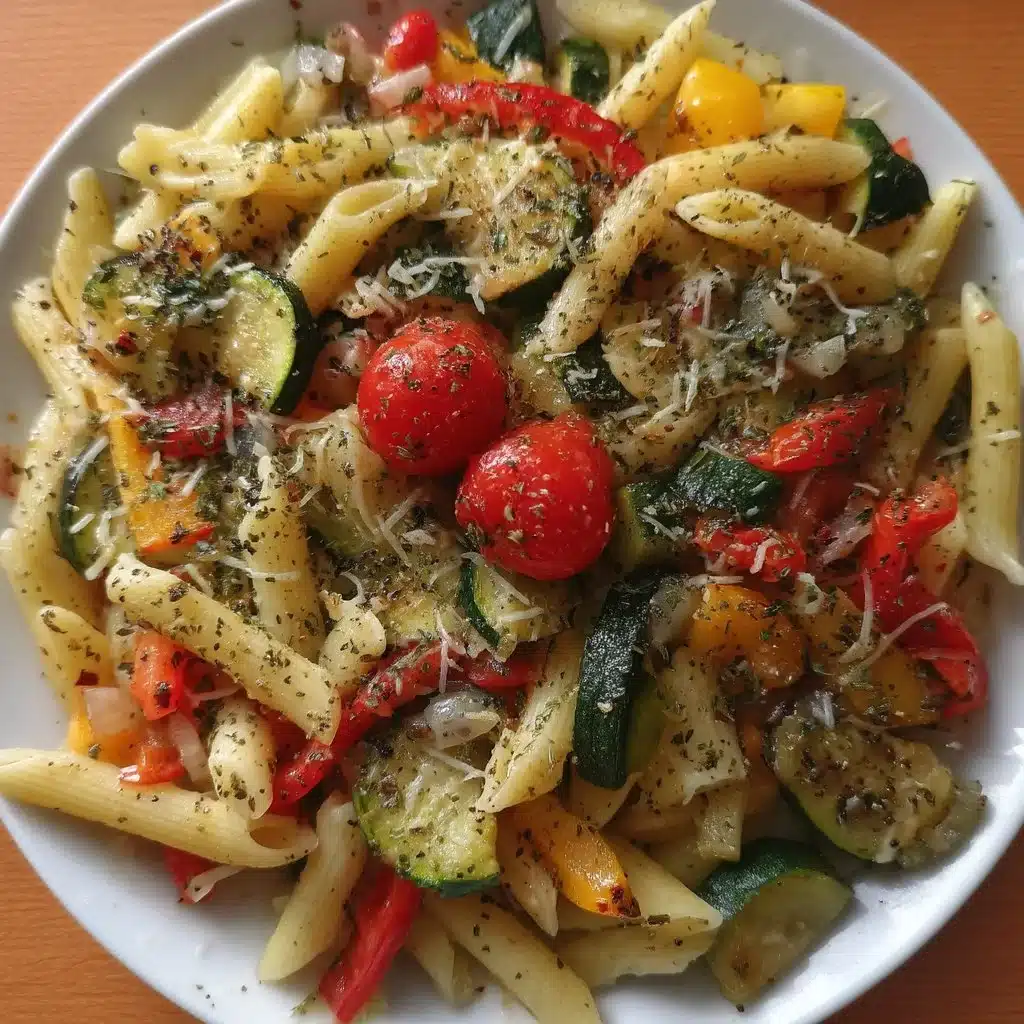
Start with vegetables that roast well and hold some texture after baking; zucchini, peppers, tomatoes, and onions check those boxes. Cut the vegetables into even pieces so they roast uniformly. Toss them in olive oil and season generously so they caramelize instead of steam. Using a hot oven speeds caramelization and deepens flavor without drying the veggies out.
While the vegetables roast, boil the pasta in well-salted water and cook it to al dente so it retains bite when tossed with the warm vegetables. Drain the pasta and add it directly to the roasting dish or into a large bowl with the veggies to combine flavors while everything is still hot. Finish with a grind of black pepper and grated Parmesan if you like a savory edge. This plan keeps timing tight and ensures the pasta doesn’t sit cold or overcook while you finish the vegetables.
Ingredients
- 2 cups of pasta (penne or fusilli)
- 1 zucchini, chopped
- 1 bell pepper, chopped
- 1 cup of cherry tomatoes, halved
- 1 onion, chopped
- 3 tablespoons olive oil
- Salt and pepper to taste
- 1 teaspoon dried oregano
- Grated Parmesan cheese (optional)
Instructions
-
Preheat the oven to 400°F (200°C).
-
In a baking dish, combine zucchini, bell pepper, cherry tomatoes, and onion. Drizzle with olive oil, and season with salt, pepper, and oregano.
-
Roast the vegetables for 20-25 minutes, until tender and slightly caramelized.
-
Meanwhile, cook the pasta according to package instructions.
-
Drain the pasta and combine it with the roasted vegetables. Toss to combine.
-
Serve with grated Parmesan cheese if desired.
Serving ideas
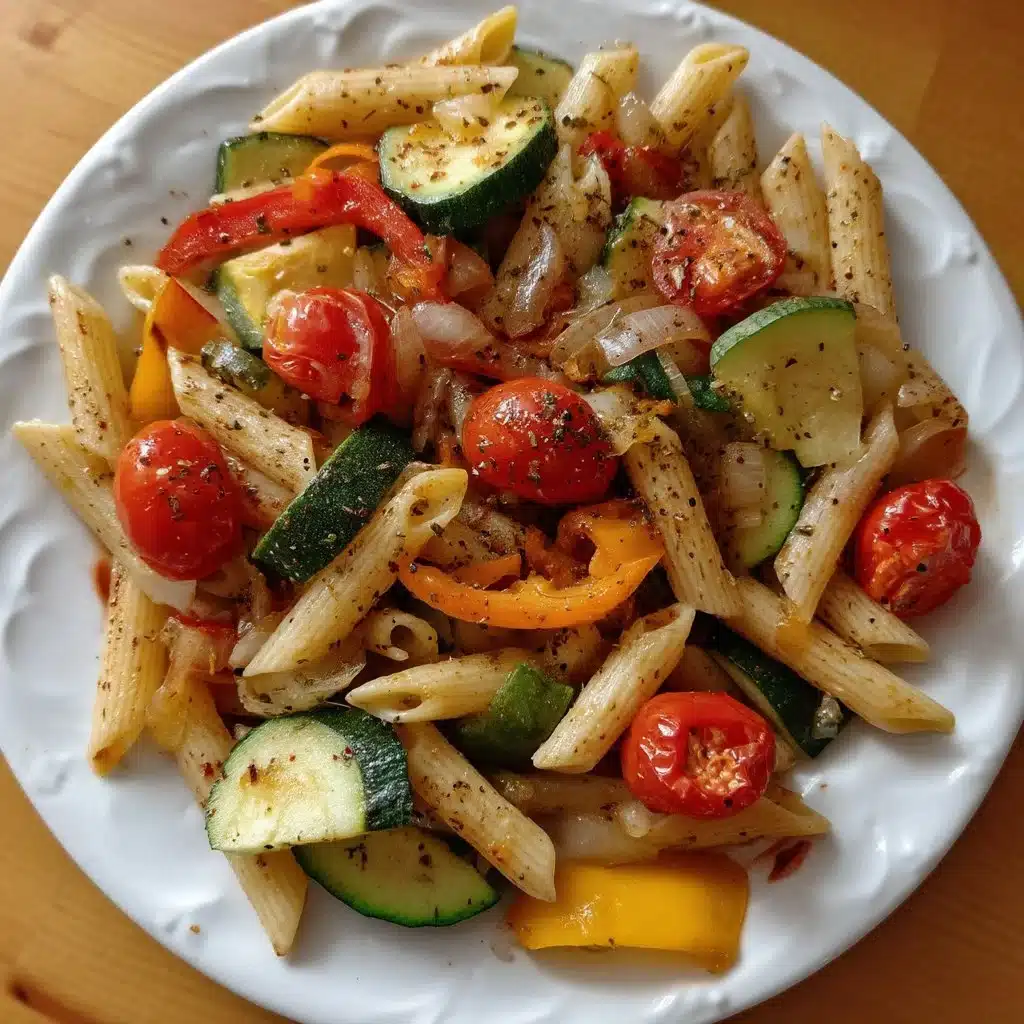
Serve this pasta straight from the baking dish for a casual family meal, or plate it with a sprinkle of cheese and a few fresh herb leaves for a slightly dressed-up look. Add a simple green salad dressed in lemon and olive oil to cut through the richness, or offer crusty bread to soak up any flavorful juices left in the dish. For protein, pan-seared chicken, roasted shrimp, or a few spoonfuls of ricotta make easy companions.
For a picnic or potluck, keep the pasta slightly under-seasoned before you leave and bring a small container of extra olive oil and grated cheese. Toss again at serving time to refresh the flavors. Serve warm or at room temperature; the dish keeps its charms either way.
Storage tips
Cool leftover pasta to room temperature within two hours, then store it in an airtight container in the refrigerator for up to four days. To reheat, gently warm the pasta in a skillet with a drizzle of olive oil over medium heat, stirring until heated through to keep the vegetables from turning mushy. You can also microwave individual portions, covered, stirring halfway through to promote even heating.
If you plan to meal prep, store pasta and roasted vegetables together for convenience, but keep any fresh herbs or cheese separate until you serve to maintain brightness. For longer storage, freeze the cooled pasta in a freezer-safe container for up to two months, then thaw overnight in the fridge before reheating. Expect a small change in texture after freezing, but the flavors remain pleasant and comforting.
DishGrub Kitchen Tips
Use a rimmed baking sheet or shallow baking dish so vegetables roast rather than steam. Give the vegetables space: overcrowding traps steam and prevents browning. If you have a convection setting, use it to speed caramelization and reduce roasting time by a few minutes. Taste as you go and season after roasting; concentrated flavors sometimes need a final pinch of salt.
If you enjoy seasonal variations, check our take on a spring-forward version for ideas on swapping veggies and herbs in the same simple method at spring vegetable pasta primavera. That post shows how small ingredient swaps can change the dish’s personality without changing the technique.
Recipe variations
Make this dish your own by adding personality in small ways. Fold in a handful of arugula or baby spinach at the end for a peppery lift. Stir in a spoonful of pesto or a splash of balsamic vinegar to introduce a new flavor dimension. Swap in other vegetables like eggplant, asparagus, or mushrooms depending on what’s fresh. For a protein boost, toss in canned chickpeas or cooked sausage.
For a creamier finish, stir a few tablespoons of mascarpone or cream cheese into the hot pasta to create a light sauce that clings to each piece of pasta and vegetable. If you keep ingredients on hand, adding lemon zest and a scatter of toasted pine nuts creates a bright, nutty contrast that reads elegant while staying easy.
Common questions
Q: Can I use other kinds of pasta?
A: Yes. Any short pasta that holds sauce works wellpenne, fusilli, rigatoni, or farfalle all perform nicely. Long pasta like spaghetti will work, too, but you might lose some of the vegetable-to-pasta balance because short shapes trap small roasted pieces more effectively. Adjust the pasta shape to your pantry and preference.
Q: How do I prevent the vegetables from becoming soggy?
A: Cut vegetables into uniform pieces so they roast evenly, and avoid crowding the pan. Use a hot oven and a rimmed sheet so steam can escape, and give vegetables ample space. If you notice early browning on one side, rotate the pan halfway through roasting to promote even caramelization.
Q: Can I make this ahead of time?
A: You can roast the vegetables a day ahead and store them in the fridge, then reheat and toss with freshly cooked pasta when you’re ready to serve. Storing everything together overnight is fine, but expect the pasta to soak up more liquid and soften. Keep cheese and fresh herbs separate and add them just before serving for the best texture and flavor.
Q: Is there a way to add more protein without changing the flavor profile much?
A: Yes. Stir in drained canned beans, like cannellini or chickpeas, after roasting for a gentle protein lift. Add cooked, shredded rotisserie chicken or simply top bowls with a fried egg for a runny yolk that enriches the dish without overpowering the vegetables.
Q: What if I only have dried oregano? Can I use fresh instead?
A: Both work. Dried oregano has concentrated flavor and holds up to roasting, while fresh oregano offers a brighter note when added at the end. Use about three times more fresh oregano than dried, and add it after roasting so it maintains its brightness.
Conclusion
For a classic take and more inspiration on roasted vegetable pasta, see Roasted Vegetable Pasta – Gimme Some Oven.