Warm ovens and shared plates make ordinary days feel like holidays again.
This quick loaf has a yeasty warmth in the memory even though it uses no yeast. It pairs with soup, tea, or a lazy weekend breakfast and fills the kitchen with that homey scent that says, “stay a while.” Family members and friends circle the table faster around a rustic round of soda bread; it breaks apart easily and invites conversation and butter. I like to slice it thick, smear it generously with salted butter, and hand a wedge to whoever walks through the door first.
At DishGrub we test recipes until they reliably deliver cozy results in everyday kitchens. We keep techniques simple, use pantry-friendly ingredients, and focus on comfort that cooks easily for busy home cooks. This gluten-free version aims to give you the same dense, slightly crumbly texture and golden crust you expect from Irish soda bread, without complicated substitutions. If you want a non-gluten-free benchmark of the classic, read our take on traditional Irish soda bread for comparison and ideas you can use here.
Why this recipe works
This gluten-free soda bread centers on a few reliable chemical reactions and straightforward handling. Baking soda reacts with the acidity in buttermilk to create carbon dioxide immediately, so the loaf rises without yeast or long proofing. Gluten-free all-purpose flour blends often contain xanthan gum or other binders that mimic dough elasticity enough to hold the loaf together while still yielding that tender, crumbly texture we expect from soda bread. A single egg adds structure and moisture, while a small amount of sugar and butter encourages browning and a richer flavor in the crust.
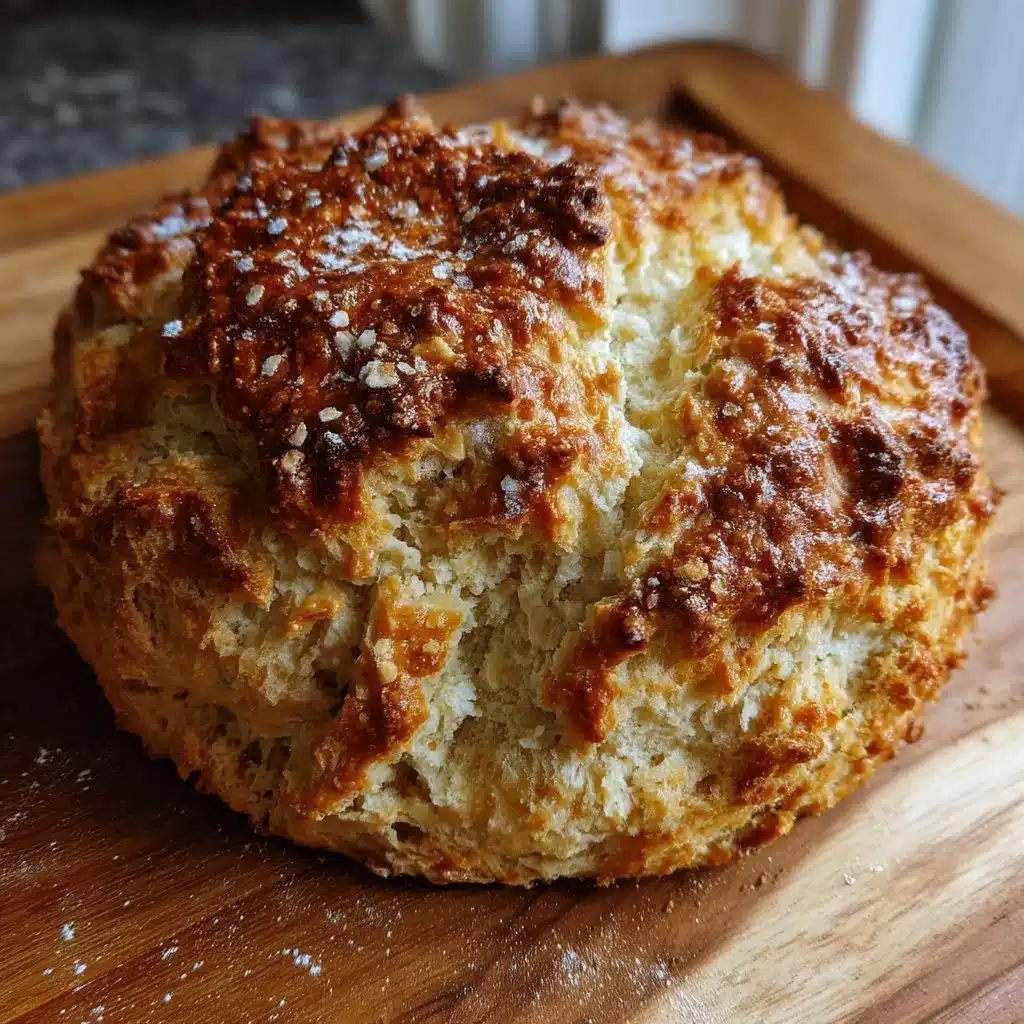
Because the batter comes together quickly, the trick is gentle handling and ensuring your wet and dry components meet at the right temperature and consistency. Overmixing can make the bread dense; underbaking leaves it gummy inside. This recipe balances hydration so the dough forms a workable round you can shape without becoming a wet sticky mess. The cross cut on top helps steam escape and gives the bread that iconic look while encouraging an even bake.
How to prepare Gluten-Free Irish Soda Bread
Start with room-temperature wet ingredients to help the baking soda react consistently. Measure the gluten-free flour by spooning it into a dry measuring cup and leveling it for accuracy, because these flours vary in weight more than wheat flour. Use a good-quality gluten-free all-purpose blend labeled for 1:1 baking to avoid extra adjustments. If your blend lacks xanthan gum, add 1/2 teaspoon to help with structure.
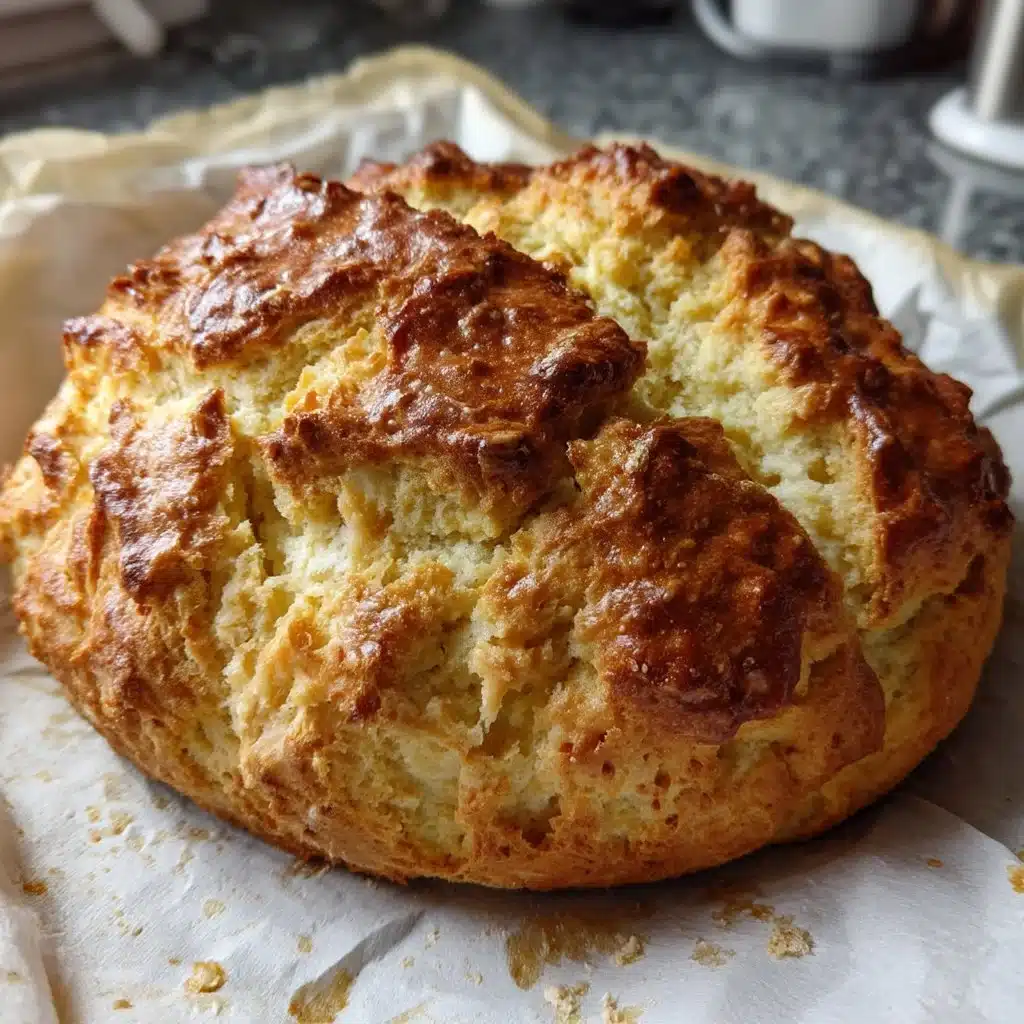
Work quickly once you combine wet and dry ingredients; the rise begins as soon as they touch. Turn the dough onto a lightly floured surface and shape it with minimal kneading—press and fold just enough to form a round. The cross cut on top acts as a visual cue for doneness and a release for steam, so use a sharp knife for a clean cut. Bake until the loaf sounds hollow when you tap the bottom and the crust reaches a warm, deep golden brown.
Ingredients
- 2 cups gluten-free all-purpose flour
- 1 teaspoon baking soda
- 1/2 teaspoon salt
- 1 tablespoon sugar
- 1 cup buttermilk
- 1 large egg
- 2 tablespoons melted butter
Instructions
- Preheat the oven to 375°F (190°C) and line a baking sheet with parchment paper.
- In a large bowl, mix the gluten-free flour, baking soda, salt, and sugar.
- In another bowl, whisk together the buttermilk, egg, and melted butter.
- Gradually add the wet ingredients to the dry ingredients, mixing until combined.
- Turn the dough out onto a floured surface and shape it into a round loaf.
- Place the loaf on the prepared baking sheet and cut a cross on top.
- Bake for 30-40 minutes, or until golden brown and hollow-sounding when tapped.
- Allow to cool before slicing.
Serving ideas
Serve this loaf warm with a pat of butter or a smear of jam for a comforting breakfast or snack. It pairs perfectly with hearty soups—potato-leek, cabbage, or beef stew—where its crumb soaks up broth without falling apart. For a savory platter, slice the bread and serve with strong Irish cheddar and thinly sliced ham or smoked salmon. You can also toast slices and top them with avocado and a sprinkle of flaky salt for a modern twist.
Cut a wedge and offer honey butter at brunch or keep it simple with salted butter so the bread’s subtle sweetness and tang from buttermilk shine. For a cozy dessert, toast slices, spread with a thin layer of jam, and broil briefly to caramelize the top.
How to store it properly
Cool the loaf completely before storing to prevent trapped steam from making the crust soggy. For same-day enjoyment, keep the bread at room temperature wrapped in a clean tea towel or in a paper bag to maintain a crisp exterior and a tender interior. If you plan to keep it for two days, store it in a loosely sealed container at room temperature to avoid drying out.
For longer storage, slice the loaf and freeze individual slices in a single layer on a tray, then transfer the frozen slices to a freezer bag. Toast or warm slices from frozen in a toaster or oven; this restores the crust while keeping the center tender. Avoid refrigerating the bread, as the cold air tends to accelerate staling and makes gluten-free crumb firmer.
DishGrub Kitchen Tips
Use the proper flour and measure carefully. Spoon your gluten-free flour into the measuring cup and level it with a knife instead of scooping, which compresses the flour and adds too much. If your blend does not include xanthan gum, add 1/2 teaspoon for better crumb integrity.
Keep the dough slightly tacky but not wet; it should hold together when you form the round. If it feels very dry, add a tablespoon of buttermilk; if it feels too sticky, dust lightly with more flour. Preheat the oven fully and use an oven thermometer if your oven runs hot or cool. A hot oven jump-starts the reaction between baking soda and buttermilk, giving you a good rise.
If you enjoy quick loaves, try a different simple loaf from our collection for technique cross-training, like our classic banana bread where similar tips on measuring and gentle mixing apply.
Recipe variations
Add 1/2 cup currants or raisins to the dry ingredients for a sweeter, traditional fruit soda bread. Fold them in gently to distribute without overmixing. For a savory twist, stir in a tablespoon of chopped fresh herbs—parsley, chives, or thyme—and 1/2 cup grated sharp cheddar before shaping. You can swap the sugar for 1 tablespoon of honey if you prefer a more complex sweetness; reduce the total liquid by a teaspoon if the dough seems too loose.
For a dairy-free version, substitute the buttermilk with a mixture of 1 cup unsweetened almond milk plus 1 tablespoon lemon juice, let it sit 5 minutes, and swap the melted butter for two tablespoons neutral oil. Note that the flavor and crumb will shift slightly but still remain satisfying.
Common questions
Q: Can I make this recipe without xanthan gum?
A: Many gluten-free all-purpose blends already contain xanthan gum or another binder. If your blend lacks it, add 1/2 teaspoon to the dry ingredients; this small addition helps the loaf hold together and improves sliceability. If you skip it entirely, expect a looser crumb that may crumble more when sliced. You can still make the bread, but plan to serve it in wedges instead of thin slices.
Q: How can I tell when the loaf is done without a thermometer?
A: Use three checks: the top should be golden brown, the bottom should sound hollow when you tap it gently with your knuckles, and a thin skewer inserted into the center should come out mostly clean with only a few moist crumbs attached. If it returns wet batter, give the loaf another 5 to 10 minutes in the oven and test again.
Q: Can I use powdered buttermilk instead of fresh buttermilk?
A: Yes. Reconstitute powdered buttermilk according to the package directions to equal 1 cup of liquid, or stir 1 cup of milk with 1 tablespoon lemon juice or vinegar and let it rest 5 minutes. The acid in buttermilk reacts with baking soda and gives the bread its characteristic rise and tang, so keep that acidic element whether you use fresh or powdered.
Q: Will this freeze well?
A: Yes. Wrap the cooled whole loaf tightly and freeze for up to three months, or freeze individual slices in a single layer before transferring them to a freezer bag. Thaw slices at room temperature or reheat directly from frozen in the toaster or oven for best texture.
Conclusion
For a gluten-free take on a time-honored quick bread, this recipe brings a golden crust, tender crumb, and simple ingredients into a loaf that feels like home. For another reliable gluten-free adaptation and extra tips, see this detailed guide on Gluten-free Irish Soda Bread.