Comfort food feels like a warm blanket for the dinner table. When I make this Japanese sweet potato curry, the house fills with cozy steam and gentle spice that pulls everyone into the kitchen. It tastes like the kind of meal you serve on a weekday when you want to slow down a little — soft, sweet chunks of potato, silky coconut milk, and curry that comforts more than it wakes. I remember serving this after a day of scraping ice from the car and watching my partner close the door with a grateful sigh. We sat down, bowls in our hands, and the room quieted as the first spoonfuls traveled warm and reassuring around the table.
I developed this version to be forgiving, quick, and rooted in pantry staples. It uses Japanese sweet potatoes for their firm, dense texture and sweet flavor that holds up to simmering. Coconut milk rounds the edges and makes a natural, dairy-free richness. Curry powder plays the lead, creating an approachable flavor profile that isn’t intimidating for picky eaters but has enough character to satisfy grown-up palates. I often double the batch because leftovers taste even better the next day; the flavors knit together overnight and make an excellent lunch that heats up in minutes.
At DishGrub, we test recipes until they work for real kitchens with real rhythms. We aim for dishes that live on repeat: simple ingredient lists, straightforward steps, and end results that feel like a hug. This curry fits the bill. It never requires specialty tools, and it adapts easily to what’s in your fridge. If you like creamy sides, try our creamy mashed potatoes alongside it for an extra comforting plate. We write for home cooks who want to feed people without fuss, so each recipe includes practical tips, sensible swaps, and serving ideas you can rely on on busy weeknights.
Why this recipe works
This curry balances sweetness, creaminess, and spice in a way that feels effortless. Japanese sweet potatoes retain their shape after simmering, so you get a satisfying bite rather than something that dissolves into the sauce. Coconut milk lends a silky mouthfeel and softens the curry powder without hiding its warm notes. Adding soy sauce pulls everything together by introducing a savory backbone that keeps the dish from tasting one-note sweet.
The method uses a single pot and mostly hands-off simmering, which reduces active time and cleanup. Sautéing the onion, garlic, and ginger at the start builds a flavor base quickly and efficiently. After you stir in the vegetables and curry powder, the coconut milk does the heavy lifting, simmering into a fragrant, spoonable sauce. This recipe scales easily: double it for company, or halve it for a small household. It also plays well with add-ins like chickpeas or tofu if you want extra protein.
How to prepare Japanese Sweet Potato Curry
This recipe keeps the steps straightforward so you can focus on flavor instead of technique. Sauté aromatics first, then add the sturdier vegetables, dust everything with curry powder, and finish with coconut milk and soy sauce. Let it simmer until the sweet potatoes are tender and the sauce thickens a little. Taste and adjust seasoning at the end so the curry maintains a bright, balanced profile.
Ingredients
- 2 Japanese sweet potatoes, peeled and diced
- 1 onion, chopped
- 2 cloves garlic, minced
- 1 tablespoon ginger, grated
- 2 carrots, sliced
- 1 bell pepper, chopped
- 1 can coconut milk
- 2 tablespoons curry powder
- 1 tablespoon soy sauce
- Salt and pepper to taste
- 2 tablespoons vegetable oil
- Fresh cilantro for garnish
Instructions
- In a large pot, heat the vegetable oil over medium heat. Add the onion, garlic, and ginger, and sauté until the onions are translucent.
- Add the diced sweet potatoes, carrots, and bell pepper. Stir to combine.
- Sprinkle the curry powder over the vegetables and mix well.
- Pour in the coconut milk and soy sauce, and bring the mixture to a boil.
- Reduce heat and let it simmer for about 20-25 minutes until the sweet potatoes are tender.
- Season with salt and pepper to taste.
- Serve hot, garnished with fresh cilantro.
How to serve this dish
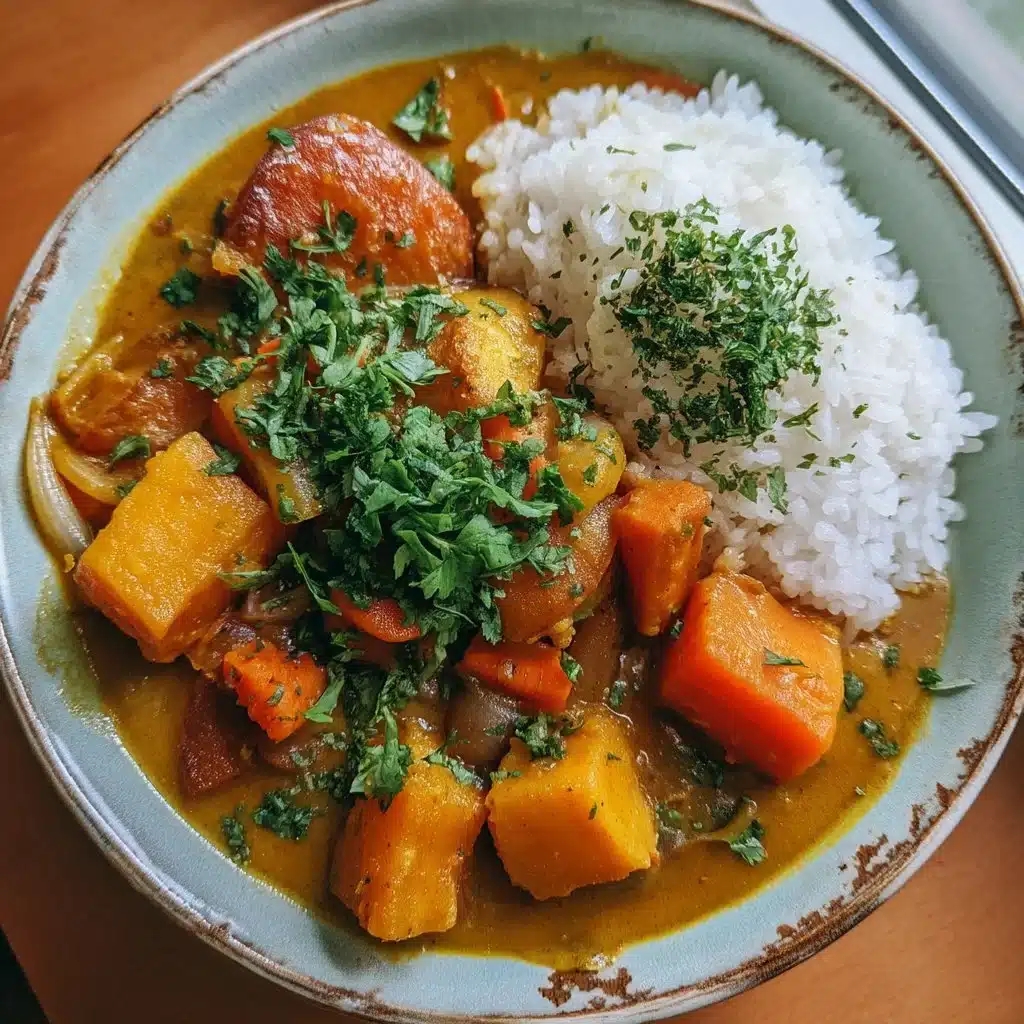
Serve this curry over steamed rice or short-grain rice for a classic, homey plate that soaks up the sauce. Spoon it over cooked quinoa for a lighter, nuttier base, or ladle the curry onto buttered toast for an informal, cozy meal. Top each bowl with fresh cilantro, a squeeze of lime, or sliced scallions to brighten the flavors right before serving.
For family-style dinners, place bowls of rice and the curry in the center of the table and let everyone assemble their own bowls. If you want a heartier main, stir in drained chickpeas or cubed firm tofu during the last 10 minutes of simmering. Add a side of quick cucumber salad or a simple green salad dressed with rice vinegar to introduce a crunchy, acidic contrast.
How to keep leftovers
Cool the curry at room temperature for no more than two hours, then transfer it to an airtight container and refrigerate. It will keep well for up to four days. Reheat gently on the stovetop over low heat, stirring occasionally and adding a splash of water or coconut milk if the sauce tightens too much in the fridge.
For longer storage, freeze portions in freezer-safe containers or heavy-duty freezer bags for up to three months. Thaw overnight in the refrigerator before reheating. Frozen curry sometimes separates a bit on reheat; whisk or stir vigorously as it warms to reincorporate the sauce. Label containers with the date so you rotate your freezer meals effectively.
DishGrub Kitchen Tips
Use these small adjustments to make the curry shine without adding complexity. Warm the pot and the oil before adding aromatics; this jump-starts flavor and avoids soggy onions. Grate the ginger instead of mincing it for a smoother, more integrated flavor. If you want a deeper, more caramelized base, cook the onions a little longer until they take on a light golden color.
If you prefer a thicker sauce, remove the lid during the last 10 minutes of simmering to reduce liquid. For a thinner sauce, add a splash of vegetable stock or water. Taste as you go and adjust seasoning with salt and soy sauce. If you want a richer finish, swirl in a tablespoon of peanut butter or a splash of lime juice before serving.
Consider pairing the curry with a creamy side for comfort on colder nights; our creamy mashed potatoes make a smooth, luxurious bed for ladling curry over, and they soak up every drop of sauce.
Make it your own
Customize this curry to match your pantry and preferences. Add protein: browned chicken thighs or browned ground pork work well, and canned chickpeas offer a quick vegetarian boost. Throw in greens like spinach or kale during the last few minutes for color and nutrients. Swap bell pepper for zucchini or eggplant if you prefer a softer texture.
Adjust spice level by choosing hot curry powder or adding a pinch of cayenne. If you want more tang, finish with a squeeze of lime or a teaspoon of rice vinegar. For a nuttier profile, stir in a spoonful of sesame paste or almond butter near the end of cooking. This recipe welcomes improvisation, so taste and tweak until it matches your family’s comfort-food sweet spot.
Frequently asked questions
Q: Can I use other types of sweet potatoes or regular potatoes?
A: Yes, you can substitute other sweet potatoes, but note that Japanese sweet potatoes hold their shape and offer a firm, dense texture that shines in this curry. Orange-fleshed sweet potatoes will soften faster and may break down into the sauce; reduce simmer time to preserve some bite. Yukon gold or red potatoes work if you prefer a less sweet, creamier potato — adjust cooking time until the pieces reach your desired tenderness.
Q: How can I make this curry vegan or add protein?
A: This version already uses coconut milk and vegetable oil, so it stays vegan if you avoid animal proteins. To add plant-based protein, stir in a can of drained chickpeas in step 4 or toss in cubed, pressed tofu during the last 10 minutes of simmering so it warms through without falling apart. For an omnivore version, brown bite-sized chicken or diced pork in the pot after step 1, then continue with the recipe by adding the vegetables and curry powder.
Q: My curry tastes bland. How do I brighten it up?
A: Layered seasoning matters here. First, make sure you sauté the onion, garlic, and ginger long enough to release their flavors. Add a bit more curry powder or use a fresher jar if the spice lacks punch. A splash of soy sauce adds umami depth; a small squeeze of lime or a teaspoon of rice vinegar just before serving will lift the flavors and counterbalance the coconut milk’s sweetness. Finish with fresh herbs like cilantro or scallions for a fresh note.
Q: Can I make this in a slow cooker or Instant Pot?
A: For slow cooker use, brown aromatics first on the stovetop, then transfer to the slow cooker with the vegetables, curry powder, coconut milk, and soy sauce. Cook on low for 3–4 hours or high for 1.5–2 hours until the sweet potatoes are tender. In an Instant Pot, use the sauté function for the aromatics, add the ingredients, seal, and cook on high pressure for 6 minutes followed by a quick release. Both methods work well; just check texture and adjust liquid as needed.
Conclusion
If you want a classic reference to build on, the traditional Japanese Curry with Carrots, Potato and Sweet Potato offers a great example of similar flavor foundations and ingredient ideas you can adapt for your own kitchen.