Warm bowls and the soft clink of spoons bring people together. When the air cools and schedules slow down, this curry feels like a welcome pause—comfort in a spoon. It warms hands, fills bellies, and asks little more than good company and a steaming pile of rice.
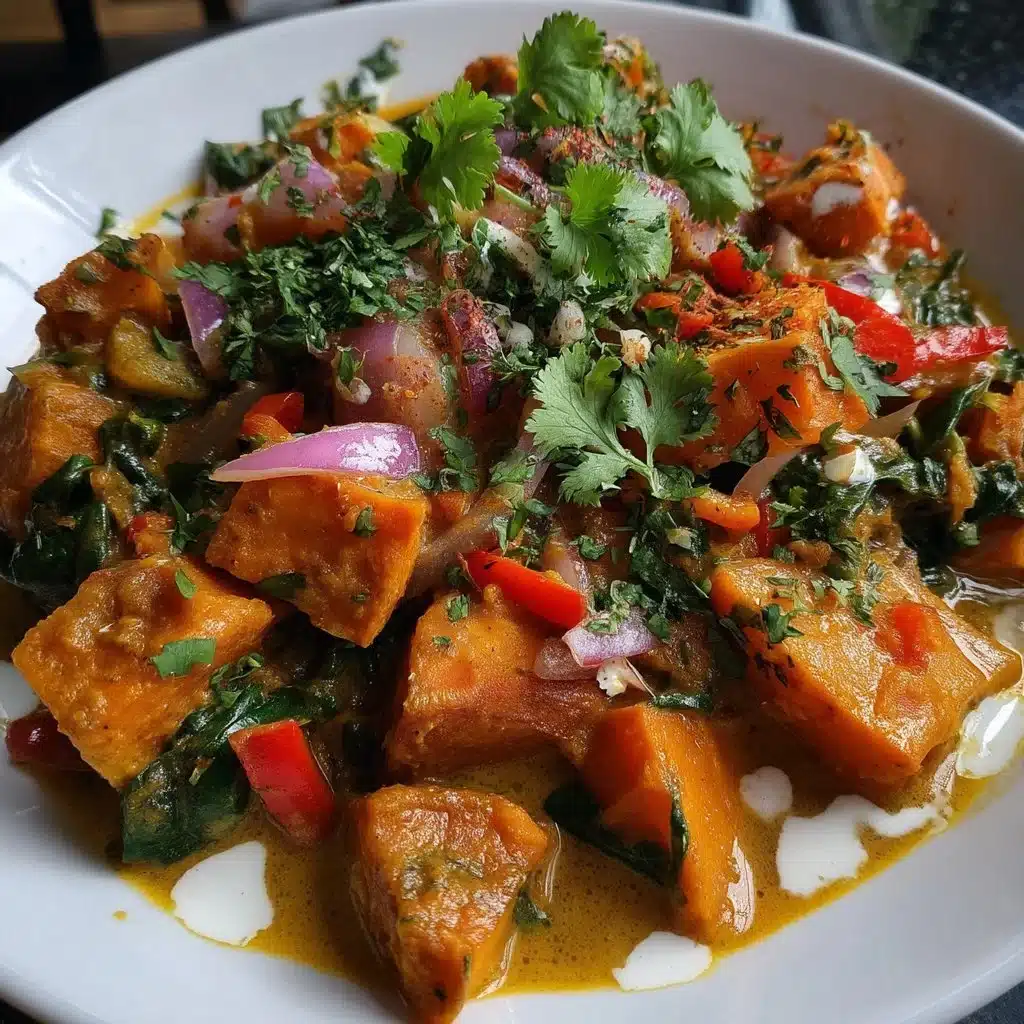
I started making this Thai sweet potato curry on weeknights when I needed dinner that felt special without a lot of fuss. The sweetness of the potatoes and coconut milk balances the bright heat from red curry paste, and a handful of spinach at the end keeps it light and homey. It comes together in one pot, which means less cleanup and more time to sit at the table. Serve it with rice, a crusty baguette, or over roasted veggies for a cozy, satisfying meal.
At DishGrub we test every recipe until it works in a real kitchen with a real schedule. We refine steps so you get consistent results without extra fuss. That means clear pantry swaps, quick tips to fix flavor, and serving ideas a busy family will actually welcome. This curry is one of those tested winners: forgiving to substitutions, fast enough for evenings, and packed with flavor that tastes thoughtful even on a rushed night. For a classic comfort pairing, try it alongside our creamy mashed potatoes recipe for a truly cozy spread.
Why this recipe stands out
This sweet potato curry earns its place in the weeknight rotation because it hits the comfort trifecta: creamy texture, bold flavor, and minimal effort. Coconut milk gives the dish a silky body that clings to tender sweet potato cubes, while red curry paste brings a fragrant, lemongrass-and-chili warmth that doesn’t overpower. You get a layered flavor profile with a short ingredient list and straightforward technique.
The recipe also adapts well. Use bone broth, swap sweet potatoes for butternut squash, or toss in chickpeas for added protein without losing the essence of the dish. The method—sauté aromatics, bloom the curry paste, simmer the vegetables—creates consistent results no matter what swaps you make. It’s a smart weeknight recipe that behaves like a restaurant dish but starts on your stovetop.
How to prepare Thai Sweet Potato Curry
This recipe focuses on efficient, sequential steps to build flavor without a lot of babysitting. Sauté the onion, garlic, and ginger until the onion softens so the aromatics release their oils. Blooming the red curry paste in the hot oil concentrates its flavors and deepens the color of the sauce. Simmering the sweet potatoes in coconut milk and broth lets the tubers soften while infusing the curry base.
Finish with quick additions—bell pepper for crunch, spinach for color and nutrients, and a squeeze of lime to brighten the whole pot. A splash of soy sauce adds umami and helps round out the coconut’s sweetness. The result tastes layered and well-balanced even though it takes under 40 minutes from start to table.
Ingredients
- 2 large sweet potatoes, peeled and diced
- 1 can (13.5 oz) coconut milk
- 1 tablespoon red curry paste
- 1 onion, chopped
- 2 cloves garlic, minced
- 1 tablespoon ginger, minced
- 2 cups vegetable broth
- 1 red bell pepper, sliced
- 2 cups spinach
- 1 tablespoon soy sauce
- 1 tablespoon lime juice
- 2 tablespoons oil for cooking
- Salt to taste
- Fresh cilantro for garnish
Instructions
- Heat oil in a pot over medium heat. Add onions, garlic, and ginger, and sauté until onions are translucent.
- Add red curry paste and cook for another minute, stirring constantly.
- Combine diced sweet potatoes, coconut milk, vegetable broth, and soy sauce. Bring to a boil, then reduce heat and simmer until sweet potatoes are tender (about 15-20 minutes).
- Add bell pepper and cook for an additional 5 minutes.
- Stir in spinach until wilted, then remove from heat and add lime juice.
- Season with salt to taste and garnish with fresh cilantro before serving.
Serving ideas
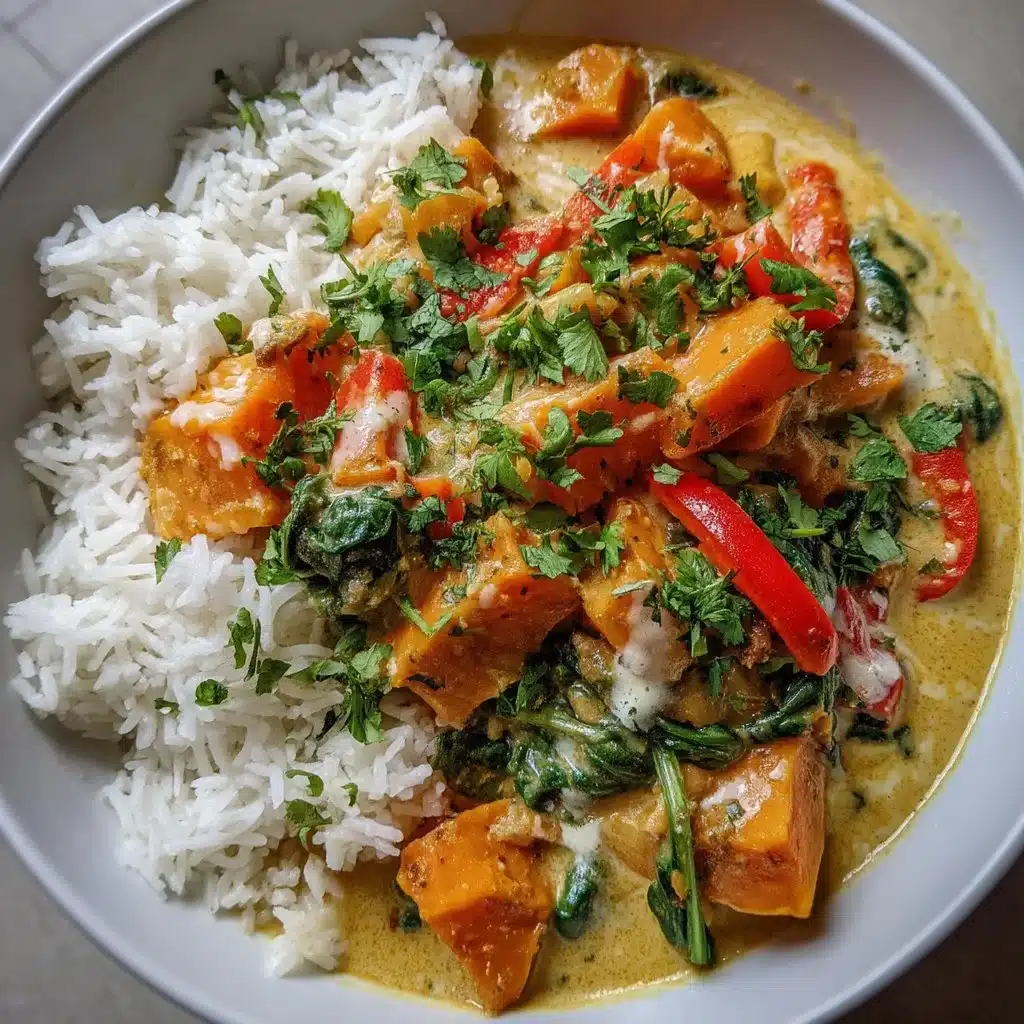
Serve this curry over steaming jasmine or basmati rice to catch the sauce and add a neutral grain that balances the coconut richness. For a lower-carb option, spoon it over cauliflower rice or roasted cauliflower steaks. If you want extra texture, top bowls with roasted peanuts or toasted coconut flakes for crunch and an extra layer of flavor.
For family-style dinners, set out bowls of chopped cilantro, lime wedges, and thinly sliced red chile for anyone who wants more brightness or heat. Leftovers make excellent lunch bowls—reheat gently on the stovetop and add a splash of water if the sauce tightens.
Storage tips
Cool the curry to room temperature before refrigerating to protect texture and flavor. Store in an airtight container for up to 4 days. When reheating, warm gently over medium-low heat and add a splash of broth or water if the coconut milk separates or thickens. Avoid overheating, which can cause the coconut milk to split.
You can also freeze this curry for up to 3 months. Portion it into freezer-safe containers and defrost overnight in the refrigerator before reheating. Remember that fresh greens like spinach will soften more after freezing, so consider adding a handful of fresh spinach when you reheat if you want a brighter texture.
DishGrub Kitchen Tips
Use full-fat coconut milk for the creamiest texture—light versions tend to thin the sauce. If you like more heat, increase the red curry paste by a teaspoon and add a pinch of chili flakes. Taste early and often: a little lime juice at the end lifts the entire pot, while salt and soy sauce balance the sweetness.
If your curry tastes flat, stir in a teaspoon of brown sugar or a splash more lime to bring it alive. If it tastes too salty, add a bit more coconut milk or a peeled, diced potato to mellow the seasoning as it simmers. For a classic comfort pairing, serve this curry alongside creamy mashed potatoes for a hearty, homey spread that everyone will dig into.
Recipe variations
Make this curry vegetarian or vegan by keeping the vegetable broth and skipping animal proteins. For added protein, stir in a can of drained chickpeas during the last 10 minutes of simmering, or add cubed tofu browned in a separate pan for texture. Swap sweet potato for butternut squash, pumpkin, or even cubed carrots—each delivers a slightly different sweetness that pairs well with the curry base.
For a nutty twist, incorporate a tablespoon of peanut butter or almond butter into the simmering liquid for a satay-like depth. If you prefer a lighter broth, reduce the coconut milk by half and make up the difference with more broth. Play with herbs—Thai basil or mint at the end gives a fresh, floral note that lifts the curry.
Common questions
Q: Can I use store-bought curry paste, and which one is best?
A: Yes, store-bought red curry paste works well and keeps this recipe quick. Start with a quality paste that lists real ingredients like red chilies, lemongrass, and galangal. Brands vary in heat and salt, so taste the curry after you add a teaspoon or tablespoon and adjust from there.
Q: How do I make this gluten-free?
A: The recipe is naturally gluten-free if you use tamari or a certified gluten-free soy sauce alternative. Double-check your curry paste label—some pastes include shrimp paste or other non-gluten-free additives, but many versions remain gluten-free.
Q: Can I reduce the fat without losing flavor?
A: You can use light coconut milk and increase the broth, but the curry will taste less rich. Boost flavor by adding extra aromatics—more ginger or a splash of toasted sesame oil at the end—and finish with lime juice to keep the flavor bright. Adding starchy vegetables like potatoes can help the sauce feel thicker.
Q: How do I prevent sweet potatoes from falling apart?
A: Cut sweet potatoes into uniform, slightly larger cubes if you want them to hold up during simmering. Simmer gently rather than violently boiling; a rolling boil can break up starchy vegetables faster. If you prefer firmer pieces, start checking tenderness at 12 minutes.
Q: Can I make this in a slow cooker or Instant Pot?
A: Yes. In an Instant Pot, sauté the aromatics with the sauté function, add the curry paste and cook briefly, then add remaining ingredients and pressure cook on high for 6 minutes with a quick release. For a slow cooker, brown aromatics on the stove, then add everything and cook on low for 4–6 hours until sweet potatoes are tender. Add spinach at the end so it stays bright.
Conclusion
This Thai sweet potato curry delivers cozy comfort and bright flavor with minimal fuss, and it adapts well to what you have on hand. If you want a slightly different take or more detailed timing and photo guidance, try Pinch of Yum’s creamy Thai sweet potato curry for extra inspiration and visuals.