I still remember the first time I made chimichurri steak for a crowd. I had a cast-iron skillet that practically hummed when it got hot, a pile of bright green parsley, and a kitchen that smelled like garlic and vinegar before the meat even touched the pan. Friends arrived hungry, kids chased each other in the yard, and the steaks sizzled in a way that made everyone pause. The sauce—a simple, herb-forward mix—cut through the richness of the beef and turned a regular weeknight into a small celebration. That night taught me that a few fresh ingredients and a hot pan deliver more than flavor; they deliver a feeling of warmth and togetherness around any table.
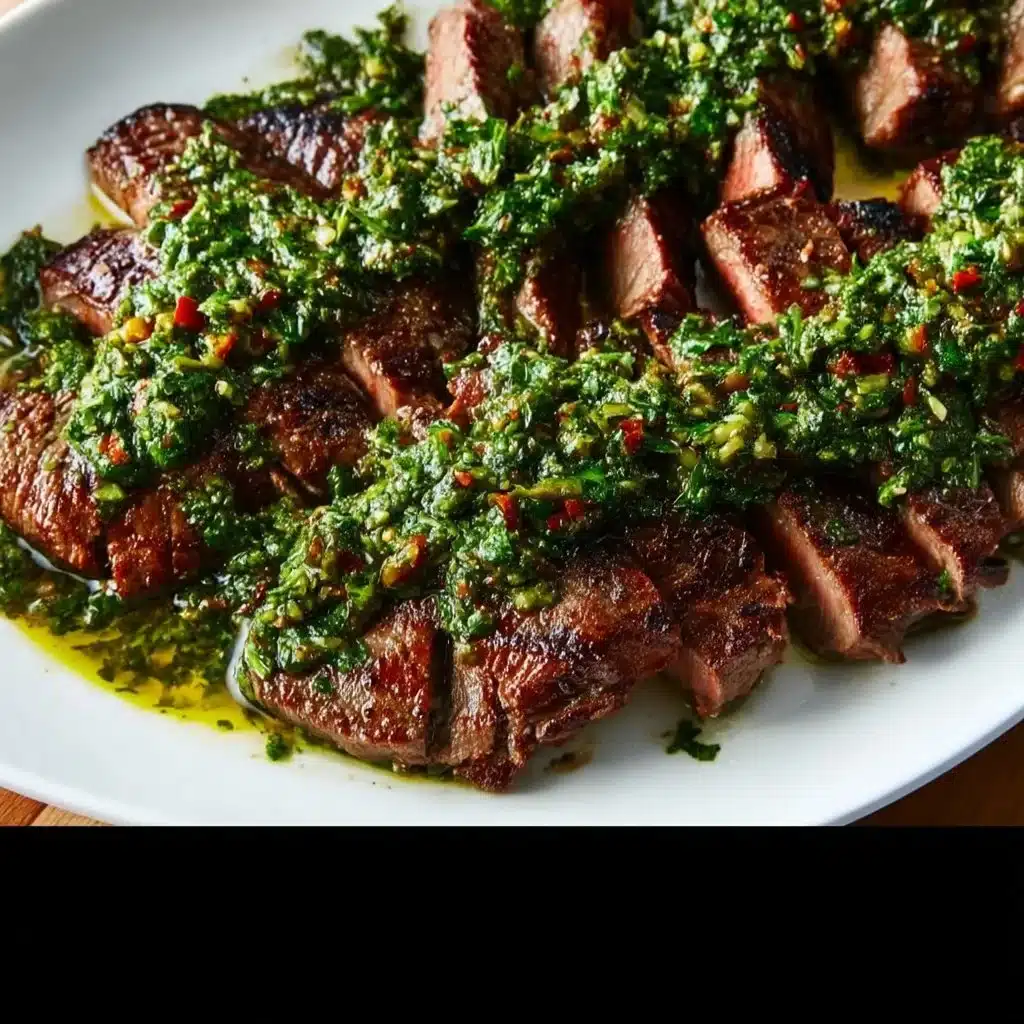
This recipe works in the same spirit: make the chimichurri ahead, sear the steaks hot and fast, rest them just long enough, and slice against the grain. The contrast between the charred crust and the herbaceous sauce feels both rustic and delightfully bright. You can serve this at a casual dinner or bring it to a potluck; it travels well and looks impressive without asking for complicated techniques. I love how the chimichurri keeps its fresh punch even after a short rest, and how a single sauce can make two steaks feed a family with leftovers for sandwiches the next day.
Comfort food connects people. We cook to nourish and to gather. That happens when a simple steak becomes something to pass around, when a green sauce livens up every bite, and when cleanup stays reasonable so conversation takes center stage. If you enjoy unfussy, satisfying meals that still earn compliments, this recipe fits right into that rhythm. For another take on hearty skillet-cooked beef, try our chicken-fried steak recipe—it delivers the same comfort with a Southern twist.
Why this recipe works
A few ideas keep this chimichurri steak reliably successful in home kitchens. High heat gives the steak a Maillard crust that tastes savory and caramelized, and quick cooking preserves a tender, juicy interior. Bringing the steaks to room temperature before cooking eliminates the chill that can slow down searing and cause uneven doneness. Patting the meat dry removes surface moisture so the pan can actually brown the steak instead of steaming it.
The chimichurri itself balances bright acid and garlic with plenty of olive oil to carry flavor. Letting the sauce rest for at least 10 minutes at room temperature allows the garlic and herbs to soften and mingle with the vinegar, giving you an immediate hit of brightness when you spoon it over the warm meat. Resting the steaks under loose foil after searing keeps the juices inside and makes slicing neater. Finally, cutting against the grain creates short meat fibers that feel tender with each bite. These small steps add up to big flavor with minimal fuss.
How to prepare Chimichurri Steak
Ingredients
- 2 ribeye or New York strip steaks, about 1.5 inches thick
- 2 tbsp olive oil
- Salt and freshly ground black pepper, to taste
- 1 cup fresh parsley leaves, finely chopped
- 3 garlic cloves, minced
- 2 tbsp fresh oregano leaves, finely chopped (or 1 tbsp dried oregano if fresh isn’t available)
- 1/2 cup extra virgin olive oil
- 2 tbsp red wine vinegar
- 1/2 tsp red pepper flakes
- 1/2 tsp salt, or to taste
- 1/4 tsp freshly ground black pepper
Instructions
-
Remove the steaks from the refrigerator 30 to 45 minutes before cooking to bring them to room temperature.
-
Combine the parsley, garlic, and oregano in a medium bowl.
-
Add the extra virgin olive oil, red wine vinegar, red pepper flakes, salt, and black pepper to the bowl and stir well to blend.
-
Taste the chimichurri and adjust seasoning if needed, then set it aside at room temperature for at least 10 minutes to allow flavors to meld.
-
Pat the steaks dry with a paper towel to remove surface moisture.
-
Generously season both sides of the steaks with salt and freshly ground black pepper, pressing the seasoning into the meat.
-
Place a cast-iron skillet or grill pan over high heat and let it heat for 3 to 5 minutes until very hot.
-
Add 2 tablespoons of olive oil to the hot pan and swirl to coat it evenly.
-
Carefully place the steaks in the pan and sear without moving for 3 to 4 minutes on the first side until a deep golden-brown crust forms.
-
Flip the steaks and cook for another 3 to 4 minutes on the other side for medium-rare, adjusting time for preferred doneness.
-
Transfer the steaks to a cutting board and loosely cover them with foil, allowing them to rest for 5 to 10 minutes.
-
Slice the steaks against the grain into 1/4-inch-thick slices.
-
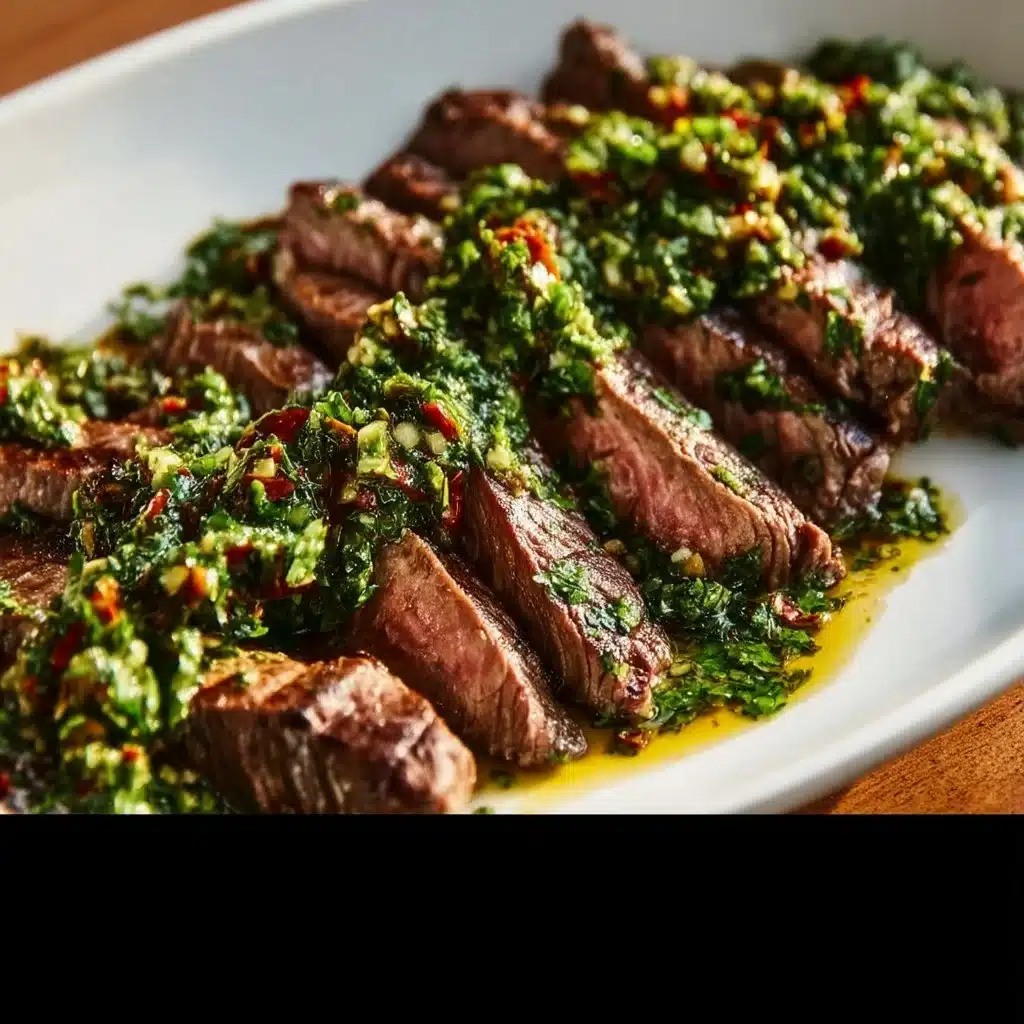
Arrange the slices on a serving plate and drizzle a generous amount of chimichurri sauce over the sliced steak.
-
Serve immediately with extra chimichurri on the side for dipping.
How to serve this dish
Serve chimichurri steak with simple sides that let the sauce shine. Roasted or smashed potatoes soak up juices and contrast the herbs. A crisp green salad with vinaigrette keeps the meal light and fresh. For a casual plate, tuck sliced steak into warm tortillas with a spoonful of chimichurri, pickled onions, and a wedge of lime for handheld tacos.
For a family-style dinner, lay the sliced steak on a large platter and spoon chimichurri across the top so everyone helps themselves. Offer lemon wedges and extra red pepper flakes so people can adjust brightness and heat. If you plan to serve this at a barbecue, keep the sauce in a small bowl on the side so guests add as much or as little as they like.
How to keep leftovers
Cool leftover steak and chimichurri quickly and store components separately for best texture. Place the sliced beef in an airtight container and refrigerate within two hours of cooking; it will keep 3 to 4 days. Store the chimichurri in a sealed jar or container in the refrigerator for up to 5 days; give it a good stir before using since the oil can separate.
For longer storage, freeze the cooked steak slices in a single layer on a sheet tray, then transfer them to a freezer bag for up to 2 months. Thaw overnight in the refrigerator and refresh the meat briefly in a hot skillet to regain some surface crisp before serving. Do not freeze chimichurri if you want the freshest texture, but you can freeze it in an ice cube tray and pop a cube into a reheated dish as a convenient flavor boost.
DishGrub Kitchen Tips
Use a heavy-bottomed pan, ideally cast iron, because it holds heat and promotes even browning. Heat the pan until the oil shimmers but does not smoke; that moment gives you an efficient sear without burning the fat. When seasoning, be bold on the outside—steaks need a confident layer of salt and pepper to build flavor.
Always slice against the grain: look for the direction the muscle fibers run and cut perpendicular to them. That simple habit makes even a chewier cut feel tender. If you want more heat in the chimichurri, increase the red pepper flakes or stir in a teaspoon of smoked paprika for a subtle smoky note. For a citrus lift, add a teaspoon of lemon zest to the chimichurri just before serving. If you want another hearty dinner idea that stays on the easy comfort-food side, try our take on chicken-fried steak for a different but equally satisfying meal.
Make it your own
Swap the cut: skirt or flank steak works well thin-sliced against the grain; reduce cooking time to account for thinner steaks. Add chopped cilantro to the chimichurri for a brighter, more Latin-forward flavor. For a smoky twist, finish the sauce with a tablespoon of good smoked paprika or grill the steaks over charcoal and let the smoke carry into the meat and sauce.
Turn the leftovers into new meals: chop the steak and toss with arugula, roasted peppers, and extra chimichurri for a quick steak salad. Or layer slices into a crusty roll with pickled vegetables for a satisfying sandwich. Experiment with vinegars—white wine or sherry vinegar brings different acidity profiles, while lemon juice creates a fresher snap.
Common questions
Q: Can I make chimichurri ahead of time?
A: Yes. You can make chimichurri up to 24 hours ahead and refrigerate it. The flavor deepens as the herbs mingle with the oil and vinegar. Bring it to room temperature or give it a quick stir before serving so the oil re-emulsifies and the flavors pop. If you plan to store it longer than a few days, keep it in a sealed jar and check the aroma before serving.
Q: How do I know when the steak is done without a thermometer?
A: Use touch and timing. For a 1.5-inch steak, sear 3 to 4 minutes per side over high heat for medium-rare. Press the center lightly: a soft, squishy feel indicates rare; slightly firmer with some bounce indicates medium-rare to medium; firm with little give indicates well-done. For the most consistent results, use an instant-read thermometer: 125°F for rare, 135°F for medium-rare, 145°F for medium. Remember the steak will rise about 5°F while it rests.
Q: Can I use dried herbs if I don’t have fresh parsley or oregano?
A: Fresh herbs give chimichurri its bright, grassy character, but you can use dried herbs in a pinch. Use about one-third the amount of dried herbs compared with fresh—so approximately 1 tablespoon of dried parsley and 1 teaspoon of dried oregano—and add them earlier so they hydrate in the oil and vinegar. The flavor will differ from fresh chimichurri but will still add herbaceous notes to the steak.
Q: Will chimichurri go bad if left on the counter during a party?
A: Chimichurri contains oil and acid, which helps preserve it short-term, but it still contains fresh garlic and herbs. Outside the refrigerator, keep chimichurri in a shallow bowl and replace it every few hours if left out for a long party. For safety and the best taste, refrigerate leftovers within two hours. If you plan to leave a bowl on the table for extended serving, consider replenishing small serving bowls from a chilled container to keep the bulk cold.
Conclusion
For a bright, easy sauce that elevates a simple sear, the chimichurri-steak combination delivers every time; if you want another take on grilling and sauces, see Skirt Steak with Chimichurri Sauce – RecipeTin Eats for more inspiration and variations.