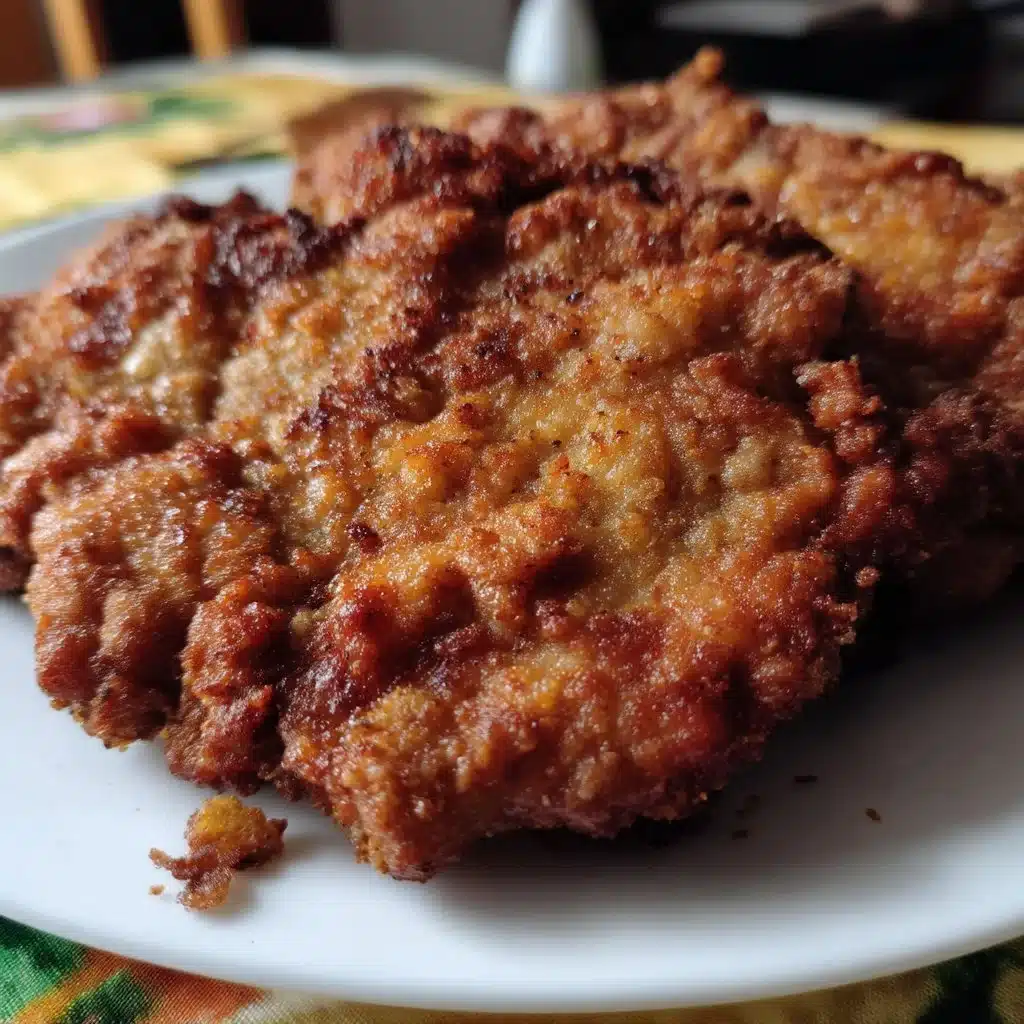
I grew up around a table where dinners meant a pause in the day and a chance to trade stories. Chicken fried steak showed up on those evenings when someone needed a hug in the form of food crunchy, golden crust giving way to tender meat and a pool of peppery gravy. The method looks fancy to diners, but it depends on simple moves and ordinary pantry staples. That combination makes it one of the most reliable comfort foods: it feeds a crowd, warms a room, and holds its own with mashed potatoes, green beans, or a bright salad. You can make it on a weeknight or on a Sunday when the house smells like something special and everyone lingers a little longer at the table.
I love this recipe because it balances texture and flavor without requiring hours of prep. Buttermilk tenderizes the cube steak while the seasoned flour builds that iconic crust. A shallow fry gives you even browning and a satisfying crunch without deep-frying a vat of oil. If you watch your oil temperature and give the steak room in the pan, you’ll get beautifully crisp edges and juicy meat inside every time. Serve it hot and don’t skip the gravy it takes the whole plate up a notch.
DishGrub tests recipes in small kitchens and big appetites, focusing on the dishes you return to again and again. We streamline techniques, highlight tiny, helpful swaps, and write like we’re standing beside you mixing the batter. Our goal remains steady: deliver cozy, practical recipes that make feeding family and friends simpler and more joyful. For a different kind of homey dinner that still feels like a warm hug, check this classic chicken pot pie recipe that pairs well with tonight’s menu.
Why you’ll love this dish
This chicken fried steak recipe gives you the best parts of Southern comfort without a long ingredient list. You get a tender steak thanks to the buttermilk soak, and a flavorful, golden crust from a seasoned flour dredge. The technique uses a skillet and a modest amount of oil, and the cooking time stays short, so you don’t need to babysit the stove all evening.
The dish works for busy cooks because you can prep the steaks ahead of time: marinate them in buttermilk in the morning or overnight, then dredge and fry when you’re ready to eat. The crunchy coating holds up well against sides like mashed potatoes or creamed corn, and it reheats nicely the next day if you keep it crisp in the oven. If you want a hands-off gravy, whisk pan drippings into milk and a little extra flour for an instant sauce that brings the whole plate together.
How to prepare Chicken Fried Steak
This method focuses on straightforward steps that deliver consistent results. Keep your pan roomy enough that each steak has breathing room crowding the pan lowers the oil temperature and leads to greasy crusts. Use a simple seasoned flour mix so the coating stays classic and balanced, and press it on to make sure it sticks. Maintain medium-high heat for browning; adjust slightly if the crust darkens too fast before the steak finishes cooking.
Ingredients
- 1 pound cube steak
- 1 cup buttermilk
- 1 cup all-purpose flour
- 1 teaspoon paprika
- 1/2 teaspoon garlic powder
- 1/2 teaspoon onion powder
- Salt and pepper to taste
- Vegetable oil for frying
Instructions
-
Marinate the cube steak in buttermilk for at least 1 hour (or overnight for better flavor).
-
In a shallow dish, mix together the flour, paprika, garlic powder, onion powder, salt, and pepper.
-
Heat vegetable oil in a large skillet over medium-high heat.
-
Remove the steak from the buttermilk, allowing excess to drip off. Dredge the steak in the flour mixture, pressing to coat well.
-
Fry the steak in hot oil for about 4-5 minutes on each side until golden brown and cooked through.
-
Drain on paper towels and serve hot.
How to serve this dish
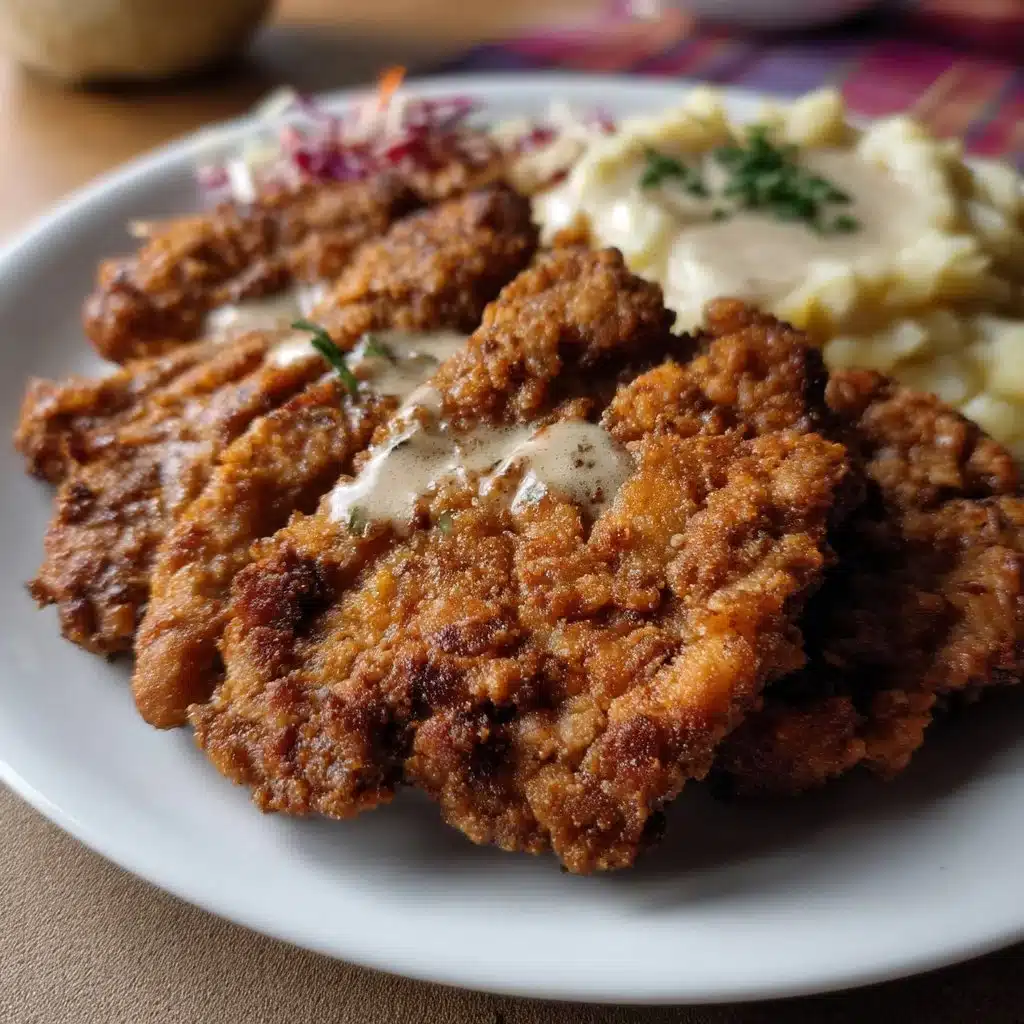
Serve chicken fried steak while it still crackles at the edges. I like to plate it beside a mound of creamy mashed potatoes and ladle warm gravy across the top so the potatoes soak up the sauce. A simple steamed vegetable, like green beans or buttered peas, brings color and brightens the plate. For weeknight dinners, a bowl of quick coleslaw or a crisp green salad adds a refreshing contrast to the crunchy, rich steak.
If you host, turn it into a family-style spread: put the steaks on a platter, pass the gravy in a pouring jug, set out mashed potatoes in a bowl, and let people build their own plates. For a lighter meal, slice the steak and serve it over buttered egg noodles with a scattering of chopped parsley. Leftovers also make a wonderful sandwich press the steak into a soft roll, add pickles and a smear of mayo, and you have a hearty lunch.
How to keep leftovers
Store any cooled leftovers in an airtight container in the refrigerator for up to 3 days. To keep the crust from getting soggy, separate the steak from any gravy and keep them in different containers. Reheat the steak in a 375°F oven on a baking sheet for 8–10 minutes until the crust crisps back up. If the steak seems dry, cover it loosely with foil for part of the reheating time and remove the foil near the end to restore crunch.
If you want to freeze for longer storage, wrap the cooled steaks individually in plastic wrap and place them in a freezer bag. Freeze up to 2 months. Thaw overnight in the refrigerator before reheating and crisping in the oven. Reheat frozen gravy slowly on the stove with a splash of milk, stirring until smooth and heated through.
DishGrub Kitchen Tips
Keep these practical notes on hand to avoid common pitfalls and get reliable results every cook night.
-
Use room-temperature steaks: Take the pan out of the refrigerator 20 minutes before cooking so the steak cooks more evenly.
-
Control your oil temperature: Heat the oil until it shimmers but doesn’t smoke. If it smokes, lower the heat. If it’s too cool, the crust will absorb oil and become heavy.
-
Don’t crowd the pan: Fry in batches so each steak gets full exposure to the hot oil. Overcrowding reduces temperature and ruins crispness.
-
Press the flour coating: After dredging, give the steak a gentle press so the coating adheres well and won’t fall off during flipping.
-
Test one steak first: Cook one piece to check seasoning and doneness, then adjust your timing and salt for the rest.
Make it your own
You can adapt this recipe to match what you have on hand or to create a flavor twist.
-
Spice it up: Add 1/4 teaspoon cayenne or a pinch of chili powder to the flour mix for heat.
-
Herb crunch: Mix 1 tablespoon of finely chopped fresh parsley or thyme into the flour before dredging for a bright herb note.
-
Cornflake crust: For an extra-crispy texture, use crushed cornflakes in a 50/50 mix with flour for the final dredge.
-
Gluten-free option: Swap the all-purpose flour for a gluten-free flour blend and use gluten-free crackers crushed for texture if desired.
-
Buttermilk substitute: If you don’t have buttermilk, stir 1 tablespoon of vinegar or lemon juice into 1 cup of milk and let it sit for 10 minutes to thicken and tang.
Common questions
Q: Can I skip the buttermilk soak?
A: You can skip it, but buttermilk tenderizes the meat and adds a mild tang that complements the crust. If you skip it, consider marinating the steak in a little milk with a splash of vinegar for at least 30 minutes to help tenderize.
Q: What size and cut of meat works best?
A: Cube steak works best because it already comes tenderized, which means thin portions cook quickly while staying juicy. If you use a thin round steak or sirloin, pound it lightly to an even thickness so it cooks uniformly.
Q: How do I make the gravy from pan drippings?
A: After frying, remove all but about 2 tablespoons of oil from the skillet, leaving any browned bits. Whisk in 2 tablespoons of flour and cook briefly to form a roux. Gradually whisk in 1 to 1 1/2 cups of milk until smooth. Simmer and whisk until the gravy thickens. Season with salt and black pepper to taste, and add a splash of hot sauce for a little depth if you like.
Q: How do I know when the steak is done?
A: Since cube steak slices are thin, the crust should turn deep golden brown and the meat should feel firm but still springy. If you prefer checking temperature, aim for an internal temperature around 145°F for beef, but many cooks rely on timing and the visual cues for this thin cut.
Q: Can I make this in a cast-iron skillet?
A: Yes. Cast iron holds heat well and creates an excellent crust. Watch closely so the exterior doesn’t darken too fast you may need to lower the heat slightly compared with a stainless steel pan.
Conclusion
For a classic, comforting plate that you can make without fuss, this chicken fried steak hits all the right notes crisp exterior, tender meat, and gravy that ties everything together. If you’re looking for another tried-and-true home dinner, you’ll enjoy this Best Chicken Fried Steak Recipe for a slightly different take and extra tips.
Print
Chicken Fried Steak
- Total Time: 70 minutes
- Yield: 4 servings
- Diet: None
Description
A classic Southern comfort dish featuring tender cube steak with a crunchy, golden crust served with rich peppery gravy.
Ingredients
- 1 pound cube steak
- 1 cup buttermilk
- 1 cup all-purpose flour
- 1 teaspoon paprika
- 1/2 teaspoon garlic powder
- 1/2 teaspoon onion powder
- Salt and pepper to taste
- Vegetable oil for frying
Instructions
- Marinate the cube steak in buttermilk for at least 1 hour (or overnight for better flavor).
- In a shallow dish, mix together the flour, paprika, garlic powder, onion powder, salt, and pepper.
- Heat vegetable oil in a large skillet over medium-high heat.
- Remove the steak from the buttermilk, allowing excess to drip off. Dredge the steak in the flour mixture, pressing to coat well.
- Fry the steak in hot oil for about 4-5 minutes on each side until golden brown and cooked through.
- Drain on paper towels and serve hot.
Notes
Serve with mashed potatoes and green beans for a classic meal. Leftovers can be reheated in the oven to keep the crust crunchy.
- Prep Time: 60 minutes
- Cook Time: 10 minutes
- Category: Main Course
- Method: Frying
- Cuisine: Southern