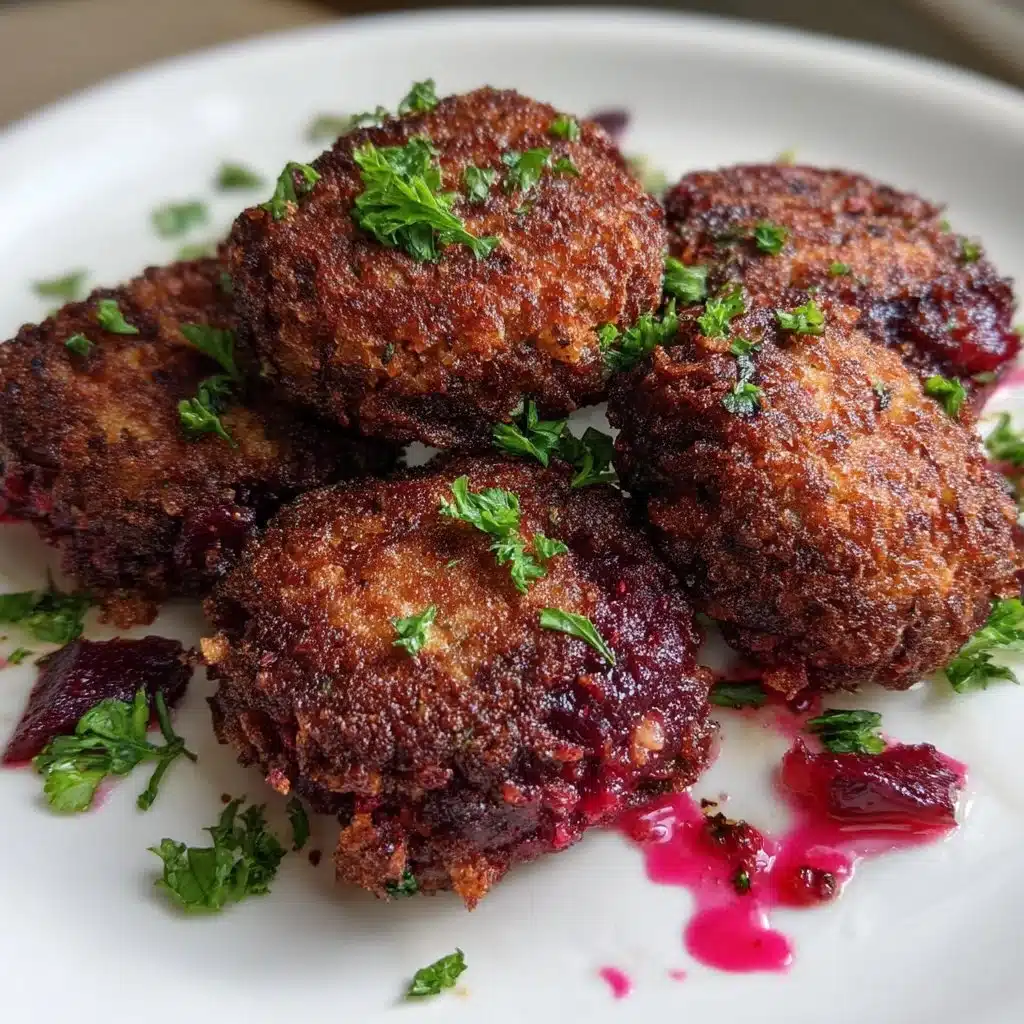
Comfort food has a way of wrapping the day up in a warm blanket. When the kitchen lights glow and the smell of something sizzling fills the house, people lean in closer—kids, partners, roommates, neighbors—because food like this invites conversation and company. Beet bulgur fritters do that in their own humble way: they bring color to the plate, a bit of crunch to the bite, and a surprisingly cozy, earthy flavor that feels like home. I first made these on a rainy evening when the pantry offered bulgur and the fridge offered a couple of cooked beets. I mashed the two together, added aromatics, shaped a few patties, and before long the skillet sounded like a little drumline as the small cast of fritters browned up. We sat around with yogurt and lemon, and the room felt fuller than the sum of the ingredients.
Cooking these fritters feels like a quiet, friendly ritual. You’ll soak up the steam from the bulgur, grate the beets while the grain cools, and then mix by hand—an honest, tactile step that connects you to what you’ll eat. They don’t demand fancy equipment, and they don’t ask for exotic spices. Instead they rely on good timing and simple seasonings to balance the sweetness of beets, the nutty chew of bulgur, and the warm hint of cumin. The result works as a snack, a meatless main, or a side to a big salad, and they hold up well if you need to make them ahead for a potluck or an easy weeknight dinner.
At DishGrub, we test recipes in real home kitchens so busy cooks can rely on them. We focus on comfort food that feels doable: straightforward steps, pantry-friendly ingredients, and flavors that please a crowd. This beet bulgur fritter recipe comes from that same practical place—adaptable, forgiving, and fast. You’ll find clear timing, simple substitutions, and tips for frying without splatter, all written so you can get straight to the cozy part: sharing the table.
Why you’ll love this dish
These fritters earn love for a few simple reasons. They bring bright color to the plate, which makes any weeknight feel special. The texture balances chewy bulgur with a soft, tender interior and a crisp, golden crust so every bite delivers contrast. You can make them from staples—bulgur and cooked beets—and punch up flavor with minimal ingredients: garlic, onion, parsley, and a hint of cumin. The patties come together quickly and fry in a single skillet, which keeps cleanup easy. They appeal to vegetarians and meat-eaters alike, and they scale neatly for company or meal prep. Finally, they taste more complex than they look; beets add sweetness and earthiness while bulgur keeps each fritter substantial without heaviness.
How to prepare Beet Bulgur Fritters
Start with good timing and a cool bowl. Cook the bulgur first and let it steam so it absorbs all the water and firms up. Grate the cooked beets and chop the aromatics while the bulgur rests. Mix everything in one bowl and press a small amount to check seasoning and texture—adjust salt or add a spoonful of flour or egg if you need extra binding. Shape even patties so they cook uniformly. Heat oil until it sizzles gently, not smokes, then fry in batches to avoid crowding the pan. Drain the finished fritters on paper towels and serve warm with a squeeze of lemon or a yogurt-based sauce. Keep the routine steady: one task at a time, and you’ll finish with a skillet full of crispy, colorful patties.
Ingredients
- 1 cup bulgur
- 2 cups water
- 1 cup grated cooked beets
- 1/2 cup chopped onion
- 2 cloves garlic, minced
- 1/4 cup fresh parsley, chopped
- 1/2 teaspoon cumin
- Salt and pepper to taste
- Oil for frying

Instructions
- Bring water to a boil in a saucepan.
- Add bulgur to the boiling water, cover the pan, and let it sit for about 15 minutes until the water is absorbed.
- Combine the cooked bulgur in a large bowl with grated beets, chopped onion, minced garlic, chopped parsley, cumin, salt, and pepper.
- Shape the mixture into patties of even size.
- Heat oil in a skillet over medium heat until it shimmers.
- Fry the patties on both sides until golden brown, about 4-5 minutes per side.
- Drain the fritters on paper towels and serve them warm.
Serving ideas
Serve these fritters hot with a cooling sauce to balance their earthiness. A simple yogurt sauce—plain yogurt whisked with lemon juice, a little olive oil, salt, and chopped dill or mint—works perfectly. For a Middle Eastern twist, drizzle with tahini and a squeeze of lemon, or offer a quick cucumber-tomato salad for freshness. Place fritters on a bed of greens with a grain salad for a full meal, or tuck them into pita with pickles and tahini for handheld dinner. For a brunch board, add avocado slices, soft-boiled eggs, and a few roasted nuts for crunch. Keep flavors bright and acidic so they cut through the fritters’ natural sweetness.
How to keep leftovers
Cool leftover fritters to room temperature before storing. Arrange them in a single layer with parchment between layers to avoid sticking, and keep them in an airtight container. Refrigerate for up to 3 days. Reheat gently in a skillet over medium-low heat with a splash of oil; this restores the crisp edges without drying the interior. You can also reheat in a 350°F oven on a baking sheet for 8–10 minutes. For longer storage, freeze fully cooled patties on a baking sheet until solid, then transfer to a freezer-safe bag; they keep well for up to 2 months. Reheat from frozen in a skillet over low heat, or warm in a 375°F oven until heated through, about 15–20 minutes.
DishGrub Kitchen Tips
Use medium-fine bulgur for the best texture; it cooks quickly and binds well. If your mixture feels too loose to form patties, add a tablespoon or two of flour, breadcrumbs, or a beaten egg to improve binding. Test-season by pan-frying a tiny spoonful before shaping everything; this helps you judge salt and spice. Keep the oil hot enough so the patties brown without soaking up excess fat—if oil smokes, lower the heat. Work in batches and avoid overcrowding the skillet; that keeps the oil temperature steady and the fritters crisp. Use a wide spatula to flip gently so the patties hold together. If you want a gluten-free option, swap cooked quinoa for bulgur and add a binder like ground flax mixed with water.
Make it your own
Customize these fritters by changing herbs and spices. Swap parsley for cilantro and add a pinch of smoked paprika for a different profile. Stir in crumbled feta or goat cheese for creaminess and tang. Mix in finely chopped spinach or kale for added greens; squeeze extra water from wilted leaves so the mixture remains firm. For a nutty crunch, fold in toasted chopped walnuts or pine nuts. Swap the frying method for shallow-baking at 425°F, brushing the patties lightly with oil and baking 15–20 minutes, flipping once. For a vegan binder, use a tablespoon of ground flaxseed mixed with three tablespoons of water and let it hydrate before adding to the mix.
Common questions
Q: Can I use raw beets instead of cooked beets?
A: You can, but raw beets add more moisture and a firmer texture. If you use raw grated beets, squeeze out excess liquid in a cheesecloth or clean dish towel before mixing to prevent the patties from becoming too wet. You may also need a bit more binder—add a tablespoon or two of flour, breadcrumbs, or an egg substitute—to help the mixture hold together while frying. Cooking the beets first gives a sweeter, softer result and reduces the risk of the fritters falling apart.
Q: How do I make these gluten-free?
A: To make gluten-free fritters, substitute cooked quinoa or cooked millet for the bulgur. Both grains provide a similar chew and bind reasonably well. You may need to add a binder like a flax egg (1 tablespoon ground flaxseed mixed with 3 tablespoons water, let sit for 5 minutes) or a small amount of chickpea flour to help the patties hold. Adjust seasoning since different grains can change texture and mouthfeel. Cooked and drained quinoa works particularly well because its tiny grains resemble bulgur’s structure.
Q: Can I bake these instead of frying?
A: Yes. For a hands-off, lower-oil option, arrange the patties on a parchment-lined baking sheet, brush or spray lightly with oil, and bake at 425°F for about 15–20 minutes, flipping halfway through until both sides turn golden. Baking yields a slightly less crisp edge than frying but still produces a pleasant texture and reduces oil use. If you prefer extra crispness, finish the baked patties under the broiler for 1–2 minutes, watching carefully to avoid burning.
Q: How do I reheat fritters so they stay crisp?
A: Reheat in a skillet over medium-low heat with a small amount of oil to refresh the crust and warm the center without drying it out. Alternatively, reheat in a 350°F oven for 8–10 minutes, which warms them evenly and keeps the texture consistent. Avoid microwaving if you want to retain crispness; microwaves make the fritters soggy. For frozen fritters, reheat from frozen in a 375°F oven for 15–20 minutes, flipping once, or use a skillet with a lid for a gentle finish.
Conclusion
If you want another take on beet fritters with a delicious sauce idea, this recipe pairs well with the tahini-based dressing in Beetroot fritters with tahini sauce | Recipe – A kitchen in Istanbul.