Summer nights and Sunday brunches both demand a salad that tastes like sunshine and turns a bowl of fruit into a centerpiece. I grew up watching my mom pull together fruit salads for potlucks, using whatever looked brightest at the market. She never measured; she trusted texture and balance—sweet, tangy, a little crunch—and she always finished with a squeeze of citrus. That simple ritual shaped my approach to quick, comforting dishes: keep ingredients real, respect their flavors, and add one thoughtful dressing that makes everything sing.
This fruit salad brings those instincts together. It takes everyday store-bought fruit and lifts it with a honey-lime poppy seed dressing that clings to every bite. The dressing does more than dress; it brightens and binds, turning a handful of fruits into a composed dish you can sit down to and savor. You can make this for a weekday breakfast that feels special, a potluck where it disappears fast, or a casual supper where light is what everyone wants after a heavy main course. I often pair it with something savory from the oven to round out the meal—one of my go-to combos is the savory punch of baked honey garlic chicken thighs for a contrast of sweet and savory that keeps dinner simple and satisfying.
At DishGrub we test recipes until they behave in a home kitchen: they work in a single bowl, they tolerate substitutions, and they shine without fussy technique. This Fresh Fruit Salad with Honey Lime Poppy Seed Dressing fits that ethos. It requires minimal prep, no special tools, and it rewards small choices—like choosing ripe kiwi or slicing pineapple just so—with big flavor. Use this as a template: keep the fruit colorful, tweak the dressing to taste, and invite friends or family to dip in. We want recipes that make everyday meals feel like hospitality, and this one does exactly that with little fuss and a lot of joy.
Why this recipe works
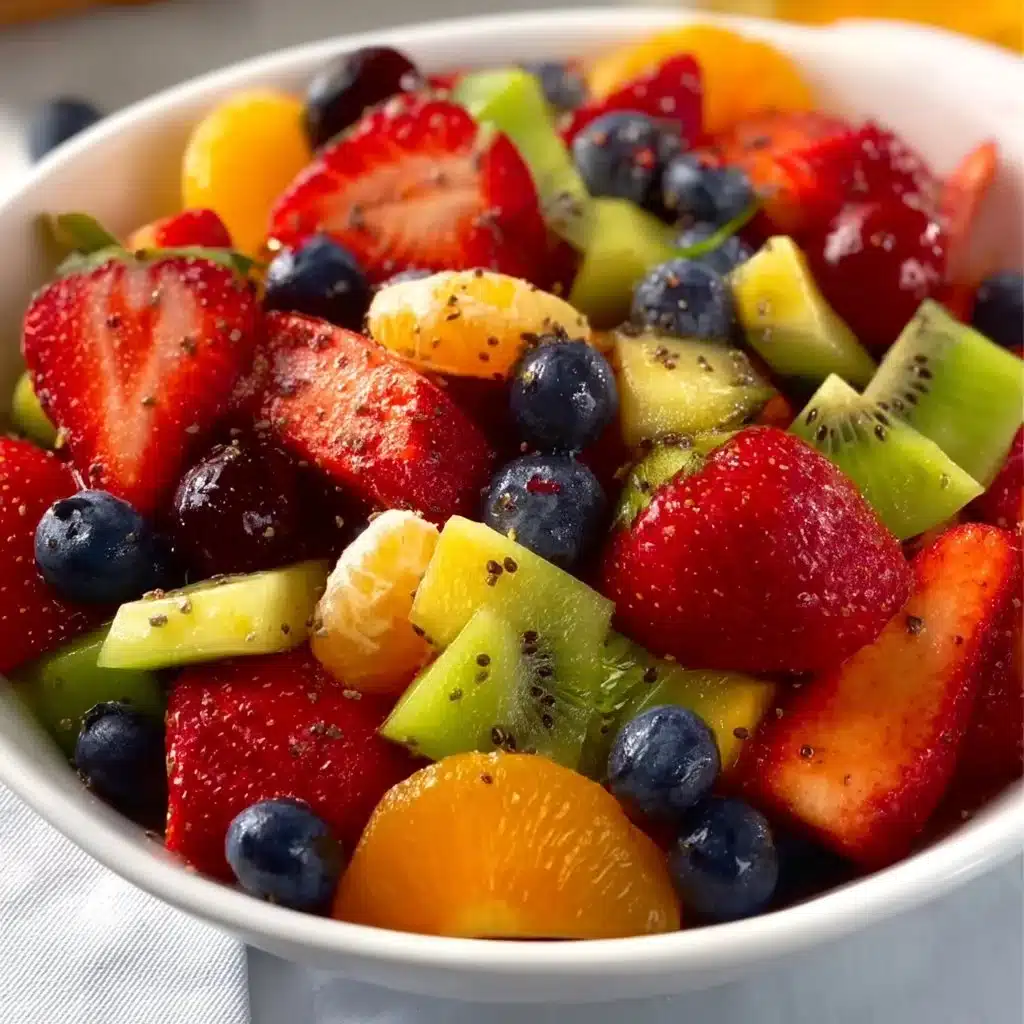
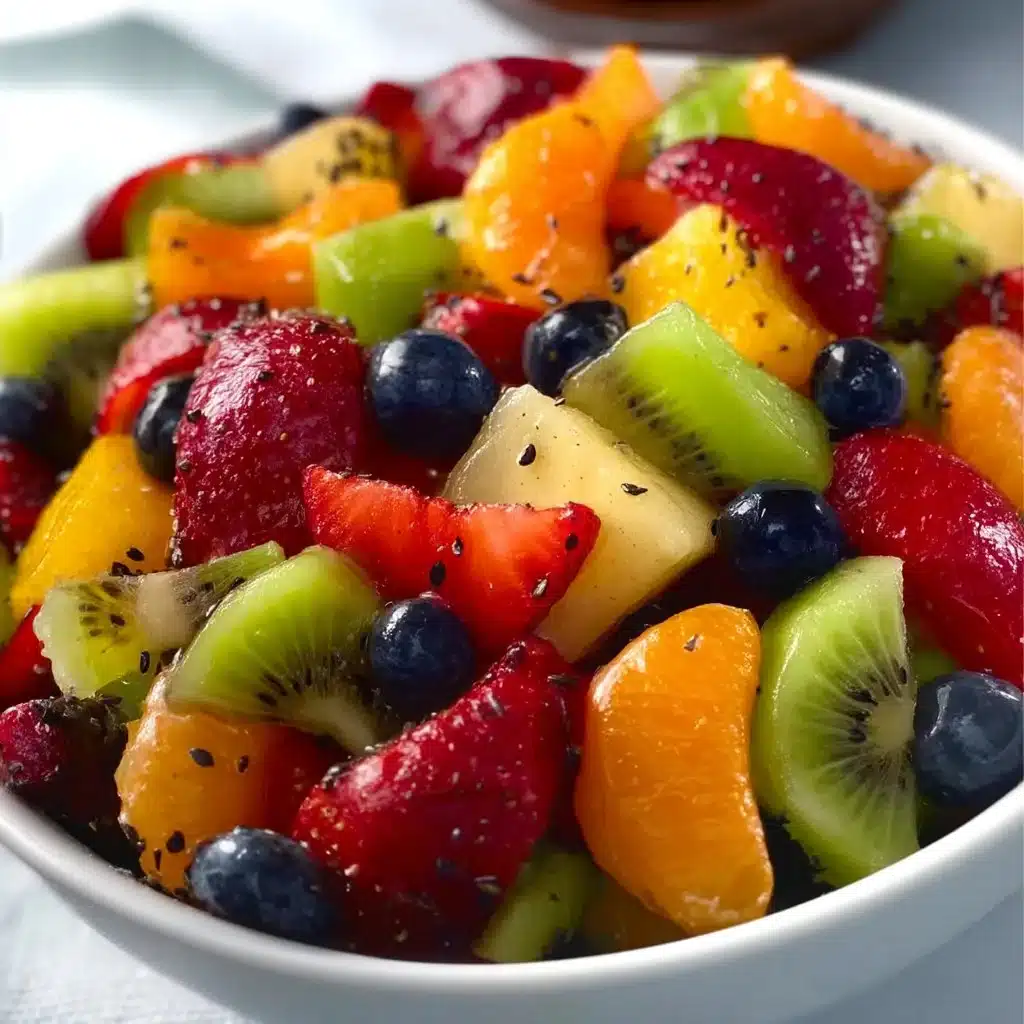
This salad succeeds because it trusts the fruit. Each variety brings a distinct texture: strawberries add soft juiciness, blueberries offer pop, kiwi gives a tender bite, pineapple brings fiber and brightness, and grapes hold shape and sweetness. The dressing acts as the bridge. Honey adds mellow sweetness that ties everything together while lime juice adds acid to lift and balance. Poppy seeds give a subtle nuttiness and a pleasant speckle that makes the bowl look homemade and inviting.
You can prepare this salad in minutes and still get depth of flavor. The lime juice prevents the fruit from tasting flat, and the honey keeps it from getting too tart. Because the dressing stays light, it won’t weigh the fruit down or make it syrupy. The method requires no macerating time, so you can serve the salad right away when fruit tastes freshest. The end result reads like a composed side dish rather than a tossed afterthought.
How to prepare Fresh Fruit Salad with Honey Lime Poppy Seed Dressing
Preparing this salad emphasizes gentle handling and timing. Cut firmer fruits into similar-sized pieces so every spoonful gives a balanced mix. Whisk the dressing quickly so the honey emulsifies evenly into the lime juice, and add the poppy seeds last so they distribute without clumping. If you plan ahead, chill the bowl and fruit slightly—cold fruit absorbs the dressing better and keeps its texture. If you want a sweet-savory dinner pairing, this fruit salad complements light proteins, or finish the meal with a cozy dessert like a carrot cake with cream cheese frosting for contrast and comfort.
Ingredients
- 1 cup strawberries, hulled and sliced
- 1 cup blueberries
- 1 cup kiwi, peeled and sliced
- 1 cup pineapple, diced
- 1 cup grapes, halved
- 2 tablespoons honey
- 1 lime, juiced
- 1 tablespoon poppy seeds
- Mint leaves for garnish (optional)
Instructions
- In a large bowl, combine the strawberries, blueberries, kiwi, pineapple, and grapes.
- In a small bowl, whisk together the honey, lime juice, and poppy seeds until smooth.
- Drizzle the dressing over the fruit and gently toss to combine.
- Serve immediately, garnished with mint leaves if desired.
Serving ideas
Serve this fruit salad as a bright side at brunch alongside scrambled eggs and toasted bread, or use it as a colorful component on a picnic board with cheeses and nuts. For breakfast, spoon the salad over plain yogurt and sprinkle with granola for crunch. For a light dessert, offer it with a scoop of vanilla ice cream or a dollop of whipped cream that softens against the chilled fruit. For backyard barbecues, place it beside grilled meats to refresh the palate—its acidity pairs especially well with smoky or rich proteins. If you present it in a clear bowl, the color contrast reads festive and intentional, turning a simple dish into a table-worthy offering.
Storage tips
Store the salad in an airtight container in the refrigerator for the best results. The fruit tastes best within 24 hours; beyond that, softer fruits like strawberries and kiwi start to break down and release extra juice. If you need to prepare ahead, keep the dressing separate and toss just before serving to preserve texture. Frozen fruit will change the salad’s mouthfeel once thawed, so avoid using previously frozen fruit unless you plan to serve it in a blended smoothie bowl instead. If the salad develops excess liquid, drain a little before serving and refresh with a squeeze of lime.
DishGrub Kitchen Tips
Choose ripe but firm fruit: ripe fruit tastes sweet and aromatic, but fruit that’s too soft will turn mushy when mixed. Slice fruit into similar-sized pieces so every forkful gives variety. Warm honey thins more easily, so if your honey sits solidly, microwave it for a few seconds before whisking to help it emulsify with the lime juice. Use fresh lime juice rather than bottled for the brightest flavor. When tossing, use a gentle hand and a large spoon or spatula so you don’t bruise the softer berries. Garnish with chopped fresh mint just before serving for a fragrance that amplifies the lime.
Recipe variations
Mix up the fruit to match the season or your pantry. Swap mango or peaches for pineapple in summer, or add thinly sliced pear and apple in fall. Add a handful of chopped toasted almonds or chopped pistachios for crunch. Fold in a few tablespoons of plain or coconut yogurt for a creamier version, or sprinkle a little sea salt and cracked black pepper for an adult-savory twist that makes the sweetness pop. For a boozy twist at adult gatherings, macerate the strawberries in a tablespoon of orange liqueur for 10 minutes before assembling. For a green boost, add baby arugula or baby spinach just before serving to make a light fruit-and-greens salad.
Common questions
Q: Can I prepare this salad ahead of time?
A: You can prep the fruit up to a day ahead and store it separately in airtight containers. Keep the dressing in a small jar in the refrigerator and combine them just before serving to preserve texture. If you must combine them earlier, expect the salad to become slightly juicier as the fruit releases its juices; it should still taste great within 24 hours.
Q: What fruits can I substitute based on season or preference?
A: Use what tastes best fresh at the market. Peaches, nectarines, mango, and cherries work beautifully in summer. In cooler months, swap in pear slices, pomegranate seeds, or citrus segments. Aim for a mix of textures: one soft fruit, one crisp or fibrous fruit, and one small poppy seed–sized fruit like blueberries or grapes.
Q: How do I prevent the fruit from turning brown or mushy?
A: Store cut fruit cold and mix with the dressing just before serving. Lime juice in the dressing helps prevent browning on fruits like apples and pears. Avoid chopping fruit too small; larger pieces hold their structure longer. Keep the salad chilled and consume within a day for best texture.
Q: Can I make the dressing less sweet or more tart?
A: Yes. Taste and adjust the dressing to your liking. Reduce the honey if you prefer a tarter dressing, or add a touch more lime juice for brightness. If you like a creamier dressing, whisk in a tablespoon of plain yogurt or sour cream, but add that only when you plan to serve promptly.
Q: Is this recipe suitable for kids or picky eaters?
A: Absolutely. The dressing keeps the fruit flavorful without overwhelming it. For picky eaters, serve components deconstructed—fruit in one bowl, dressing on the side—so they can mix as they like. Cutting fruit into bite-sized, uniform pieces helps kids try different fruits in one spoonful.
Conclusion
For another take on a fresh, bright recipe that pairs well with everyday meals, check out this version of the Fresh Fruit Salad with Honey-Lime Poppy Seed Dressing for inspiration and plating ideas.