Nothing beats a bowl of something warm and bright when you want comfort that feels a little fresh. This green veggie curry lives right at that intersection: cozy coconut cream, aromatic ginger and garlic, and a spoonful of green curry paste that wakes up every bite. It’s the kind of dish you make when you want dinner that’s quick, nourishing, and a little celebratory without the fuss. Invite a friend, let a pot simmer while you set the table, and you’ll have a simple meal that reads as thoughtful and complete.
I learned this curry on a weeknight when the fridge held an assortment of leftover greens and a half-open can of coconut milk. A few pantry staples, a quick sauté, and the house smelled like a small Thai restaurant. We ate with rice, chatted about the day, and agreed the leftovers tasted even better the next day. That’s the charm here: it rewards small substitutions, short hands in the kitchen, and the kind of togetherness that happens when feeding people something warm. Pair it with a crisp salad, steamed jasmine rice, or a tart cucumber relish to cut through the richness.
At DishGrub, we test recipes until they work reliably on busy weeknights and lazy Sundays alike. We favor approachable steps, pantry-friendly swaps, and results that taste like effort well spent. If you like light, bright meals that still satisfy, this green veggie curry fits right into our lineup of comfort food made simple. You can round the evening out with a cooling green drink—try pairing it with DishGrub’s detox green smoothie for a fresh contrast.
Why you’ll love this dish
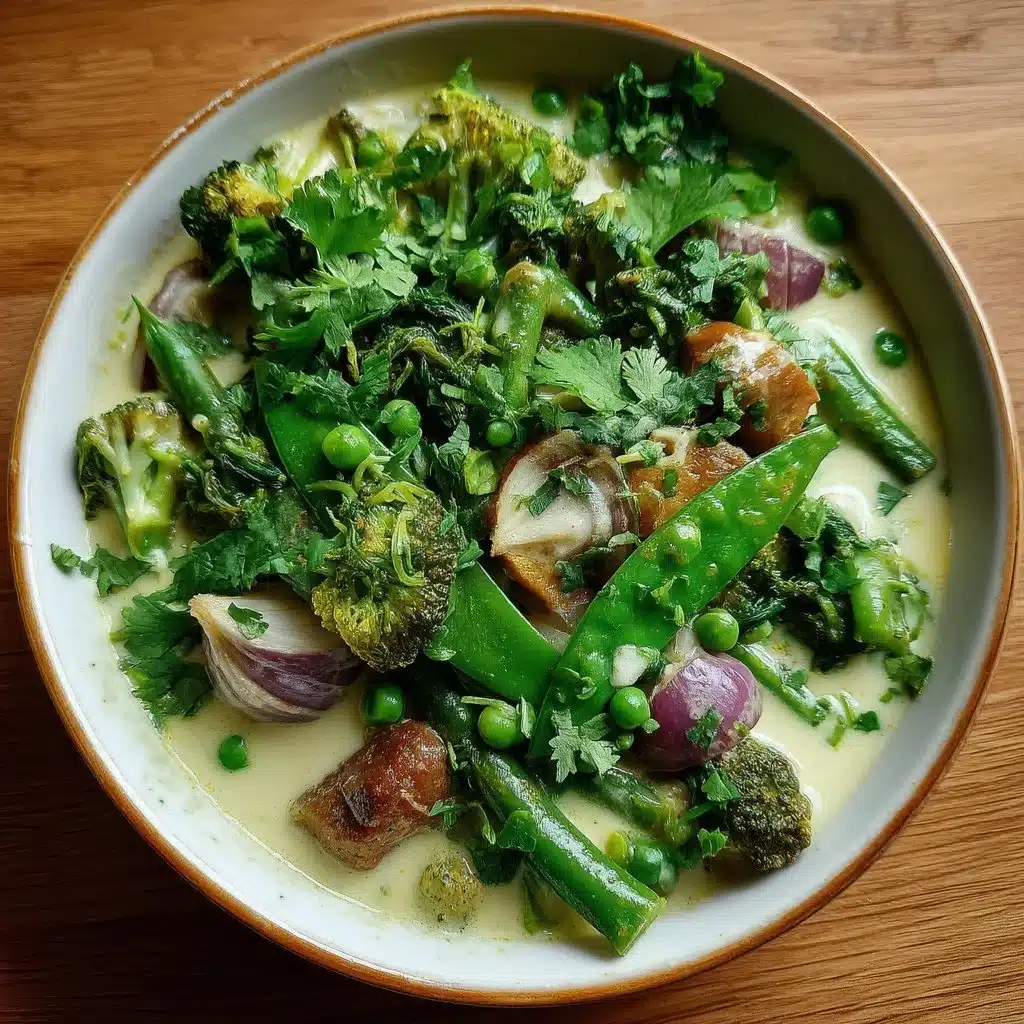
This curry rewards you with big flavor from a few simple moves. Green curry paste carries layers of lemongrass, chiles, and citrusy aromatics, while coconut milk brings richness without heaviness. The mixed greens deliver texture: broccoli and green beans offer a satisfying bite, spinach folds into the sauce, and peas add pops of sweetness. You get bright, savory, and creamy elements in every spoonful.
You’ll also appreciate how flexible it is. Use whatever green vegetables you have on hand, adjust the curry paste to your heat preference, and scale the coconut milk to get a thinner or saucier finish. It cooks fast—ready in about 20 minutes from start to table—so it works for weeknights and low-effort entertaining.
How to prepare Green Veggie Curry
Start by assembling ingredients and prepping your vegetables. Warm a tablespoon of oil, sweat aromatics until fragrant, and bloom the green curry paste to deepen its flavor. Add the vegetables and coat them in the paste, then pour in coconut milk and simmer until everything reaches tender-crisp perfection. Taste and season last so your salt level stays balanced against the coconut’s natural sweetness. If you want a refreshing pairing, try serving this curry with a chilled green beverage like our green detox smoothie recipe to balance the heat and creaminess.
Ingredients
- 2 cups assorted green vegetables (e.g., broccoli, green beans, spinach, peas)
- 1 onion, chopped
- 2 cloves garlic, minced
- 1 inch ginger, grated
- 1 can coconut milk
- 2 tablespoons green curry paste
- 1 tablespoon vegetable oil
- Salt to taste
- Fresh cilantro for garnish
Instructions
-
Heat vegetable oil in a large pot over medium heat.
-
Add chopped onion, garlic, and ginger, sauté until softened.
-
Stir in green curry paste and cook for an additional minute.
-
Add assorted green vegetables and stir to coat.
-
Pour in the coconut milk and bring to a simmer.
-
Cook until vegetables are tender, about 10-15 minutes.
-
Season with salt to taste.
-
Serve hot, garnished with fresh cilantro.
Serving ideas
Serve this curry over steaming jasmine or basmati rice to soak up the sauce. For a lower-carb option, spoon the curry over cauliflower rice or a bed of quinoa. Top with a squeeze of lime for brightness and add fresh cilantro or Thai basil for herbal lift. If you want extra texture, scatter roasted peanuts or cashews on top just before serving.
Make it a lunch bowl by pairing a generous scoop with a crunchy slaw of shredded cabbage, carrot, and a light rice vinegar dressing. For a family-style dinner, put the curry in a warm serving bowl, set out rice, and let everyone spoon their portions—this dish keeps well at the table and invites relaxed, communal eating.
Storage tips
Cool the curry to room temperature before refrigerating to protect texture and flavor. Store it in an airtight container for 3 to 4 days. The sauce will thicken in the fridge; reheat gently over low heat on the stove with a splash of water or extra coconut milk to loosen it. For longer storage, freeze the curry in a freezer-safe container for up to 2 months; thaw overnight in the fridge and reheat slowly to maintain the best texture.
When reheating, stir frequently to prevent the sauce from separating. If the coconut oil has separated after freezing, whisk the curry well during reheating to bring it back together. Label containers with the date so you know when to use them.
DishGrub Kitchen Tips
Always taste as you go. Because coconut milk can vary in sweetness and curry pastes vary in salt and heat, add salt and any extra seasoning at the end. If you want a silkier sauce, blend half the cooked vegetables with the coconut milk first, then return the purée to the pot and stir in the rest of the vegetables for textural contrast.
When you sauté the onion, garlic, and ginger, keep the heat moderate so you don’t brown them too quickly; you want those aromatics to become sweet and tender, building a mellow base for the curry. If you prefer more heat, add a chopped chile or a pinch of red pepper flakes along with the curry paste. For deeper complexity, stir in a teaspoon of brown sugar or a splash of fish sauce (or soy sauce for a vegan option) before serving.
Recipe variations
-
Make it heartier: Add cubed tofu, seared tempeh, or chickpeas to boost protein. For tofu, press it briefly and pan-sear until golden before adding to the curry.
-
Add citrus: Stir in lime zest and a tablespoon of lime juice at the end to brighten the entire pot.
-
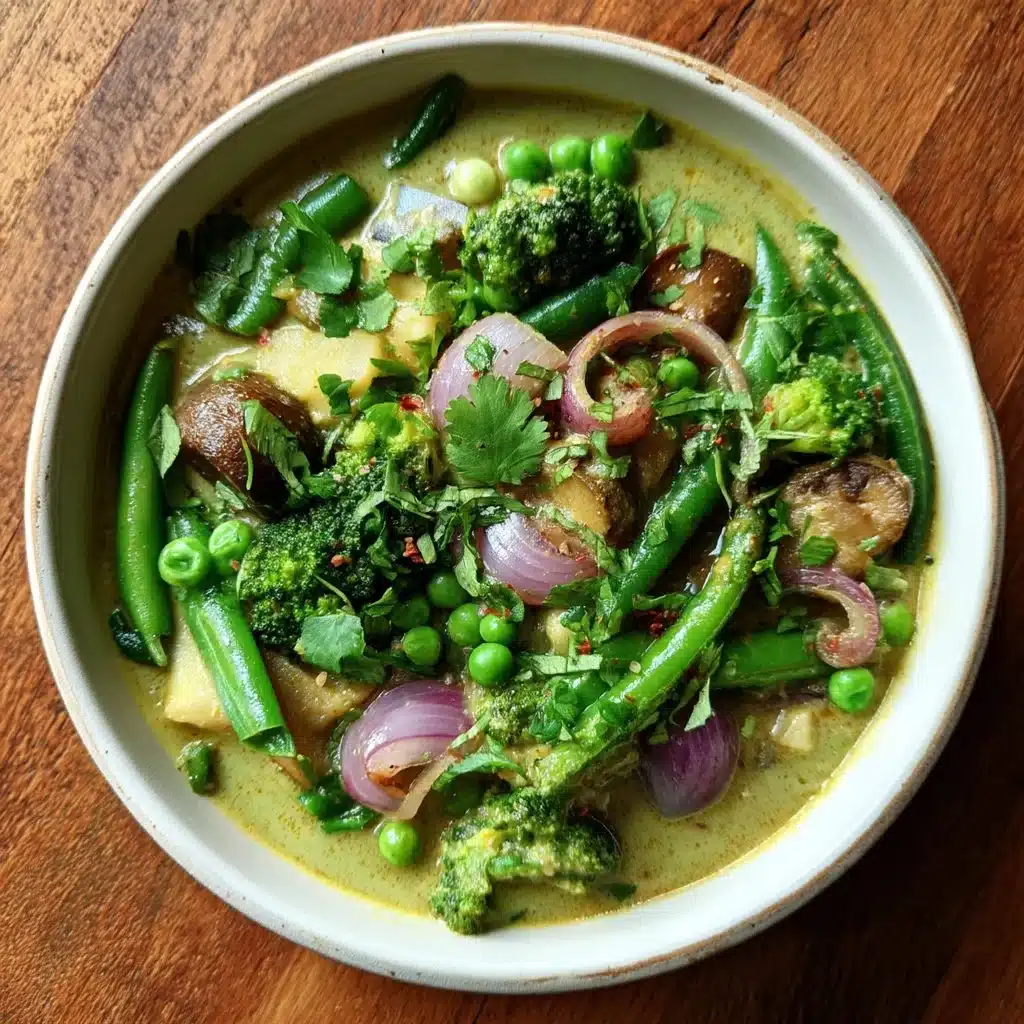
Make it chunky: Keep larger florets of broccoli and whole green beans for a more rustic texture.
-
Turn it into a soup: Add 1 to 2 cups of vegetable broth and serve the curry with a spoon like a warming soup.
-
Increase creaminess: Use full-fat coconut milk and finish with a swirl of coconut cream or cashew cream for decadence.
Common questions
What green vegetables work best in this curry?
You can use a mix of firm and tender vegetables to get contrast. Broccoli and green beans hold up well to simmering and give bite. Spinach wilts quickly and adds silkiness; add it at the end so it doesn’t overcook. Peas provide pops of sweetness. You can also use asparagus tips, zucchini, or snap peas—treat them like the other greens and adjust cooking times so nothing goes mushy.
Can I make this gluten-free and vegan?
Yes. Use a gluten-free green curry paste (check labels) and vegetable broth if you add extra liquid. Coconut milk is naturally vegan, and this recipe contains no animal products if you avoid fish sauce and choose a vegan curry paste. Substitute soy sauce with tamari if you need gluten-free seasoning.
How do I control the spice level?
Green curry paste varies by brand. Start with one tablespoon, taste after simmering, and add the second tablespoon if you want more heat and deeper flavor. If the curry turns out spicier than you prefer, temper heat with a little extra coconut milk, a squeeze of lime, or a teaspoon of sugar to balance the flavors.
Can I prep this ahead?
Yes. Chop vegetables and store them separately in the fridge for up to a day. You can make the curry base (onion, garlic, ginger, curry paste, coconut milk) and refrigerate it; when ready to serve, bring it to a simmer and add fresh vegetables so they keep their texture. The finished curry also reheats well, and some find the flavors meld further overnight.
How should I reheat leftovers without losing texture?
Reheat gently over low to medium-low heat on the stove, stirring often. Add a splash of water or coconut milk if the sauce clings too tightly to the pot. Microwave in short bursts, stirring between intervals. For frozen portions, thaw in the refrigerator overnight and warm slowly to avoid separation.
Conclusion
If you want a reliable, weeknight-friendly main that feels a little special, this green veggie curry delivers. For inspiration on similar bright, plant-forward dishes and techniques, consider checking out Incredible Vegan Thai Green Curry – Rainbow Plant Life, which offers depth on flavor-building and vegan Thai preparations.