Warm bread brings people together in a way few other things do. A pan of golden focaccia, studded with briny olives and flecked with rosemary, invites conversation, softens even a rushed weeknight, and fills the house with a smell that says welcome. Tear it warm and you make space for sharing: salads, soups, and the small, slow luxury of time at the table.
I learned to make this olive herb focaccia on a rainy Saturday when my oven doubled as a neighborhood beacon. Neighbors wandered over with wine and stories, and the first pan barely lasted an hour. The dough feels forgiving beneath your palms — sticky at first, then smooth, then eager to rise. The simple rituals matter: proofing the yeast in warm water, pressing dimples with your fingers, and finishing with a generous drizzle of olive oil and a pinch of coarse salt. Each step rewards you in comfort and texture: a crisp crust, an open, airy crumb, and pockets of olive flavor that surprise in every bite.
At DishGrub we test recipes until they behave predictably in real kitchens with real schedules. We trim extra fuss so you keep all the flavor and lose the confusion. Our goal stays simple: turn classic comfort into something you can make tonight, whether you bake with kids, for friends, or to rescue a busy week. For a full meal that pairs beautifully with this bread, try our herb roasted chicken thighs, a straightforward companion that brings roast flavors and a pan sauce that soaks into the focaccia.
Why you’ll love this dish
This olive herb focaccia balances simplicity and character. The dough uses basic pantry ingredients, and it rewards a bit of hands-on time with air pockets and a golden exterior. Olives add a salty, savory note, and dried herbs give an aromatic lift without requiring chopping or special preparation. You can serve it as dinner bread, tear it for sandwiches, or enjoy it as a snack with cheese and a drizzle of good olive oil. The method requires just one proofing window, so the timeline fits a weekend or a planned weekday evening.
Because the recipe tolerates slight variations in hydration and mix-ins, it forgivingly fits different skill levels. The surface dimpling creates those signature olive-oil pools that crisp in the oven and leave tender crumbs beneath, and coarse sea salt on top sharpens the flavors. You’ll notice the crumb stay soft for a day and still pleasant reheated for two, which makes it a busy cook’s friend.
How to prepare Olive Herb Focaccia
This recipe follows a straightforward path: activate yeast, mix, knead, let the dough double, shape on a pan, dimple and oil, then bake. You won’t need a stand mixer unless you want to save effort; a sturdy bowl and a little elbow grease produce excellent results. Watch the dough during the rise: temperature affects timing, so a warm, draft-free spot helps it reach its full height in about an hour. When you press the dimples, don’t worry about perfection — rustic indentations make the focaccia look homemade and help trap oil and salt.
Ingredients
- 2 cups warm water
- 1 packet active dry yeast
- 4 cups all-purpose flour
- 2 teaspoons salt
- 1/4 cup olive oil
- 1 tablespoon dried herbs (e.g., rosemary, thyme)
- 1 cup olives (e.g., kalamata, green), pitted and chopped
- Coarse sea salt for topping
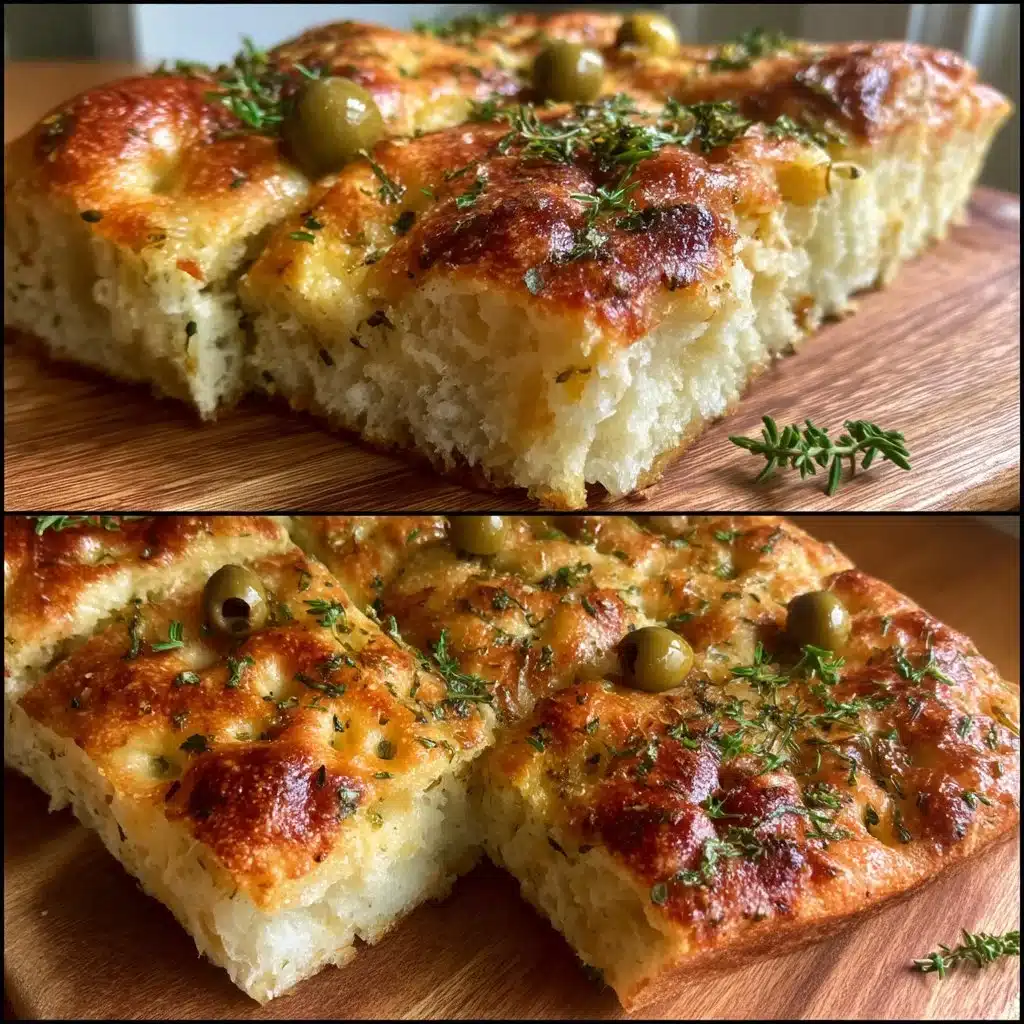
Instructions
- In a large bowl, combine warm water and yeast; let sit for about 5 minutes until frothy.
- Add flour, salt, olive oil, dried herbs, and olives; mix until a dough forms.
- Knead the dough on a floured surface for about 10 minutes until smooth.
- Place in a greased bowl, cover, and let rise until doubled in size (about 1 hour).
- Preheat the oven to 425°F (220°C).
- Punch down the dough and spread it onto a greased baking sheet.
- Dimple the surface with your fingers, drizzle with olive oil, and sprinkle coarse sea salt on top.
- Bake for 25-30 minutes or until golden brown.
- Allow to cool slightly before slicing and serving.
Serving ideas
Serve warm slices as the starch for an easy weeknight meal, or lay slices flat and pile on burrata, roasted tomatoes, and basil for a bright appetizer. Use thick-cut pieces to build sandwiches with roasted vegetables and goat cheese, or tear wedges to dip into soups and stews. For a seafood-inspired pairing, enjoy the focaccia alongside our herb roasted salmon to create a balanced plate with flaky fish and herby, olive-studded bread. Guests appreciate this bread with a board of mixed cheeses, marinated olives, and a bowl of flavored olive oil for dipping.
How to keep leftovers
Wrap cooled focaccia tightly in foil or place it in an airtight container to retain moisture. Store at room temperature up to two days for the best texture. If you need to keep it longer, slice and freeze in a sealed bag for up to three months; toast slices directly from frozen or warm them in a low oven. To revive day-old focaccia, sprinkle a little water on top and warm it in a 350°F oven for 8–10 minutes; the added steam softens the crumb and refreshes the crust.
DishGrub Kitchen Tips
- Measure water temperature: aim for 105–115°F to activate yeast without killing it. Warmer water speeds the rise; cooler water slows it.
- Use coarse salt at the end: sprinkling coarse sea salt after dimpling preserves texture and prevents the dough from becoming too salty.
- Don’t skimp on oil: drizzling olive oil over the dough before baking yields a crisp exterior and rich flavor.
- Handle olives gently: chop them roughly so they distribute flavor without creating large oil pockets that make the dough soggy.
- Choose your pan: a rimmed baking sheet gives a broad surface area and creates the focaccia’s characteristic thin profile. For a thicker loaf, use a smaller pan and bake a few extra minutes.
- If the dough resists stretching, let it rest for 10 minutes to relax the gluten before shaping.
- For extra aroma, press a few rosemary sprigs into the surface along with the olives before baking.
Make it your own
Swap in fresh herbs if you have them: chopped rosemary or thyme adds bright, fresh notes. Try other mix-ins like thinly sliced red onion, sun-dried tomatoes, or a sprinkling of grated parmesan before baking. For a garlicky variation, rub a halved clove of garlic over the surface after baking or press minced garlic into the dough before oiling. To make a focaccia sandwich, press cooled focaccia in half horizontally and toast briefly, then fill with roasted vegetables and a smear of pesto. For a slightly richer dough, replace a couple of tablespoons of water with milk or add one beaten egg; watch the bake time as richer doughs brown more quickly.
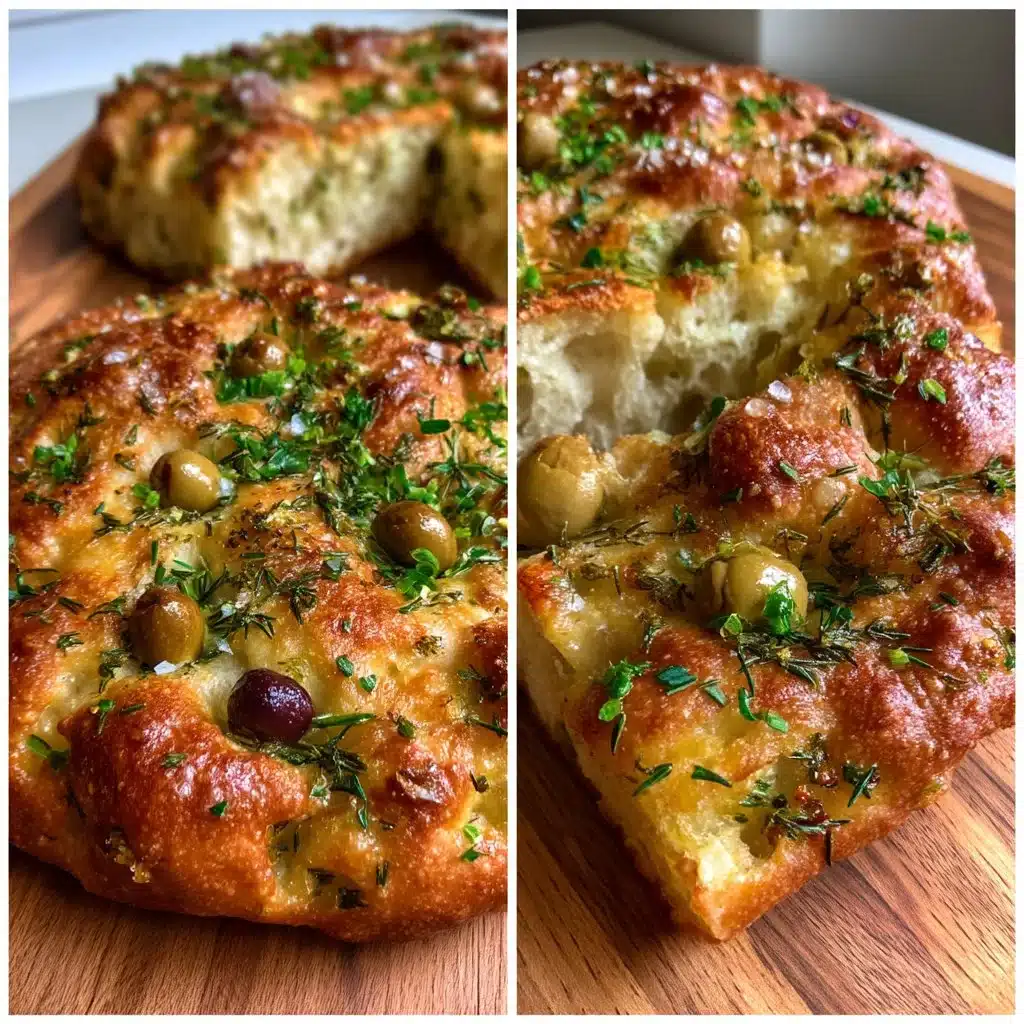
Frequently asked questions
Q: Can I use instant yeast instead of active dry yeast?
A: Yes. If you use instant yeast, sprinkle it directly into the flour and reduce the initial water sitting time since instant yeast doesn’t need proofing. Expect a similar rise, but keep an eye on the dough during the first hour because instant yeast sometimes acts faster in warm kitchens.
Q: My focaccia came out dense. What did I do wrong?
A: Dense focaccia usually means the dough didn’t rise enough or you overfloured during kneading. Make sure your yeast froths in warm water before mixing. Knead until smooth and slightly tacky, not dry. Proof in a warm, draft-free spot and allow the dough to double; an under-proofed dough won’t create the open crumb you want.
Q: How do I prevent the bottom from burning while the top is pale?
A: Rotate the pan mid-bake to promote even browning and position the oven rack in the center. If the bottom burns first, try lowering the oven temperature by 10°F and baking a few extra minutes, or move the pan one rack higher. Using a light-colored baking sheet also reduces excessive bottom browning.
Q: Can I make this dough ahead of time?
A: Yes. After the initial mix and a short rise, you can refrigerate the dough for up to 24 hours to develop flavor. Bring it back to room temperature, let it finish its rise until doubled, then shape and bake. Cold-proofing builds complexity in the flavor and gives you scheduling flexibility.
Q: What olives work best in focaccia?
A: Firm, flavorful olives like kalamata or Castelvetrano work well. Choose pitted olives to avoid biting into pits while eating. Chop them coarsely so each bite has a hint of olive without overwhelming the dough, and rinse very salty olives briefly to balance the overall salt level.
Conclusion
For a tested, home-friendly version that inspired this take on olive and herb focaccia, see this complementary recipe for a slightly different technique and flavor profile at Olive and Herb Focaccia – Eight Forest Lane.