Evening light slants through my kitchen window, and the house smells like lemon and warm olive oil. When the week tightens and schedules collide, I reach for dinners that comfort and connect without adding stress. This one-pan lemon dill salmon checks both boxes: it roasts in a single dish, fills the room with bright, familiar aromas, and serves up a dinner that feels thoughtful even when time runs short. I picture a small table, a pitcher of water, simple napkins, and the kind of conversation that drifts easily when food feels like home.
I learned this recipe on a night when I needed something effortless but special. A friend stopped by after a long day and we opened a bottle of wine while the oven did its work. The salmon emerged flaky and tender, the lemon softened and sweet, and the asparagus kept a pleasant snap. The dish asked for nothing fancyjust good ingredients treated with respect. That balance makes it ideal for weeknights and for when you want to impress without sweating the details. If you love sheet-pan simplicity, this salmon sits in the same easy lane as our Sheet-pan lemon herb chicken & broccoli for hands-off roasting and big flavor.
DishGrub tests every recipe to make sure it works reliably for home cooks. We favor straightforward techniques, minimal cleanup, and ingredients you can find at most markets. This lemon dill salmon recipe follows that promise: clear steps, flexible timing, and smart tips to avoid overcooked fish. We test timing across ovens and give alternatives for different appetites. If you enjoy recipes that respect your time and still deliver cozy flavors, you’ll find the DishGrub approach both comforting and practical.
Why you’ll love this dish
This recipe combines freshness and ease. Lemon brightens the salmon while fresh dill gives it a light, herby lift that keeps the plate feeling vibrant. Salmon cooks quickly and forgivingly on a sheet pan, so you spend minutes prepping and the oven does the rest. That simplicity frees you to set the table, steam a quick side, or relax with a glass of wine.
One-pan cooking reduces both active time and cleanup. You roast salmon and asparagus together, and the lemon imparts a subtle, mellow tang as it warms. The asparagus cooks in the salmon’s gentle steam and finishes with a slight char if you slide it closer to the heat. The result looks elegant, tastes fresh, and proves you don’t need long ingredient lists to create a satisfying meal.
Because the method stays simple, it adapts easily. Use thicker fillets for a thicker, buttery interior. Choose firm, vibrant asparagus for best texture. This dish works for weeknights, small dinner parties, or a cozy weekend supper when you want something fuss-free but memorable.
How to prepare One Pan Lemon Dill Salmon
Start with room-temperature salmon for even cooking. Pat each fillet dry and season lightlysalmon benefits from a confident seasoning. Trim woody ends from the asparagus so everything cooks uniformly. Arrange the ingredients with the thicker fillet sides facing the perimeter of the pan so heat hits evenly.
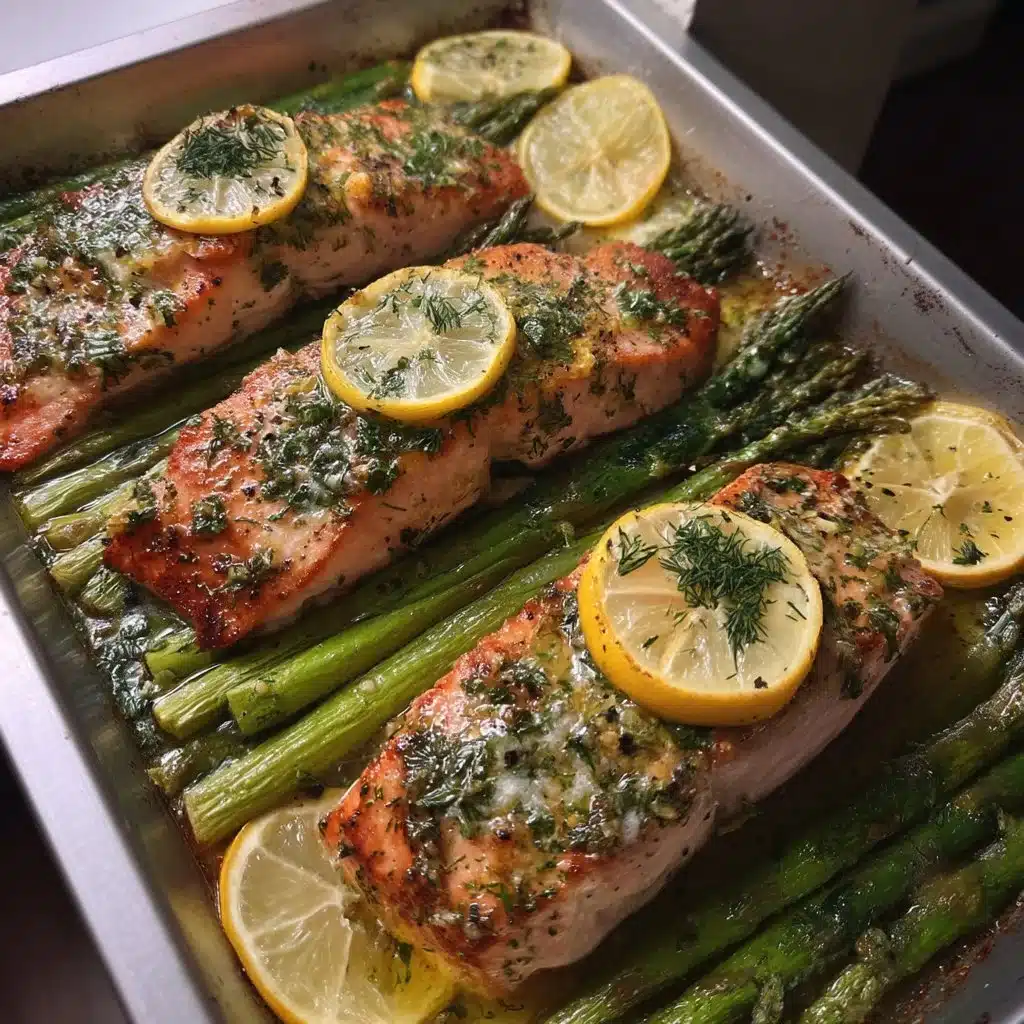
Use a rimmed baking sheet or a shallow baking dish to catch any juices. Drizzle olive oil evenly to promote golden edges and to help lemon slices release their oils. Lay lemon slices directly on the fillets to infuse citrus flavor as the fish bakes. Scatter dill over everything near the end of prep to protect its delicate leaves from immediate heat, which helps preserve its bright aroma.
Watch the oven carefully during the last five minutes of baking. Oven temperatures vary, so check for flaky flesh that still feels moist. If you prefer a crisper top, broil for 30 to 60 seconds at the endwatch constantly to avoid burning the lemon. Leftovers reheat well and make a speedy addition to a salad or grain bowl; you can even use flaked salmon to top warm grains or toss into pasta. For a family breakfast idea using leftovers, try pairing flaked salmon with eggs for a savory twist on morning protein or serve alongside our fluffy buttermilk pancakes as a brunch pairing for a special weekend.
Ingredients
- 4 salmon fillets
- 2 tablespoons olive oil
- 2 lemons (sliced)
- 2 tablespoons fresh dill
- Salt and pepper to taste
- 1 pound asparagus (trimmed)
Instructions
- Preheat the oven to 400°F (200°C).
- Place the salmon fillets in a large baking dish and drizzle with olive oil.
- Arrange lemon slices on top of the salmon.
- Sprinkle fresh dill, salt, and pepper over the top.
- Place the asparagus around the salmon in the baking dish.
- Bake in the preheated oven for 15-20 minutes or until the salmon is cooked through.
- Serve hot.
How to serve this dish
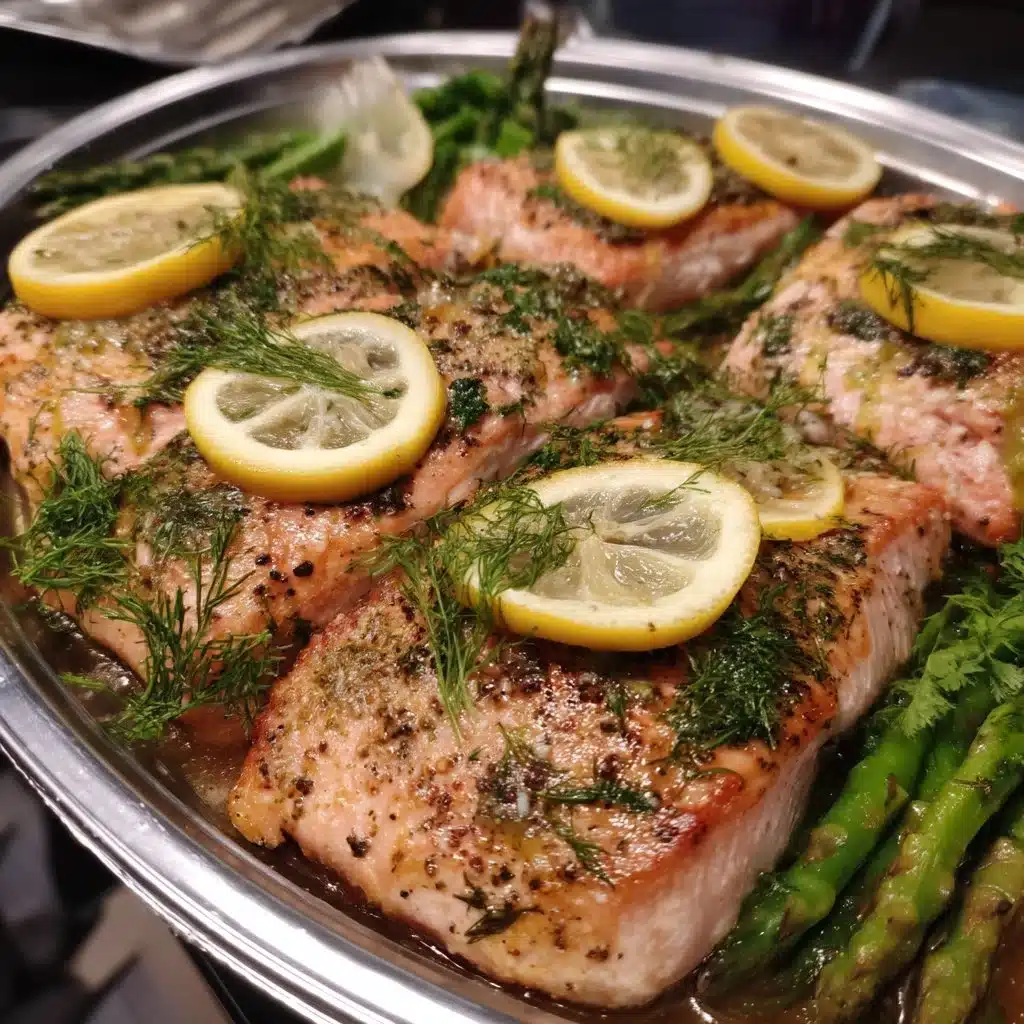
Serve the salmon straight from the pan to keep cleanup minimal and presentation friendly. Spoon any pan juices over the fillets for extra flavor. Keep sides simple: a bowl of roasted baby potatoes, a wild rice blend, or a crisp green salad complement the citrus-herb notes without competing. If you prefer a lighter plate, spoon the salmon over a bed of mixed greens and add a simple vinaigrette.
For family-style dinners, place the baking dish at the center of the table with lemon wedges for squeezing. Offer crusty bread to mop up juices and a small dish of extra dill or chopped parsley for guests who want more herb. For a weeknight, pair this dish with quick steamed rice or quinoaboth soak up the flavor and make for a complete plate in minutes.
How to keep leftovers
Cool leftovers to room temperature within two hours, then transfer to an airtight container. Store in the refrigerator for up to 3 days. Reheat gently to avoid drying the fish: place on a microwave-safe plate and cover loosely, heating in short bursts at 50 percent power until warm; or reheat in a low oven at 275°F (135°C) for 8–10 minutes.
If you want to freeze cooked salmon, wrap portions tightly in plastic wrap and then place in a freezer-safe bag for up to one month. Thaw overnight in the refrigerator and reheat gently. Use leftover salmon cold in salads or flaked on top of grain bowls, where the texture shift feels intentional rather than overcooked.
DishGrub Kitchen Tips
Choose salmon that looks moist and firm with a consistent color. Wild-caught and farmed salmon offer different flavor profiles; pick what you prefer and cook by thickness rather than weight. When seasoning, apply salt and pepper evenly to enhance the natural fish flavor without masking it.
Trim asparagus at the woody ends by bending each spear until it snaps naturallythat point indicates where the tender part begins. If you want even cooking, slice the thicker spears in half lengthwise so they finish at the same time as the salmon.
Use fresh dill when possibleits flavor makes a noticeable difference. If you only have dried dill, reduce the amount since the flavor concentrates during drying. For a hands-off approach, let the salmon rest for 5 minutes after it comes out of the oven; the residual heat will finish cooking gently and keep the fillet moist.
For another sheet-pan weeknight winner that follows the same easy format, try our sheet-pan lemon herb chicken & broccoli, which uses the same straightforward prep and roast approach.
Make it your own
Swap dill for tarragon or parsley if you prefer a different herb note. Add a thin layer of Dijon mustard under the lemon slices for a tangy crust that complements the fish. Toss a few cherry tomatoes into the pan for sweet acidity and color.
For a spicier profile, sprinkle a pinch of smoked paprika or red pepper flakes over the fillets before roasting. To add richness, finish with a small knob of cold butter on each fillet as it rests so it melts into the juices. If asparagus is out of season, substitute green beans, thinly sliced zucchini, or baby potatoesadjust cook time to ensure everything finishes together.
Common questions
What oven temperature and time work best for different salmon thicknesses?
For 1-inch-thick fillets, 400°F for 12 to 15 minutes usually yields tender, flaky salmon. Thicker filletsaround 1.5 inchesneed 15 to 20 minutes. Start checking at the lower end of each range. The fish should flake easily with a fork but still feel moist. If you use a thermometer, aim for 125°F to 130°F for medium-rare and 140°F for fully opaque but still moist salmon.
Can I use frozen salmon for this recipe?
You can, but thaw it completely before roasting for even cooking. Pat the fillets dry once thawed to remove excess moisture; otherwise, the salmon will steam rather than roast. If you must roast from frozen, increase the time and expect a softer texture. Thawing overnight in the refrigerator gives the best result.
How do I prevent overcooking the asparagus when the salmon is done?
Trim asparagus to similar thicknesses so they cook evenly. If your spears are thin, add them to the pan halfway through the salmon’s cook time instead of at the beginning. You can also scatter the asparagus closer to the hot edge of the pan to char slightly while keeping the rest of the pan at a gentler heat.
Is lemon necessary, and can I substitute with another acid?
Lemon brightens and balances the oiliness of salmon, but you can substitute with thin orange slices for a sweeter citrus note or a few splashes of white wine over the fillets before roasting. A drizzle of good vinegar after cooking, like sherry or champagne vinegar, can also add brightness if you prefer not to roast citrus.
Can I scale this recipe for more people or a crowd?
Yes. Keep spacing in the pan so heat circulates around each fillet. Use multiple pans if necessary rather than crowding one sheet; crowded pans trap steam and reduce browning. Adjust bake time slightly for larger volumes, and check doneness visually and with a thermometer.
Conclusion
For a simple, impressive weeknight or casual dinner, this sheet-pan lemon dill salmon delivers bright, homey flavors with minimal cleanupperfect for busy nights when you still want something special. For another take on a lemon-forward sheet-pan meal, check this Sheet Pan Lemon Dill Salmon – The Life Jolie.