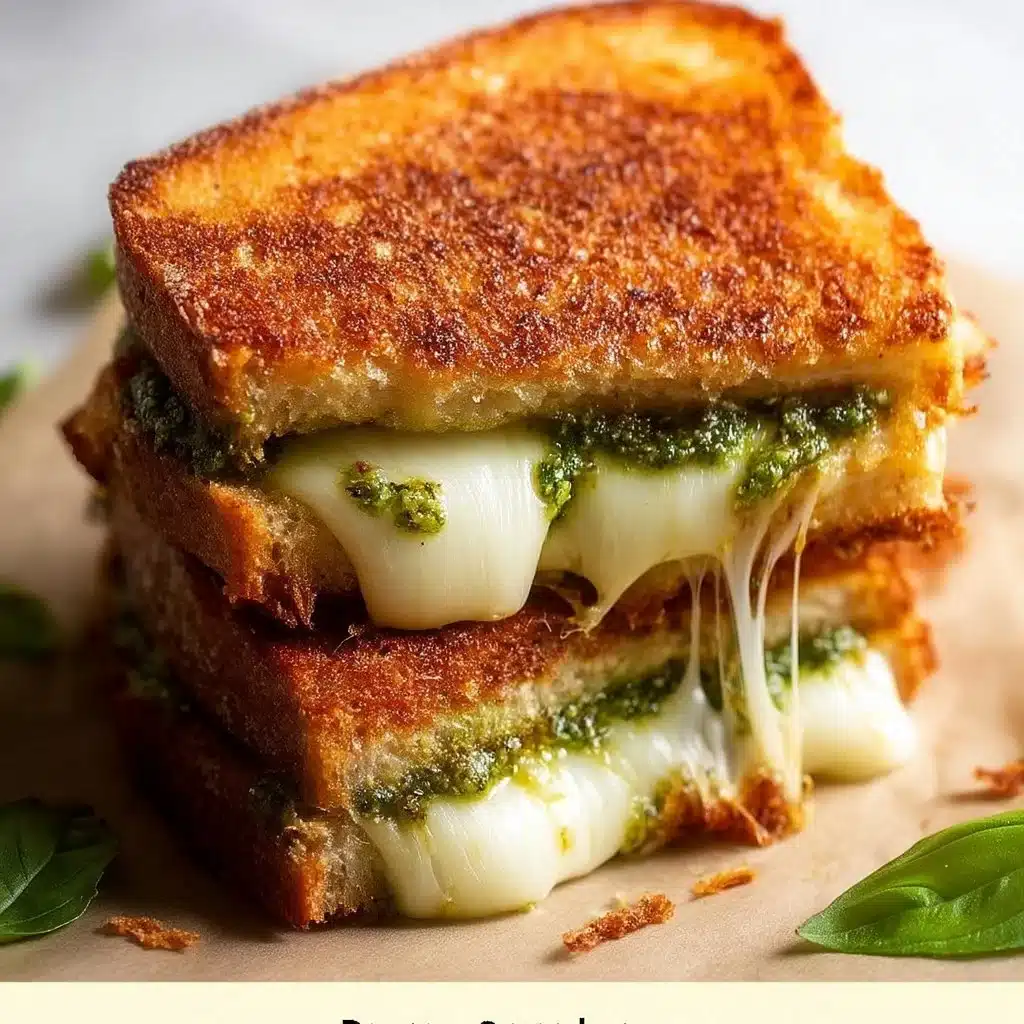
Warmth, melted cheese, and a bright smear of basil — a pesto grilled cheese lands on the plate like a cozy hello. You pull a sandwich from the skillet and the edge yields with a gentle crunch, revealing gooey cheese threaded with ribbons of pesto. That first bite delivers comfort and a little spark: familiar, homey, but unexpectedly fresh. Make this sandwich on a busy weeknight and it will quiet the hunger and lift the spirits; let it sit beside a bowl of tomato soup for a nostalgic lunch that tastes like childhood reimagined. When friends drop by, a platter of pesto grilled cheeses feels generous without fuss and invites everyone to gather around the stove or the table and talk while the sandwiches brown.
I write recipes that treat simple ingredients with kindness — not overcomplicated, but thought-through so they sing in the kitchen. At DishGrub we test each recipe until it works for real home cooks: we chase quick wins, honest flavors, and techniques that save time without sacrificing taste. This pesto grilled cheese thrives because it blends two familiar comforts — grilled cheese and pesto — into a fast, reliable meal you can make with pantry staples. If you want a fuller dinner, serve it alongside our baked mac and cheese for a swoon-worthy comfort-food plate that comes together with minimal effort. We aim for cozy, practical recipes that feel like an old favorite and fit easily into the week.
Why you’ll love this dish
This sandwich loves simple ingredients and returns the favor with big flavor. The pesto brings bright herb, garlic, and nutty notes that cut through the richness of the melted cheese, and the toasted bread gives you that satisfying crunch every time you bite. The recipe works with whatever cheese you have on hand: mozzarella gives you stretch and mildness, cheddar gives you tang and depth, and a blend of both balances creaminess with flavor.
You can make this sandwich in under 10 minutes, which makes it a perfect solo lunch, quick dinner, or late-night snack. It scales easily if you’re feeding more people — just use a larger skillet or work in batches. For a weekend spread, I like to serve it on a wooden board with pickles, a green salad, and a scoop of something creamy; it pairs especially well with our cheesy baked mac and cheese when you want an over-the-top comfort combo. The short ingredient list keeps shopping simple, and the technique gives consistent golden-brown bread and fully melted cheese every time.
How to prepare Pesto Grilled Cheese
Ingredients
- 2 slices of bread
- 1/2 cup of shredded cheese (e.g., mozzarella or cheddar)
- 2 tablespoons of pesto
- Butter or olive oil for cooking
Instructions
- Spread pesto on one side of each slice of bread.
- Place the shredded cheese between the two slices of bread, pesto sides facing inward.
- Heat a skillet over medium heat and add butter or olive oil.
- Place the sandwich in the skillet and cook until golden brown on one side.
- Flip the sandwich and cook until the other side is golden brown and the cheese is melted.
- Slice in half and serve warm.
Serving ideas
Keep the presentation cozy and straightforward. Cut the sandwich on the diagonal and arrange halves on a plate for a classic look. If you want to stretch one sandwich into a shareable snack, pair it with fresh fruit or a small bowl of olives so people can nibble while they munch. For a lunchtime pairing, a bright, crunchy salad dressed with lemon vinaigrette balances the sandwich’s richness and keeps the meal feeling fresh.
For dipping, tomato soup remains the timeless choice. A quick canned tomato soup lifts with a splash of cream or a swirl of pesto to echo the sandwich flavors. If you prefer a lighter dip, try a simple yogurt dip with lemon zest and a pinch of smoked paprika. At brunch, serve the sandwich with a fried or soft-boiled egg on the side; the runny yolk acts like an extra sauce that plays beautifully with the pesto and melted cheese.
Storage tips
Store leftover sandwiches carefully so they keep texture and flavor. If you plan to eat the next day, wrap cooled sandwiches in parchment paper and place them in an airtight container; refrigerate for up to 24 hours. Refrigeration slows the bread staling and keeps the cheese safe, but it does soften the crust.
To reheat and recapture crispness, toast the sandwich in a skillet over medium-low heat with a light pat of butter or a drizzle of oil. Cover the skillet briefly to help the cheese melt, then remove the lid for the last minute to re-crisp the bread. Avoid microwaving unless you accept a softer crust; if you do microwave, heat in short bursts and then finish in a hot skillet to restore some crunch. If you want to freeze sandwiches, assemble them without browning, wrap each in plastic, then freeze for up to a month; reheat from frozen in a skillet over low heat, covered, until the center thaws and the cheese melts.
DishGrub Kitchen Tips
Start with room-temperature cheese for faster, more even melting. Cold cheese takes longer to melt and can lead to over-toasted bread before the center gets gooey. Shred your own cheese when possible; pre-shredded cheese sometimes contains anti-caking agents that can affect melt quality.
Control your heat. Medium or medium-low works best. Too hot and the bread browns before the cheese melts; too cool and you won’t get that crisp golden exterior. Use a skillet with a flat bottom so the heat distributes evenly. If you like extra butter on the outside, spread softened butter on the bread rather than melting butter in the pan; that gives you a cleaner browning with less splatter.
Press gently with a spatula while the sandwich cooks to encourage the cheese to melt. If the sandwich feels too thick, remove one slice, spread pesto more thinly, and reassemble to avoid uneven heating. And taste as you go: a little extra pesto or a pinch of flaky salt on the finished sandwich brightens everything.
Recipe variations
Turn this basic sandwich into a new favorite with small tweaks. Add thinly sliced tomato for juiciness or a few leaves of fresh spinach for a green boost. For more savory depth, layer on a few slices of prosciutto or cooked bacon. If you like a tangy note, spread a thin layer of Dijon mustard on the outside of the bread before adding pesto.
Switch the bread to ciabatta or sourdough for more texture and flavor, or use a soft roll if you prefer a pillowy bite. Make it spicy by mixing a little red pepper flakes into the pesto or spreading harissa on the bread. For a lighter version, assemble the sandwich with less cheese and grill it in a nonstick pan sprayed lightly with oil; you still get crunch and flavor with fewer calories. For a brunch twist, add a fried egg inside for a sandwich that doubles as a handheld meal.

Common questions
What’s the best cheese for melting? Choose cheeses that melt cleanly. Mozzarella melts into a stretchy ribbon and gives a mild flavor; cheddar adds sharpness and depth. A mix of both often produces the best balance of flavor and texture. I recommend shredding the cheese yourself from a block to avoid drying agents found in some pre-shredded options.
Can I make this sandwich gluten-free or dairy-free? Yes. Use your favorite gluten-free bread and swap the cheese for a plant-based melting cheese. Many vegan cheeses melt nicely when shredded and cooked over low heat; add an extra minute to let them soften. Use olive oil instead of butter if you want a dairy-free exterior crust.
How do I prevent the bread from burning before the cheese melts? Lower the heat to medium-low and give the sandwich more time in the pan. Press gently with a spatula and cover the skillet for short intervals to trap heat and encourage the cheese to melt. You can also pre-grate the cheese finely so it melts faster and distributes more evenly.
How many sandwiches can I cook at once? That depends on your skillet size. You can cook multiple sandwiches in a large pan or work in batches with a standard 10- to 12-inch skillet. Keep finished sandwiches warm on a baking sheet in a low oven (about 200°F) as you work through batches.
Can I make pesto ahead? Yes. Pesto stores well in the refrigerator for up to a week and freezes beautifully for several months. If you use frozen pesto, thaw it and stir to loosen the oils before spreading it on the bread so it spreads easily.
Conclusion
For a reliable, comforting sandwich that feels both familiar and a little adventurous, this pesto grilled cheese delivers quickly and with little fuss. For a deep-dive on another excellent pesto grilled cheese take, check out The Ultimate Pesto Grilled Cheese | Something About Sandwiches.