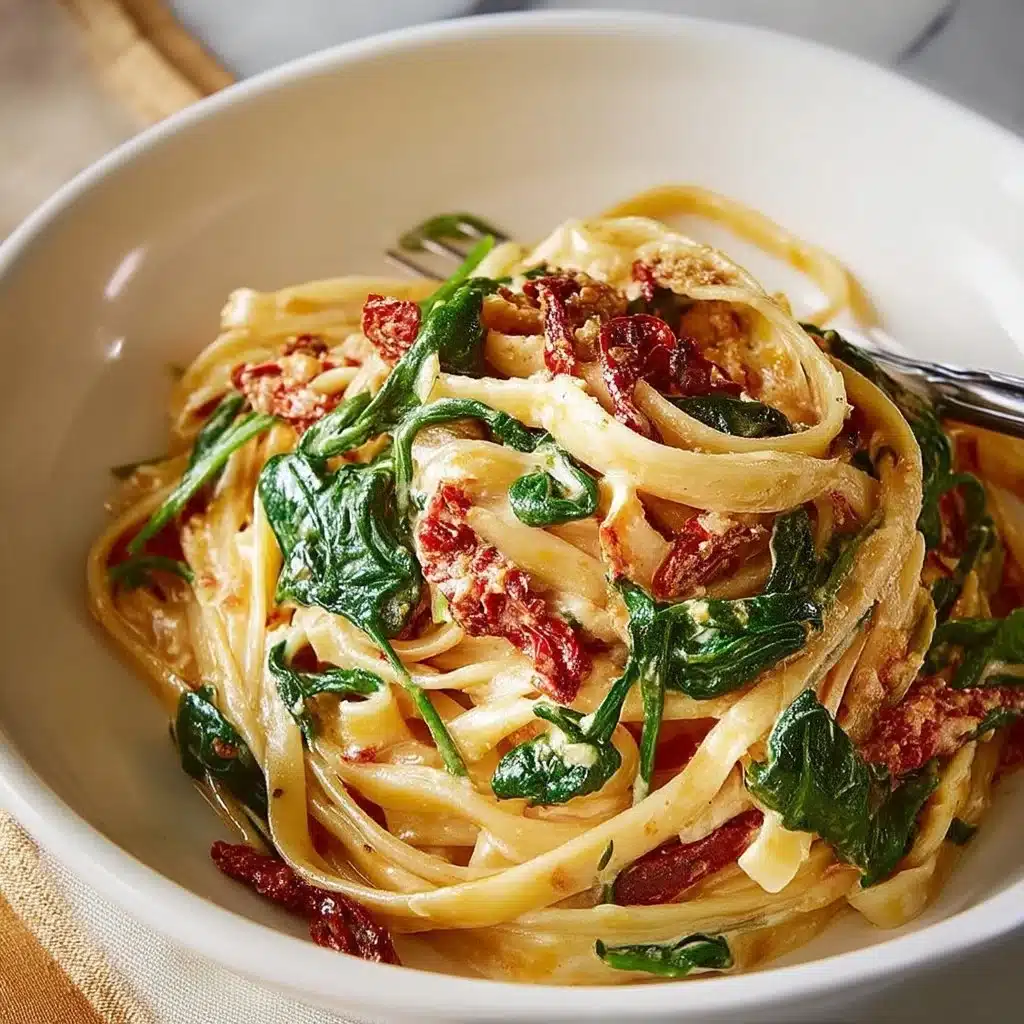
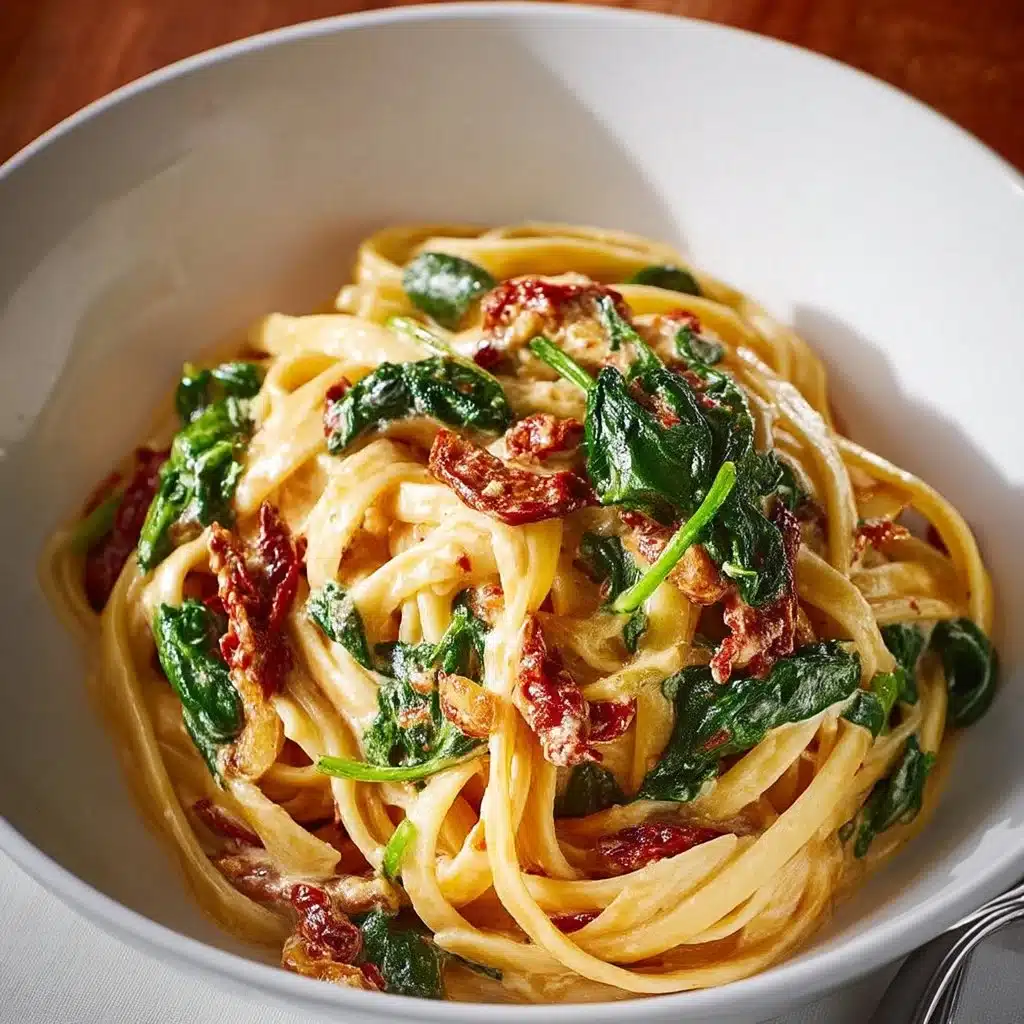
I grew up in a kitchen that smelled like simmering tomatoes and buttered noodles. Sunday dinners meant a bubbling pot of spaghetti, the table full of cousins and clinking forks. My aunt taught me to cook the way she learned: by feel, by taste, and by watching the way a sauce changed texture on the spoon. Years later, when life sped up and schedules filled every night of the week, those same simple pasta dinners became my shorthand for comfort. They remind me that a handful of good ingredients and a short stretch of time can restore a worn week. This recipe for spinach and sundried tomato spaghetti lives in that tradition — quick to pull together, lush enough to feel like a treat, and flexible enough to feed a hungry roommate or a small dinner party.
I remember the first time I tossed warm spaghetti into a skillet of garlicky cream and wilted greens; the steam curled up and carried the scent of garlic and tomatoes right to the dining table, and we all paused to breathe it in. Sundried tomatoes pack sun-kissed intensity without a long cook time, and fresh spinach absorbs the sauce, softening into ribbons that hide extra veggies in plain sight. Heavy cream makes everything silky, and a generous shower of parmesan ties the flavors into a familiar, cheesy finish that feels like home. This dish proves comfort food doesn’t need long hours or complicated steps — it needs a few reliable techniques and an appetite.
I developed this recipe with weeknights in mind: minimal prep, pan-to-plate simplicity, and pantry-friendly ingredients. If you want to make it a family ritual, double the batch and serve with crusty bread. If you need it for one, it reheats beautifully. For a similar fuss-free pasta that leans into Italian-American classics, try our one-pot version of meatier comfort with one-pot spaghetti and meatballs, which follows the same spirit of ease and flavor.
Comfort food brings people together over simple pleasures. A bowl of warm, creamy pasta says “I slowed down for this” in a language everyone recognizes. DishGrub tests recipes until they work reliably for U.S. home cooks: we aim for cozy, practical dishes that produce big smiles with little fuss. Our recipes strike a balance between weeknight speed and Sunday-night satisfaction. We keep steps clear, ingredients familiar, and techniques forgiving so that you can cook confidently, whether you host a casual dinner or feed a hungry family after a busy day. This spinach and sundried tomato spaghetti represents that approach: simple ingredients, bold payoff, and a short list of steps that get you from stove to table in about the time it takes to catch up on one episode of a favorite show.
Why this recipe works
How to prepare Quick and Easy Spinach and Sundried Tomato Spaghetti
Ingredients
- spaghetti
- fresh spinach
- sundried tomatoes
- heavy cream
- garlic
- olive oil
- salt
- pepper
- parmesan cheese
Instructions
-
Cook spaghetti according to package directions.
-
In a large skillet, heat olive oil over medium heat and sauté garlic until fragrant.
-
Add sundried tomatoes and fresh spinach, cooking until spinach wilts.
-
Pour in heavy cream and stir until combined, then season with salt and pepper.
-
Add the cooked spaghetti to the skillet and toss to coat with the sauce.
-
Serve warm, topped with grated parmesan cheese.
Serving ideas
Serve this spaghetti with a simple salad of romaine, lemon, and olive oil to cut the creaminess with bright acid. Offer toasted garlic bread or a rustic baguette to soak up leftover sauce. For a heartier plate, top each serving with pan-seared chicken breast strips or a few slices of roasted sausage. If you want a lighter finish, squeeze fresh lemon over the bowls right before serving to brighten the flavors without changing the comforting texture. Garnish with extra parmesan or a few torn basil leaves for herb-driven aroma.
Pair the dish with a medium-bodied white wine such as Pinot Grigio or a light red like Chianti for a flexible wine match. For nonalcoholic choices, sparkling water with lemon or a cold iced tea keeps the meal feeling fresh and easy.
Storage tips
Cool leftovers quickly and transfer them to an airtight container within two hours of cooking. Store refrigerated for up to three days. Reheat gently on the stovetop over low heat with a splash of milk or cream to revive the texture; microwave in short bursts, stirring between intervals to heat evenly. For freezing, portion the pasta into freezer-safe containers and freeze for up to two months, though cream-based sauces can change texture after thawing; thaw overnight in the refrigerator and reheat slowly with a little added liquid to restore creaminess.
Label containers with the date so you use the oldest portion first. If the sauce looks separated after storage, whisk in a tablespoon of warm water or a splash of cream while reheating to bring it back together.
DishGrub Kitchen Tips
Trim prep time by mincing garlic and slicing sundried tomatoes the night before. Use reserved pasta water if the sauce needs loosening; a couple of tablespoons of starchy pasta water blend the cream into a silkier sauce without watering down flavor. If your sundried tomatoes come packed in oil, incorporate that oil into the pan for an extra flavor boost, and reduce the added olive oil slightly to balance fat.
If you want to explore variations of one-pan pasta dinners, our tested take on classic comfort appears in the one-pot spaghetti and meatballs, which shows another way to cut down on cleanup while delivering crowd-pleasing taste.
Clean as you go: while the pasta boils, get the skillet and garlic ready so everything comes together quickly when the spaghetti finishes. Keep a microplane or box grater handy for quick parmesan shredding just before serving.
Recipe variations
Make it vegetarian-friendly and smoky by using fire-roasted sundried tomatoes and swapping heavy cream for a cashew cream blend to keep texture while cutting dairy. Add protein with shredded rotisserie chicken or stir in white beans for a quicker, inexpensive boost.
Turn it bright and Mediterranean by adding capers and olives with a handful of chopped cherry tomatoes at the end. For heat, toss in red pepper flakes when you sauté the garlic. Swap the spinach for baby kale if you prefer sturdier greens that hold a little more texture after cooking.
For a lighter weeknight version, cut the cream in half and stir in a cup of reserved pasta cooking water to thin the sauce while keeping silkiness. Finish with a generous sprinkle of lemon zest to introduce fresh contrast.
Common questions
What type of spaghetti works best for this dish?
Use a standard durum-wheat spaghetti for the best bite and sauce cling. Thicker pastas like spaghettoni also work well because they hold up to the cream without getting lost. If you choose whole-wheat or gluten-free pasta, follow the package timing and rinse only if the label recommends it; otherwise, reserve at least a cup of pasta water to help the sauce adhere.
Can I make this dairy-free?
Yes. Replace heavy cream with canned coconut milk or a homemade cashew cream for a dairy-free option. Coconut milk introduces a subtle sweetness, so balance it with an extra squeeze of lemon or a pinch of red pepper flakes. Cashew cream stays neutral and gives a similar silky mouthfeel; soak raw cashews and blend with water until smooth before stirring into the skillet.
How do I prevent the sauce from becoming too thin?
If the sauce thins, simmer it gently to reduce and concentrate, stirring frequently. If the sauce separates, whisk in a tablespoon of cold butter or stream in a little reserved pasta water off the heat to emulsify. To thicken quickly, stir in a small handful of finely grated parmesan; the cheese melts and helps bind the cream. Always adjust seasoning after thickening.
Can I add other vegetables?
Yes. Mushrooms, bell peppers, or zucchini make great additions. Sauté denser vegetables like mushrooms first to release moisture; add quick-cooking vegetables like zucchini later so they stay tender-crisp. Frozen peas also work: stir them in off the heat so they thaw into the warm sauce.
What if I only have sun-dried tomatoes in oil versus dry-packed?
Both types work, but oil-packed sundried tomatoes bring extra richness. Use some of the flavored oil in the skillet and reduce added olive oil. If you only have dry-packed tomatoes, rehydrate them in hot water for 10 minutes before chopping and adding to the pan.
How long will leftovers last?
Refrigerated leftovers keep for three days. Freeze portions for up to two months, but expect a slight change in texture due to the cream. Reheat slowly and add a splash of liquid to refresh the sauce.
Conclusion
If you want another take on this flavor combination, check out CookingClassy’s version of spaghetti with sun-dried tomatoes and spinach for extra inspiration and serving ideas.