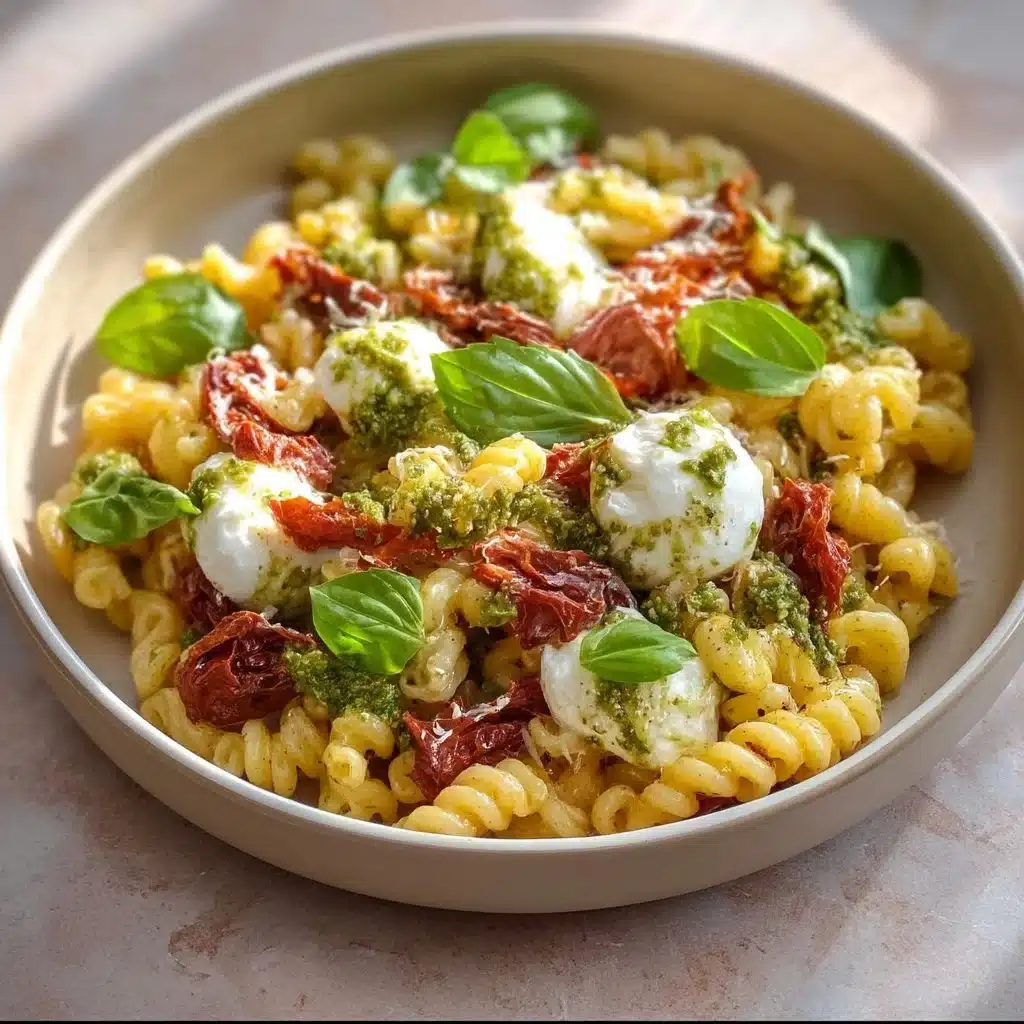
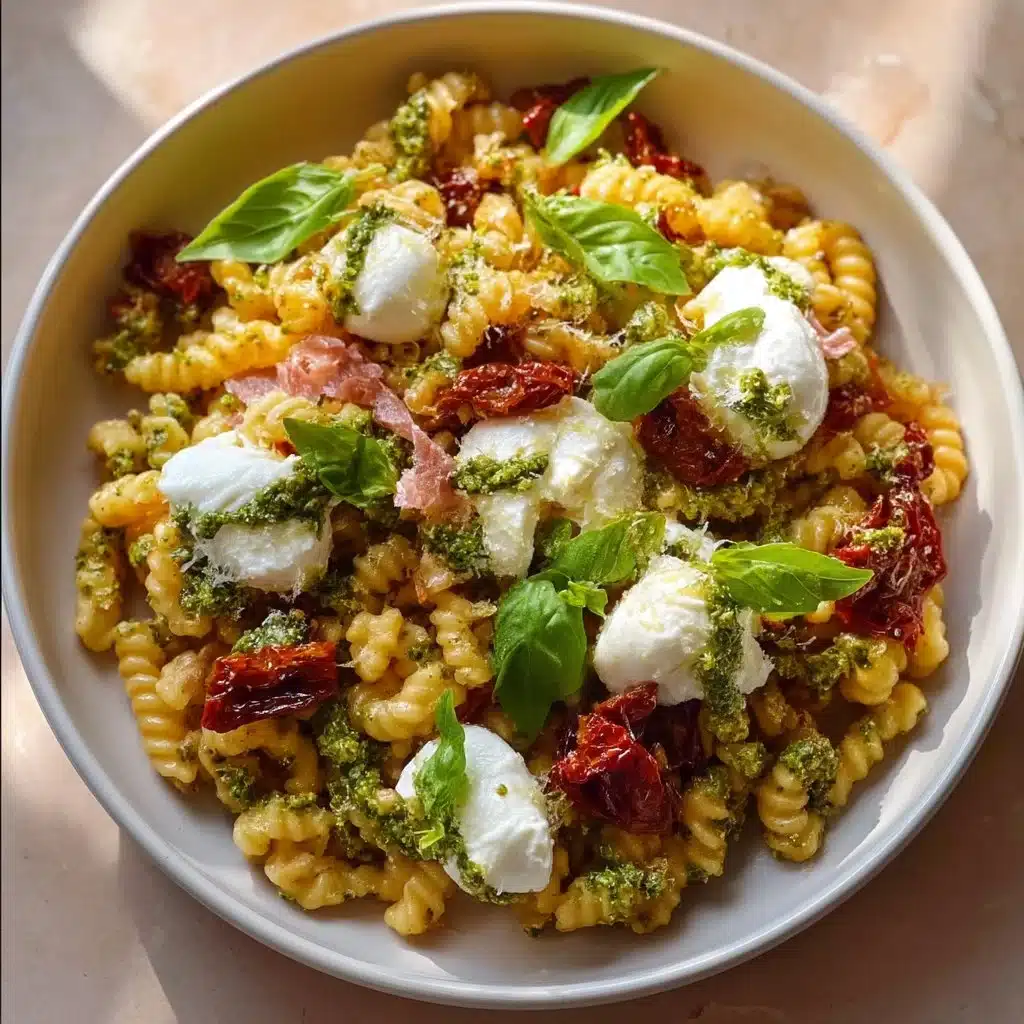
There’s something about a bowl of pasta salad that makes everyone at the table linger. The textures — toothsome radiatori, silky burrata, crisp shards of prosciutto, and crunchy pistachios — invite people to dig in and talk. I like to build recipes that feel like a small celebration: easy enough for a weeknight, special enough for a potluck. This Radiatori Pasta Salad brings together bright slow-roasted tomatoes, peppery basil, and a dollop of pesto to tie flavors together. It tastes like late-summer tomatoes and backyard dinners, but it’s simple to assemble any time of year.
I test recipes until they consistently please a busy family, and this one held up in every run-through. The foundation of radiatori pasta traps dressing and bits, so every bite carries flavor. Burrata adds a creamy contrast to salty prosciutto, while Parmigiano and aged balsamic lend savory depth. I often pair this pasta salad with a simple grilled protein or serve it as part of a buffet where people graze and chat. If you want a richer, saucier cousin for two, try my creamy tomato pasta recipe for a cozy date-night meal for a creamy tomato pasta for date night.
This recipe keeps prep friendly: cook the pasta, cool it, toss the components, and finish with a drizzle of aged balsamic vinaigrette. You can assemble ahead for gatherings and let flavors marry in the fridge, or toss quickly and serve immediately for fresher basil and crisper pistachios. Below you’ll find clear steps, serving ideas, and a few swaps to make this your own while keeping cleanup minimal and flavor high.
Why this recipe works
This salad balances texture and fat with bright acidity. Radiatori’s nooks hold pesto and vinaigrette so each spoonful tastes like a composed bite rather than a mix of separate ingredients. Burrata brings creamy luxury without the need for heavy cream; it softens into the pasta, coating pieces for a silky mouthfeel. Prosciutto adds a savory, cured contrast that plays well against sweet slow-roasted tomatoes. Pistachios give crunch and a nutty lift that a lot of pasta salads lack. Parmigiano contributes savory umami that rounds the whole salad and keeps it from tasting one-dimensional.
The order of assembly matters: cooking and cooling the pasta fully prevents the burrata from melting into a puddle and lets the pesto cling instead of sliding off. Tossing gently preserves the burrata’s cream pockets and keeps prosciutto ribbons intact. A final drizzle of aged balsamic vinaigrette ties sweet and sour elements together and provides a glossy finish. Small attention like toasting pistachios lightly or tearing basil instead of chopping helps aroma and texture shine through. These tweaks make a simple salad feel thoughtfully prepared.
How to prepare Radiatori Pasta Salad
Plan for a little resting time if you want the flavors to meld. The recipe works well both chilled and at room temperature; chill for an hour if you prefer a cooler salad or serve within 20 minutes if you want fresher basil and crunch. Prep the slow-roasted tomatoes and pesto ahead to shorten assembly time. When cooking the pasta, salt the boiling water generously — it’s your first chance to season the base.
Lay out ingredients so you can build the salad quickly: bowl, spatula, and serving dish. Reserve a small splash of pasta cooking water if your pesto feels tight; it loosens easily and helps the sauce cling. If you pack this for a picnic, toss the pasta with pesto and leave burrata until serving to avoid texture changes from chilling. For a buffet, arrange burrata torn into pieces on top so guests can scoop creamy pockets into their bowls.
Ingredients
- Radiatori pasta
- Prosciutto
- Burrata cheese
- Slow roasted tomatoes
- Fresh basil
- Pesto
- Parmigiano cheese
- Pistachios
- Aged balsamic vinaigrette
Instructions
- Cook the radiatori pasta according to package instructions. Drain and let cool.
- In a large bowl, combine the cooked pasta, prosciutto, burrata, slow roasted tomatoes, and basil.
- Add the pesto and toss gently to combine.
- Sprinkle the Parmigiano and pistachios over the top.
- Drizzle with aged balsamic vinaigrette before serving.
Serving ideas
Serve this salad as an elegant side or a light main. It pairs perfectly with grilled lemon chicken or shrimp, which add a smoky, acidic lift without overpowering the burrata. You can also let it stand as the centerpiece for a Mediterranean-inspired spread with olives, crusty bread, and marinated artichokes. For picnic or potluck service, keep the burrata and vinaigrette separate until just before serving to maintain texture and contrast.
Portioning works well in two ways: scooped generous for a main course, or placed in smaller bowls as a side. Garnish with extra basil and a few whole pistachios for a pretty finish. If you need to stretch this salad for more guests, fold in some arugula or baby spinach for volume and peppery balance.
Storage tips
Store leftovers in an airtight container in the refrigerator for up to 2 days. The salad keeps best when you separate the dressing and burrata from the bulk if you plan to refrigerate more than a few hours; bring the bowl to room temperature and add the burrata and vinaigrette before serving for the freshest texture. Pasta will absorb vinaigrette over time, so toss with a splash of olive oil or a touch more pesto if it dries out.
If you must freeze, avoid freezing burrata and fresh basil. Freeze only the base (pasta, tomatoes, and prosciutto) for short-term storage, and refinish with fresh basil, burrata, and vinaigrette after thawing. Reheat gently if you prefer a warm dish, then add the creamy cheese at the end.
DishGrub Kitchen Tips
Use room-temperature burrata when you add it so it softens gently within the salad rather than stiffening when cold. Tear the burrata by hand into uneven pieces — those little pockets create delightful texture contrasts. Lightly toast the pistachios in a dry pan for 2 to 3 minutes to boost their flavor; watch closely so they don’t burn. If you have a high-quality store-bought pesto, start with a smaller amount and add to taste; homemade pesto often tastes brighter, so adjust accordingly.
When choosing slow-roasted tomatoes, pick ones packed in olive oil with herbs when possible — they add concentrated sweetness and complexity. If you want a more herb-forward result, chiffonade the basil (stacking leaves, rolling, and slicing) to distribute flavor without bruising. For inspiration on pairing grain-forward salads with proteins, try a light pairing like our grilled chicken quinoa salad, which follows the same principle of balanced texture and bright dressing.
Recipe variations
Make this salad vegetarian by swapping prosciutto for roasted mushrooms or crispy chickpeas for a different savory note. For a lighter, dairy-free option, replace burrata with marinated tofu or a creamy cashew ricotta. Swap pistachios for toasted almonds or pine nuts depending on preference or allergies. To add heat, stir in a spoonful of chili oil or a few red pepper flakes when you toss with pesto.
If you want to Mediterranean-ize it further, add chopped kalamata olives and diced cucumber. For a more summery take, fold in fresh corn kernels and a squeeze of lemon before serving. Another twist: use a basil-arugula pesto to introduce a peppery edge, or mix sun-dried tomato pesto for a deeper, sweeter flavor profile. Small changes keep the recipe interesting while preserving the balance of creamy, salty, sweet, and crunchy.
Common questions
What makes radiatori different from other pasta shapes and why use it here?
Radiatori’s ridged, ruffled shape captures dressing, pesto, and tiny bits like torn burrata and chopped pistachios in every crevice. That design gives each forkful a balanced mix of ingredients, which is especially helpful in composed salads where you want consistent flavor without constantly fishing for a particular component. Radiatori holds up well when mixed ahead, too, so it won’t become mushy as quickly as some delicate shapes.
Can I prepare this salad ahead of time for a party?
Yes. Prepare the cooked and cooled pasta, the slow-roasted tomatoes, and pesto up to a day in advance. Store them separately; combine everything and add burrata and vinaigrette within an hour of serving for the best texture. If you must assemble earlier, leave the burrata and balsamic aside and add just before serving to avoid overly soft cheese and absorbed dressing. When you toss everything together close to serving time, the salad tastes freshly made and lively.
How should I reheat leftovers that I want warm?
If you prefer warm leftovers, remove the burrata before reheating, and gently warm the salad in a skillet over low heat with a tablespoon of olive oil so the pasta loosens and the tomatoes soften. Add the burrata after you heat it so the cheese remains creamy rather than fully melting. Alternatively, microwave briefly in 20-second bursts, stirring between each burst, then add the burrata and fresh basil at the end.
Is there an easy way to scale this recipe up for a crowd?
Yes. Multiply pasta and tomatoes and scale pesto and Parmigiano proportionally, but add pesto gradually and taste as you go. Prosciutto and burrata scale linearly, but for a crowd you can substitute burrata with torn fresh mozzarella combined with a spoonful of mascarpone to mimic creaminess if burrata becomes costly. Toast larger batches of pistachios and sprinkle just before serving to maintain crunch. Keep dressing on the side so guests can season to taste.
Conclusion
For a fresh, crowd-pleasing pasta salad that reads like a special occasion but comes together quickly, this Radiatori Pasta Salad delivers layers of texture and flavor. If you want another Italian-inspired pasta idea with a different dressing profile, try this classic Radiatore Pasta Salad with Italian Dressing and Pepperoni for more inspiration.