I remember summer evenings when the neighborhood seemed to slow to the rhythm of low conversation and the smell of smoke drifting from backyards. My family gathered around a wobbly picnic table, hands sticky with sauce, plates piled high with comfort. Ribs anchored those meals—not because we chased trends, but because they turned ordinary nights into something we looked forward to. I learned to make slow cooker ribs because I wanted that same warmth without standing over a hot grill for hours. I wanted something reliable, forgiving, and full of flavor that still felt like a Sunday tradition on a Wednesday night.
This recipe grew from those small experiments: trimming, seasoning, and tasting until the sauce and meat felt like they belonged together. Slow cooking pulls the connective tissues apart and makes forks do the work of knives. The sauce seeps into the meat and the bones release their little gifts of flavor. When I brined my first rack in a quick rub and let the slow cooker do its magic, the family declared it a keeper. We kept tweaking the sauce balance—sweet, tangy, and a little smoky—until it hit the kind of comfort note that makes people sit a little longer at the table. Serve this with a simple slaw and a pile of baked beans, and you have a meal that says “you matter” without fuss or a long ingredient list.
At DishGrub we test recipes until they behave the same way in different kitchens. We design recipes for busy U.S. home cooks who want cozy results without complicated steps. You’ll find straightforward instructions, practical tips, and reliable timing in every post—so you can build new family traditions. If you love one-pot slow-cooked BBQ, try our slow cooker BBQ meatballs recipe for another easy, saucy weeknight winner.
Why this recipe works
Slow cooking converts tough collagen into gelatin at a low, steady temperature. That process makes baby back ribs tender while keeping the meat moist. The simple rub of garlic and onion powders plus salt and pepper seasons the ribs without masking their natural pork flavor. A little brown sugar lifts the sauce with caramel warmth while apple cider vinegar brightens the overall profile so the dish never tastes flat.
The slow cooker environment traps steam and sauce, letting flavors meld into the meat. Because you cook on low for a long stretch, you don’t risk drying out the ribs like you might under direct heat. The option to finish under the broiler gives you the best of both worlds: fall-off-the-bone tenderness and a quick, caramelized surface. This method works for busy schedules because the slow cooker does most of the work; you get the same cozy, classic rib experience with far less active time.
How to prepare Slow Cooker BBQ Baby Back Ribs
Ingredients
- 2 racks of baby back ribs
- 1 cup BBQ sauce
- 1 tablespoon brown sugar
- 1 tablespoon apple cider vinegar
- 1 teaspoon garlic powder
- 1 teaspoon onion powder
- Salt and pepper to taste
Instructions
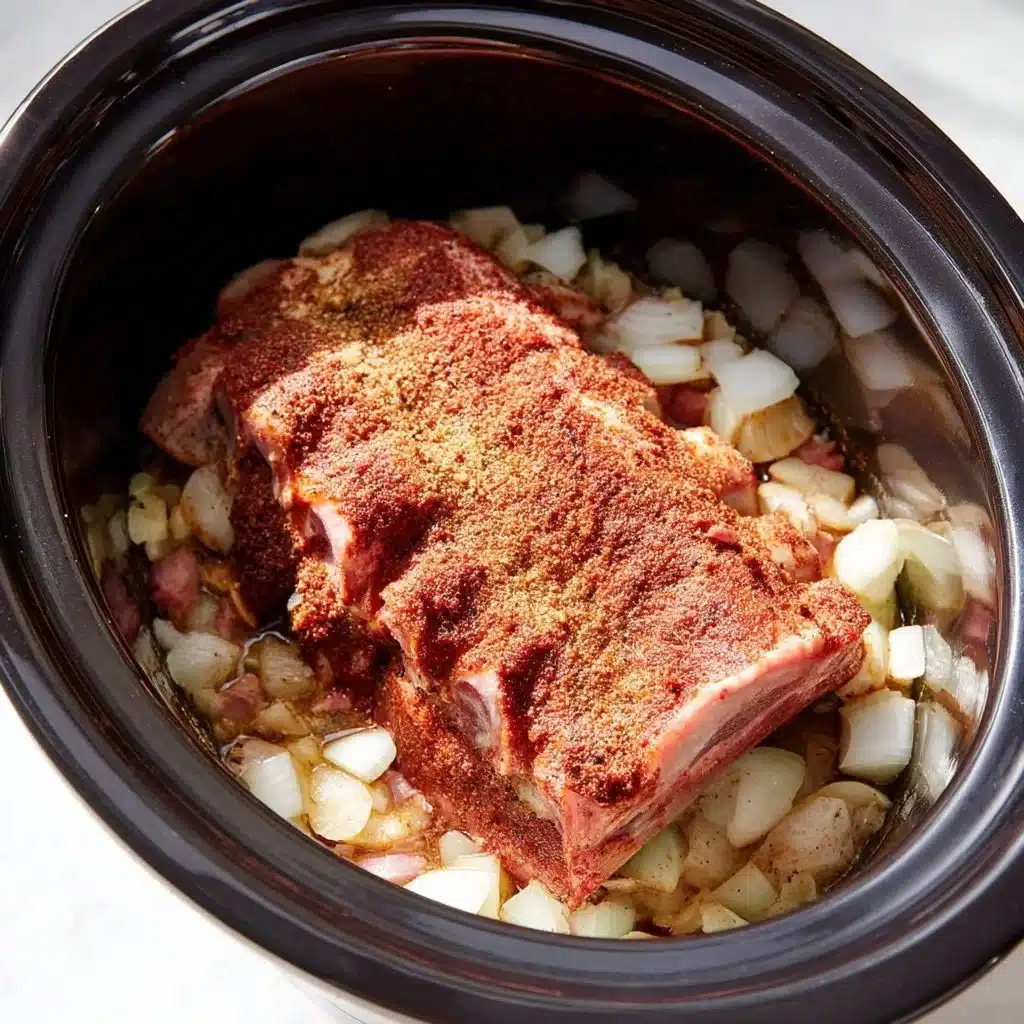
- Remove the membrane from the back of the ribs and season with salt, pepper, garlic powder, and onion powder.
- In a bowl, mix the BBQ sauce, brown sugar, and apple cider vinegar.
- Place the seasoned ribs in the slow cooker and pour the BBQ sauce mixture over them.
- Cover and cook on low for 6 hours, or until the ribs are tender and fall off the bone.
- Optionally, broil the ribs for a few minutes for a crispy finish before serving.
Serving ideas
Serve these ribs with sides that balance their richness. A crisp cabbage slaw with a vinegar-based dressing cuts through the sauce and refreshes the palate. Classic baked beans offer a sweet and savory partner that soaks up extra sauce. Keep a pan of roasted potatoes or a tray of grilled corn nearby for a heartier plate that still feels homey.
For casual gatherings, slice the racks between bones and serve on a big platter with extra sauce in a warmed bowl for dipping. For a slightly elevated weeknight dinner, tuck ribs alongside a pile of mashed potatoes and steamed green beans. If you want a picnic-style spread, include pickles, sliced onions, and soft rolls so guests can build mini rib sandwiches. Whatever you choose, keep the sides simple—the ribs belong at center stage.
How to keep leftovers
Cool leftovers quickly and store them properly to preserve texture and safety. Remove meat from bones if you want easier reheating; wrap tightly in foil or place in an airtight container. Refrigerate within two hours of cooking and use within three to four days. For longer storage, freeze ribs or pulled rib meat in heavy-duty freezer bags or airtight containers for up to three months.
Reheat gently to avoid drying the meat. You can warm leftovers in a low oven at 300°F with a splash of water or extra sauce, covered with foil, until heated through. Reheat in the slow cooker on low for an hour for larger portions. For quick meals, slice meat and warm in a skillet with a little BBQ sauce until just hot. Avoid microwaving at high power for long stretches; that method tends to dry out the meat unless you add moisture and cover it.
DishGrub Kitchen Tips
Trim the membrane from the back of the ribs for tender, penetrable seasoning. To remove it, slide a butter knife under the thin silver skin at one end, lift and peel it away—using a paper towel helps if it slips. Season generously but evenly; the slow cooker will lock the seasoning into the meat.
Use a mid-range BBQ sauce you enjoy straight out of the bottle as your base. If you prefer a smoky edge, add a teaspoon of smoked paprika or a dash of liquid smoke, but add liquid smoke sparingly because it goes a long way. Taste your sauce before you pour it over the ribs and adjust sugar or vinegar to suit your preference.
If you want to cross-train these techniques, our slow cooker BBQ meatballs recipe shows how to balance sauce flavors and timing for different proteins. That recipe uses similar sauce tricks that work well here when you want to tweak sweetness or tang.
Make it your own
Customize the sauce and seasoning to fit your household. For a spicier version, add cayenne pepper, hot sauce, or chipotle in adobo to the BBQ mix. For a sweeter glaze, increase the brown sugar to two tablespoons or brush on a honey-based glaze during the broil finish. Swap apple cider vinegar for balsamic for a deeper, slightly sweeter tang, or add orange juice for a bright citrus lift.
Play with regional influences: add a touch of mustard and Worcestershire sauce for a Carolina-inspired tang, or stir in molasses for a deeper, Kansas City–style sweetness. Use different rubs—try smoked paprika and brown sugar, or a coffee-based rub for an earthy complexity. No matter which direction you take, keep the balance of sweet, salty, and acidic front-of-mind so the ribs stay saucy and lively rather than one-dimensional.

Common questions
Q: How do I know when the ribs are done?
A: Test ribs by inserting a fork between two bones and twisting slightly; the meat should give easily and the bone should offer little resistance. You can also pick up the rack with tongs—if the meat starts to pull away from the bone tips and bends easily, they are ready. Avoid overcooking to the point where the meat becomes stringy; slow cookers vary, so check near the end of the suggested time.
Q: Can I use baby back ribs frozen or partially frozen?
A: Do not place frozen ribs directly into a slow cooker. Slow cookers heat slowly, which can keep meat in a temperature danger zone too long and increase food-safety risks. Thaw ribs fully in the refrigerator overnight before cooking. If you’re short on time, submerge sealed ribs in cold water for a few hours and change the water occasionally to speed thawing safely.
Q: Can I skip the broiler finish?
A: Yes. The broiler gives you a caramelized exterior and slightly sticky bark, but it remains optional. If you prefer, simply serve the ribs straight from the slow cooker and brush extra sauce on the plate. To get a bit of texture without a broiler, heat a skillet over medium-high and sear the ribs briefly on the meat side with a brush of sauce—watch closely to avoid burning.
Q: Will this recipe work with spare ribs or St. Louis ribs?
A: Yes, but spare ribs and St. Louis cuts contain more fat and connective tissue and may need slightly longer cooking time. Check for tenderness at the 6-hour mark and add time as needed. You may also want to trim excess fat for a cleaner final presentation.
Q: How can I make this recipe less sweet?
A: Reduce or omit the brown sugar and offset with a bit more vinegar or a splash of Worcestershire sauce for depth. Adding a teaspoon of mustard or a squeeze of fresh lemon juice can also cut sweetness while keeping a balanced flavor.
Conclusion
For another take on slow-cooked, saucy BBQ that follows similar timing and flavor principles, compare with this slow cooker BBQ baby back ribs recipe, which offers a complementary approach to braising and finishing ribs.