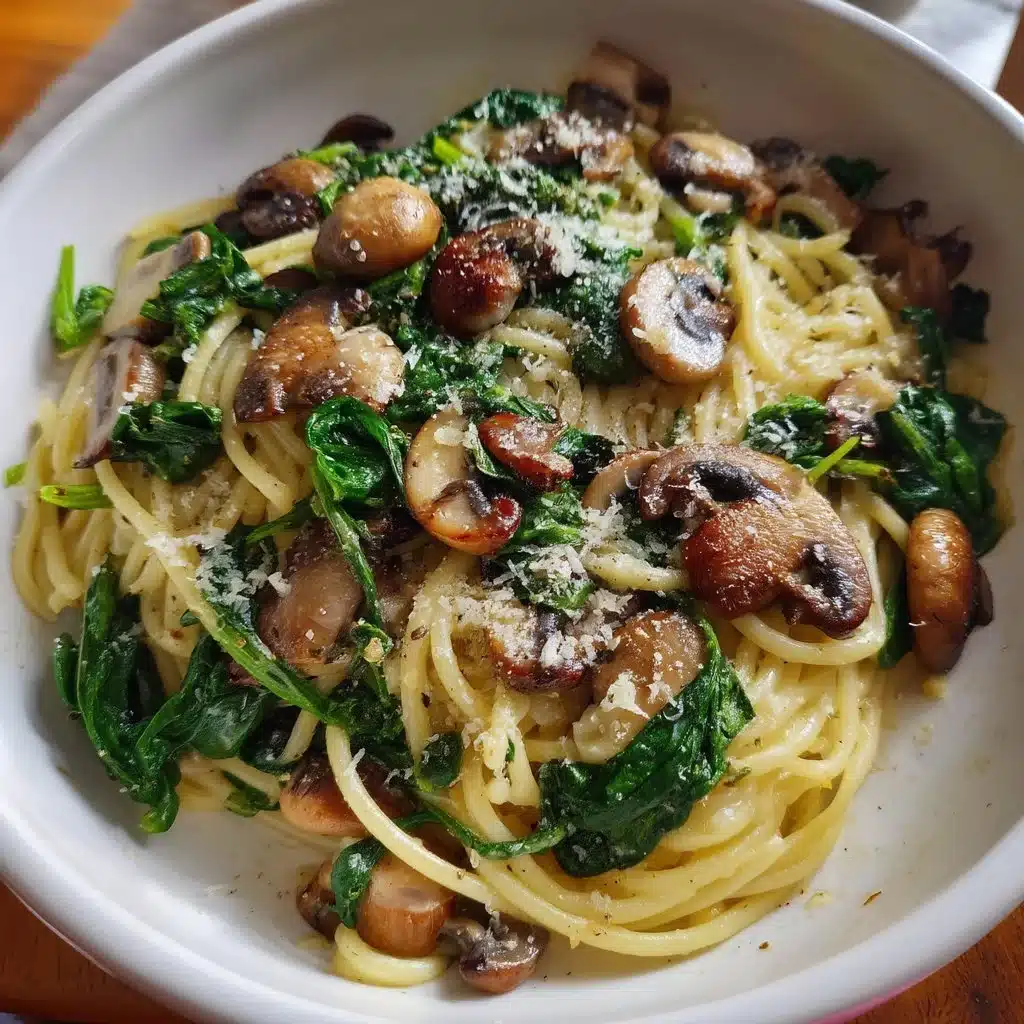
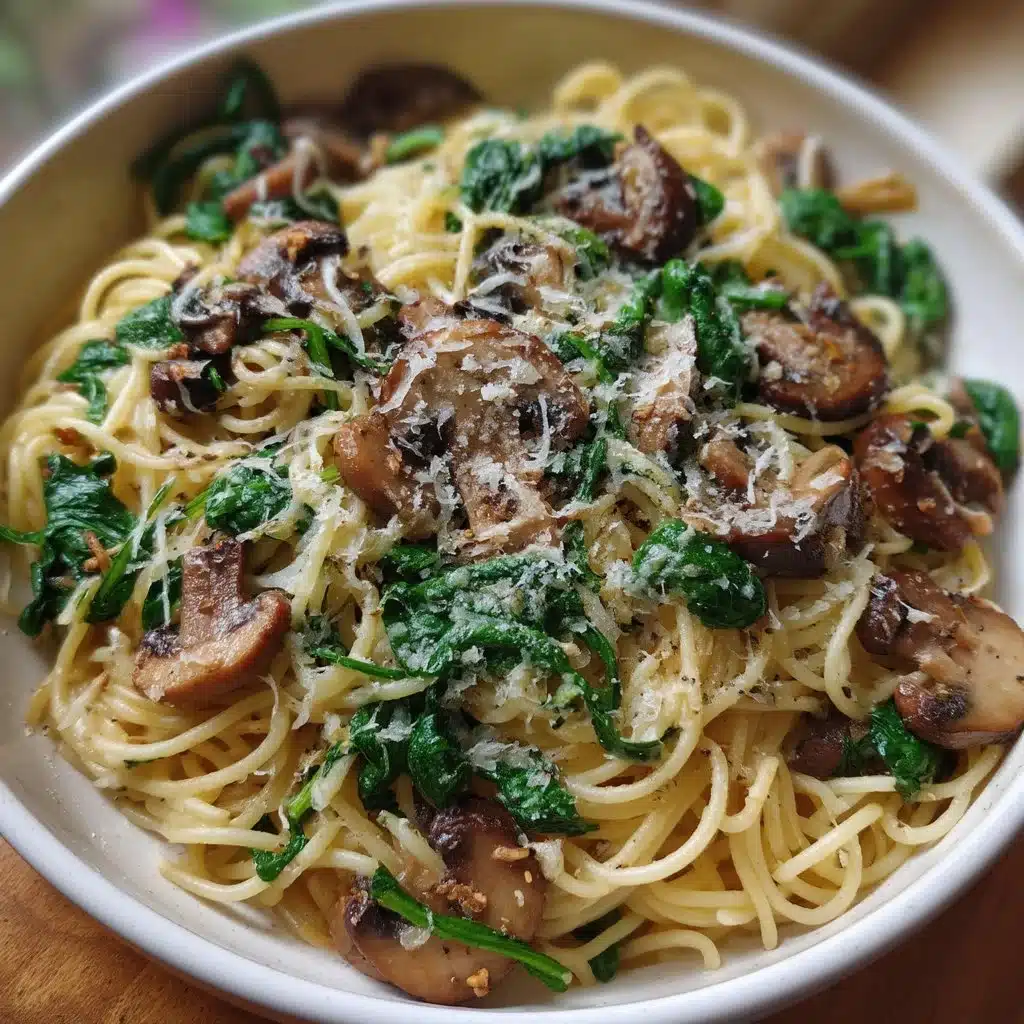
On weeknights I reach for the kind of food that feels like a hug — simple, warm, and quick to pull together. This spinach mushroom pasta does that job every time: tender pasta coated in garlicky olive oil, mushrooms browned until they taste almost meaty, and bright spinach wilted just enough to collapse into the sauce. It fills bowls and laps up conversation, the kind of meal that makes everyone linger a little longer around the table. When I tossed this together the first time, a picky teenager and a tired adult both asked for seconds, which sealed its place in our rotation.
I like how a handful of pantry staples transforms into something cozy without fuss. You can morph it into lunch for one or a plate for a weekend dinner party just by changing the garnish and sides. I keep a box of pasta, a jar of olive oil, and a bag of frozen spinach on backup for nights when plans run late; fresh mushrooms and garlic bring the rest to life. If you love spinach-forward comfort, you might also enjoy my take on a dip that stars spinach in a richer, cheesier form — try this cheesy spinach artichoke dip for a snackable cousin to tonight’s plate.
At DishGrub we test recipes until they make sense for real kitchens: no single-use gadgets, straightforward steps, and flavors that weather substitutions. We focus on comfort food made simple, so you can spend less time fretting and more time eating. This pasta pays off whether you have 10 minutes or thirty; it rewards good techniques (like browning mushrooms and saving pasta water) but forgives small mistakes. If you want a warm, adaptable weeknight dish that plays well with leftovers and crowds, this one checks all the boxes.
Why this recipe works
This recipe succeeds because it balances texture, flavor, and speed. Mushrooms add deep, savory umami when you brown them properly; their juices give the whole dish heft without heavy cream. Garlic and olive oil provide an aromatic backbone that coats each strand of pasta, while fresh spinach brings a bright, slightly earthy note and a pop of color. The starch that pasta releases binds the ingredients, so a splash of reserved pasta water turns separate components into a silky sauce.
You get big flavor from minimal ingredients because the technique concentrates tastes. Browning the mushrooms creates caramelized edges and rich flavor pockets. Wilting the spinach quickly retains its tender bite and fresh color. Tossing hot pasta with the pan ingredients lets the heat marry everything together so the seasoning distributes evenly. The dish also scales easily: double the pasta, heat a larger pan, and you still end up with the same reliable results.
How to prepare Spinach Mushroom Pasta
Start by cooking the pasta to just under al dente so it finishes perfectly in the pan. While the pasta cooks, use a wide skillet to give mushrooms room; crowding them produces steam, which prevents browning. Heat the pan and oil until the oil shimmers, then add garlic and mushrooms so they sizzle and develop color. Add the spinach last because it wilts in seconds; tossing at the end keeps it bright and prevents overcooking.
Reserve a little pasta water before you drain; that starchy liquid acts as glue if the pan feels dry. Toss the drained pasta with the mushroom and spinach mixture over medium heat so the flavors blend and the sauce loosens just enough. Finish with grated Parmesan, a twist of black pepper, and a squeeze of lemon if you like brightness. If you want a spinach-forward appetizer to match tonight’s main, check out this other spinach artichoke dip for a crowd-pleasing starter.
Ingredients
- 8 oz pasta
- 2 cups fresh spinach
- 1 cup mushrooms, sliced
- 2 cloves garlic, minced
- 2 tablespoons olive oil
- Salt and pepper to taste
- Parmesan cheese for serving
Instructions
-
Cook the pasta according to package instructions. Drain and set aside.
-
In a large skillet, heat olive oil over medium heat.
-
Add minced garlic and mushrooms, sautéing until mushrooms are tender.
-
Stir in fresh spinach and cook until just wilted.
-
Add the cooked pasta to the skillet and toss everything together.
-
Season with salt and pepper, then serve with grated Parmesan cheese.
Serving ideas
Serve this pasta straight from the skillet for a rustic weeknight vibe, or plate it neatly with a little Parmesan and cracked black pepper on top for guests. Add a wedge of lemon on the side so people can brighten their bowls individually. For a fuller meal, place the pasta alongside a simple green salad dressed with lemon and olive oil, or put several slices of toasted garlic bread on the table to soak up any remaining sauce.
If you want protein, offer sliced grilled chicken, pan-seared shrimp, or browned Italian sausage as optional mix-ins so diners can pick their preference. For a lighter touch, top each portion with a scoop of ricotta or a spoonful of Greek yogurt swirled in at the table. For a heartier, cozier plate, finish with a drizzle of browned butter and a scattering of toasted walnuts for crunch.
Pair the dish with wines that match its weight: a crisp Pinot Grigio or a light Chardonnay complements the mushrooms and cheese. For nonalcoholic options, sparkling water with a squeeze of citrus keeps the palate refreshed between bites.
Storage tips
Cool leftovers quickly and transfer them to an airtight container, then refrigerate for up to three days. Reheat gently on the stovetop over low heat with a splash of water or stock to loosen the sauce and revive the spinach. Microwaves work in a pinch; stir halfway through heating and add a small drizzle of olive oil or a teaspoon of water if the pasta seems dry.
Freezing isn’t ideal because spinach releases water when thawed and mushrooms can get rubbery, but you can freeze portions if necessary. Flash-freeze the pasta on a tray, then move to a freezer bag; thaw overnight in the fridge and reheat slowly on the stovetop with a little extra liquid to restore texture. When you plan to reheat, reserve a bit of fresh Parmesan to add after warming so the cheese keeps its bright flavor.
DishGrub Kitchen Tips
Use high heat to brown mushrooms but reduce to medium after they release moisture so they caramelize instead of steaming. Don’t add salt to the mushrooms too early; salt draws out water and prevents quick browning. Mince garlic finely and add it once mushrooms have taken on color so the garlic doesn’t burn and turn bitter.
Keep a cup of pasta water ready before you drain; add it a tablespoon at a time if you need to bring the sauce together. Taste and season in layers — season the mushrooms while they cook, then taste again after tossing with pasta. Grate Parmesan fresh rather than using pre-grated cheese; it melts better and tastes fresher. If you like a glossy finish, swirl in a tablespoon of butter at the end.
Invest in a wide skillet rather than a narrow pan; it gives ingredients room to cook evenly and makes tossing pasta easier. If your skillet is small, work in batches to avoid steaming the mushrooms and overcrowding the pan.
Recipe variations
Add cream: Stir in 1/4 to 1/2 cup heavy cream after adding the spinach for a richer, silkier sauce.
Add shallots and white wine: Sauté a minced shallot with the mushrooms, deglaze the pan with a splash of white wine, and let it reduce before adding spinach.
Make it vegan: Use vegan pasta, swap Parmesan for a sprinkle of nutritional yeast, and finish with a drizzle of extra-virgin olive oil for richness.
Boost protein: Fold in shredded rotisserie chicken, sautéed Italian sausage, or quick-cooked shrimp for a heartier meal.
Add heat and color: Toss in red pepper flakes, halved cherry tomatoes, or a handful of toasted pine nuts for texture and brightness.
Use different greens: Substitute baby kale or Swiss chard if you want a heartier green; cook a little longer until tender.
Swap the mushrooms: Use cremini or shiitake for bolder, earthier flavor, or try a mix for depth.
Common questions
What kind of pasta works best for this dish?
Short or long pasta both work, but choose shapes that catch the sauce. Spaghetti, linguine, or fettuccine coat nicely and feel classic; penne, rigatoni, or farfalle also work if you prefer bites that trap mushrooms and spinach between curves. Use what you enjoy or what you have on hand.
Can I use frozen spinach instead of fresh?
Yes, you can, but handle it right. Thaw the spinach and squeeze out as much excess water as possible before adding it to the pan, and add it a little earlier so it heats through. Fresh spinach wilts quickly and keeps a slightly firmer texture and brighter color, so I prefer it when I have it.
How do I prevent the mushrooms from getting soggy?
Give them space in the pan and don’t crowd them. Cook over medium-high heat and let them sit undisturbed for a minute or two so they brown before you stir. If the pan looks dry, add a touch more oil, but avoid adding salt too early because it draws out moisture. Work in batches for larger quantities.
Can I make this ahead for entertaining?
You can prepare the mushrooms and garlic a few hours ahead and refrigerate, then reheat gently and toss with freshly cooked pasta just before serving. Cooked pasta tends to clump if left too long, so I recommend cooking the pasta within an hour of serving for the best texture. Alternatively, reheat gently with a splash of pasta water to refresh the dish.
How much cheese should I use?
Taste as you go. Start with a generous tablespoon of freshly grated Parmesan per serving and adjust to preference. Freshly grated hard cheese adds salty umami and helps the sauce bind; finish each bowl with an extra sprinkle at the table.
Conclusion
If you’d like a version that leans into shallots and extra mushroom depth, this Mushroom Spinach Pasta with Shallots – Familystyle Food offers a great inspiration you can adapt to the simple method here.