I remember the first time my grandmother ladled a warm, green bowl of split pea soup onto the kitchen table. She had a way of making ordinary things feel important: the steam rising from the pot, the slow clink of the spoon against ceramic, and that comforting smell of onion and thyme that hung in the house for hours. The recipe came from a lifetime of winter evenings, when neighbors stopped by and kids tracked snow across the floor. It cost next to nothing, but it gave everyone something priceless — a moment to sit down and breathe. Over the years I learned that a pot of soup does more than fill bellies; it gathers people. You can make this soup in under an hour and still capture the same warmth and welcome.
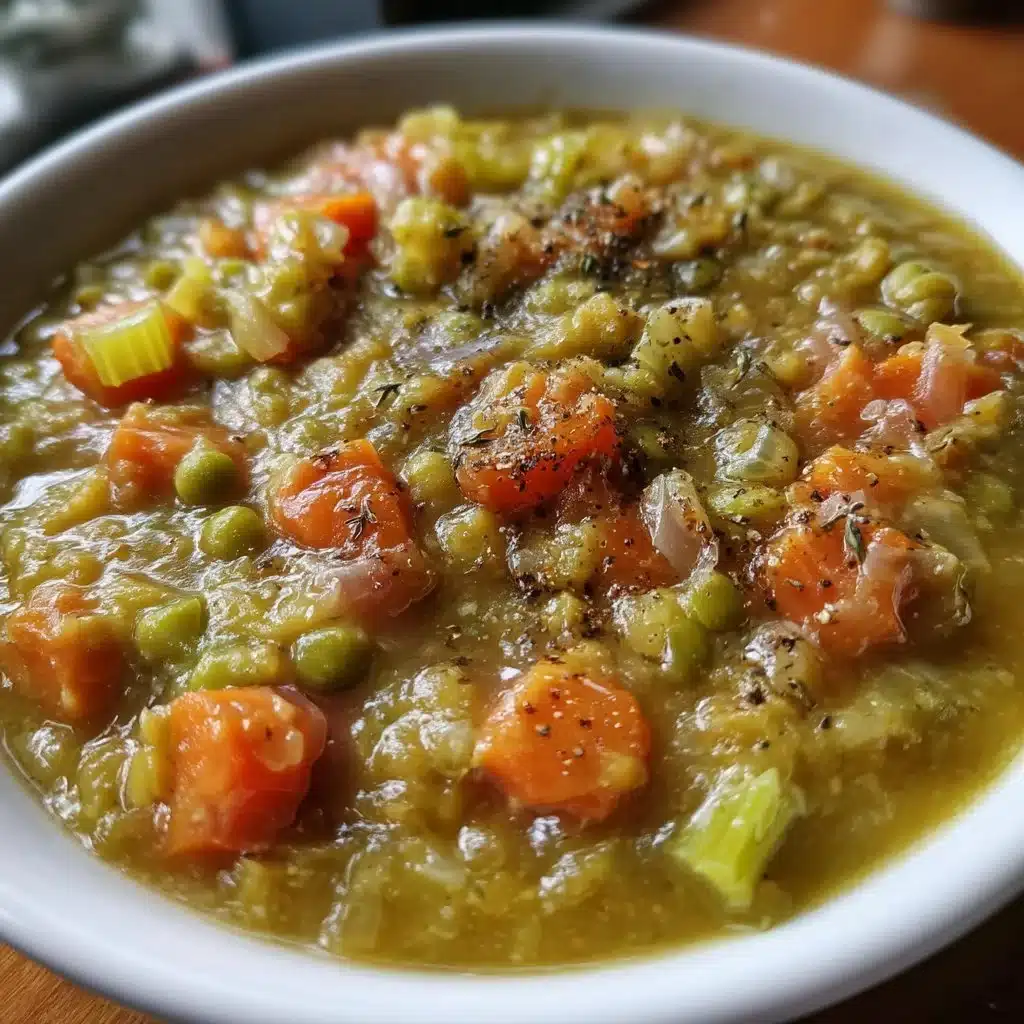
I like recipes that do the heavy lifting so I can focus on the people around the table. This split pea soup fits that bill. It behaves patiently on the stove, letting the peas soften and the flavors round out, and the result tastes richer than the simple list of ingredients suggests. When I cook it, I aim for texture as much as flavor — a little rustic body, not too smooth, with bits of carrot and celery to remind you it’s homemade. That rough, honest quality makes it a perfect weeknight dinner or a hearty lunch for colder days. Serve it with crusty bread or a simple salad and you have a meal that’s quietly satisfying.
Comfort food ties into togetherness, and I write for cooks who want good food without fuss. At DishGrub, we test recipes until they work consistently in a real home kitchen — on standard stovetops and in everyday pots. You’ll get cozy flavors without complicated techniques. For those who love a creamy vegetable soup, check out our guide to a favorite variation that pairs beautifully with split pea soup in a full-week meal rotation: our broccoli cheddar soup recipe. We keep instructions clear, measurements reliable, and substitutions practical so you can feel confident the first time you try a dish and every time after.
Why you’ll love this dish
This split pea soup feels deceptively luxurious because it develops deep flavor from humble ingredients. The peas give it a naturally creamy body once they break down during simmering. Onion, carrot, and celery form a classic aromatic trio that adds sweetness and balance. Thyme and a single bay leaf lend an herbaceous backbone, while a simple sauté in olive oil wakes up the vegetables and adds a light caramelized note. You will love how little hands-on time the recipe demands and how big the payoff tastes.
The soup fits many occasions: ladle it into bowls for a quiet family dinner, keep it on the stove for a casual lunch, or pack it for a thermos when you need comfort on the go. It reheats beautifully and often tastes better the next day after the flavors meld.
How to prepare Split Pea Soup
This recipe uses straightforward, reliable steps so you can focus on timing and texture. Rinse the peas, sweat the vegetables, add the liquid, and simmer until the peas fall apart. If you want a smoother result, blend part or all of the soup at the end; if you prefer texture, leave it chunky. The stovetop method gives excellent control over the thickness — add more broth if you like a lighter soup or let it reduce for a heartier bowl.
Ingredients
- 1 cup split green peas
- 1 onion, chopped
- 2 carrots, sliced
- 2 stalks celery, chopped
- 4 cups vegetable broth or water
- 1 bay leaf
- 1 teaspoon thyme
- Salt and pepper to taste
- 1 tablespoon olive oil
Instructions
-
Rinse the split peas under cold water and set aside.
-
In a large pot, heat olive oil over medium heat.
-
Add onion, carrots, and celery; sauté until the vegetables are softened.
-
Add the rinsed peas, broth, bay leaf, thyme, salt, and pepper.
-
Bring to a boil.
-
Reduce heat, cover, and simmer for 30-40 minutes until peas are tender.
-
Remove bay leaf, blend if desired for a smoother texture, and serve hot.
Serving ideas
Serve the soup steaming hot with a slice of crusty bread or a warm roll. A simple green salad dressed with lemon and oil adds brightness and cuts the soup’s richness. For a heartier meal, top bowls with a spoonful of plain yogurt or sour cream and a sprinkle of chopped fresh parsley for color. If you like smoky notes, crumble crispy bacon or a handful of smoked paprika into bowls. For a vegetarian main, add a crusty grilled cheese sandwich on the side for dunking and extra comfort.
If you plan to serve this at a casual gathering, place bowls on a tray with small plates of garnishes — chopped chives, grated Parmesan, or crushed red pepper — and let guests customize their bowls. A little garnish transforms simple soup into a thoughtful, shared meal.
How to keep leftovers
Cool the soup quickly by transferring it to shallow containers and refrigerate within two hours of cooking. Stored properly in airtight containers, the soup keeps well for 3 to 4 days in the refrigerator. For longer storage, freeze in meal-sized portions for up to 3 months. Thaw frozen soup overnight in the refrigerator or warm gently on the stove from frozen, adding a splash of water or broth if it becomes too thick.
When reheating on the stovetop, warm over low to medium heat and stir occasionally to prevent sticking. If the soup has thickened in the fridge, add liquid in small amounts until you reach the desired consistency. Taste and adjust seasoning with salt and pepper before serving.
DishGrub Kitchen Tips
Use these practical tips to make the recipe even more reliable in your kitchen. Rinse the peas to remove dust and any small stones; this simple step ensures a cleaner flavor and texture. Sauté the onion until translucent and just beginning to brown for extra sweetness. Keep an eye on your simmer so the pot doesn’t boil too hard; a gentle simmer breaks the peas down without sticking.
If you want a richer flavor without meat, toast the peas briefly in the dry pot before sautéing the vegetables for a nuttier note. For a creamier finish without dairy, blend part of the soup and fold it back in for body. If you’d like an inspiration crossover, pair your split pea bowl with a cheesy vegetable soup; we tested a comforting version that pairs well for a two-soup rotation and you can read it here: comforting broccoli cheddar soup.
Make it your own
This soup adapts easily to what you have on hand. Swap vegetable broth for chicken broth if you don’t require a vegetarian version; the additional savory depth complements the peas nicely. Add diced potatoes or a handful of barley for extra body. Stir in a spoonful of Dijon mustard at the end for a bright, tangy lift. For a smoky variation, cook chopped smoked ham or ham hock with the peas and remove bones before serving.
Want it spicy? Add a pinch of cayenne or a dash of hot sauce to each bowl. For herb-forward flavor, swap thyme for rosemary or add a bay of fresh parsley at the end. These small changes let you make the soup fit your pantry and your palate.

Frequently asked questions
Q: Can I use whole dried peas instead of split peas?
A: Whole peas require a longer cooking time because they retain their skins, which slow down softening. If you use whole dried peas, plan on simmering for at least 60 to 90 minutes and check for tenderness periodically. You might need additional liquid. For predictable, creamy results in under an hour, split peas are the better choice because they break down faster.
Q: Do I need to soak split peas before cooking?
A: No, you don’t need to soak split peas. Unlike many whole legumes, split peas cook relatively quickly without pre-soaking. Rinsing them removes dust and debris, but soaking won’t reduce the cooking time dramatically. If you prefer to soak them briefly, it won’t hurt, but it’s not necessary.
Q: How do I fix soup that turns out too thick or too thin?
A: If the soup is too thick, stir in warm broth or water a little at a time until it reaches the consistency you like. If the soup is too thin, simmer it uncovered to reduce and thicken, or blend a portion of the soup and return it to the pot to add body. Adding starchy vegetables like potatoes can also naturally thicken the soup while boosting flavor.
Q: Can I make this in a slow cooker or Instant Pot?
A: Yes, both tools work well. In a slow cooker, combine ingredients and cook on low for 6 to 8 hours or on high for 3 to 4 hours until peas are tender. In an Instant Pot, use the pressure-cook setting for about 12 minutes with natural release. Adjust liquids slightly if needed and always check texture before serving.
Conclusion
For more variations and step-by-step photos you can compare with our approach, see this detailed Split Pea Soup Recipe (Stovetop, Crockpot, Instant Pot), which lays out multiple methods for stovetop, slow cooker, and pressure-cooker preparations.