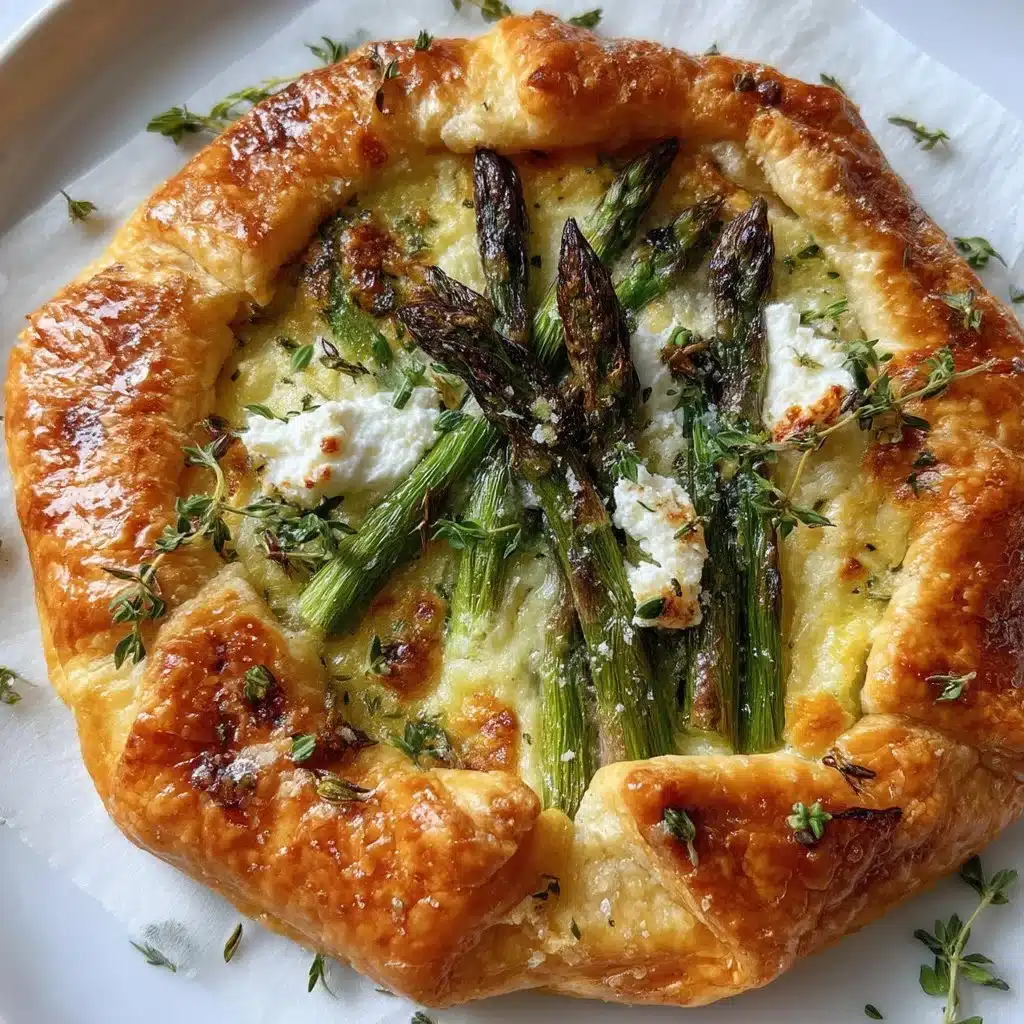
Spring vegetable galettes feel like a neighbor bringing over a warm pie: simple, honest, and ready to be shared. The first bite here—flaky pastry, a cushion of tangy ricotta, and bright roasted asparagus—reminds you that comfort food can also taste fresh. Serve it warm from the oven on a weekday night, or set it on the table for a casual weekend brunch. Either way, people gather, plates get wiped, and someone asks for the recipe.
At DishGrub we test recipes until they behave the way a home cook needs them to: predictable, forgiving, and delicious. We aim for cozy meals that don’t demand fancy equipment but do deliver on flavor. If you like this galette, you might also enjoy a creamy, custardy asparagus quiche we developed for busy spring mornings — find our detailed version here: asparagus quiche. That recipe shares the same seasonal spirit and easy approach: minimal fuss, maximum comfort.
Why this recipe works
This galette balances textures and flavors with a small number of ingredients. The store-bought puff pastry supplies reliable, buttery layers without the time investment of making pastry from scratch. Ricotta brings a cool, creamy base that tames the salt of Parmesan and the vegetal brightness of asparagus. A light egg wash on the crust promotes deep golden color and a pleasant crisp. You get contrast in every bite: crisp pastry, smooth cheese, and tender-crisp asparagus. The assembly stays casual, so beginners can create something that looks rustic and purposeful without precision. The recipe also tolerates small substitutions—different herbs, a squeeze of lemon, or a handful of grated sharp cheddar will still produce a satisfying tart. Because the galette bakes quickly, you can put it together after work and serve it while the salad still feels fresh.
How to prepare Spring Asparagus Ricotta Galette
This galette comes together in an afternoon or a weeknight. Work from chilled pastry, keep your fillings cool, and avoid overloading the center so the crust folds easily. Trim any very thick asparagus stalks or halve them lengthwise so they cook evenly. Room-temperature ricotta spreads without tearing the pastry, and mixing half the Parmesan into the ricotta seasons it through. When folding the crust, don’t panic about neatness—pleats give the galette its rustic charm. Bake until the pastry shows a rich amber color and the asparagus shines with a little browning at the tips. Let the galette rest briefly so the ricotta firms, then sprinkle herbs and slice.
Ingredients
- 1 sheet of puff pastry
- 1 cup ricotta cheese
- 1 bunch asparagus, trimmed
- 1 egg, beaten
- Salt and pepper to taste
- 1/2 cup grated Parmesan cheese
- 1 tablespoon olive oil
- Fresh herbs (such as thyme or basil) for garnish
Instructions
- Preheat the oven to 400°F (200°C).
- On a lightly floured surface, roll out the puff pastry into a round shape, about 12 inches in diameter, and transfer it to a baking sheet lined with parchment paper.
- In a bowl, mix the ricotta cheese with salt, pepper, and half of the Parmesan cheese.
- Spread this mixture over the pastry, leaving a 2-inch border around the edges.
- Arrange the trimmed asparagus on top of the ricotta.
- Drizzle with olive oil and season with additional salt and pepper.
- Fold the edges of the pastry over the filling, pleating it to create a rustic look.
- Brush the edges with the beaten egg.
- Sprinkle the remaining Parmesan cheese over the asparagus.
- Bake for 25-30 minutes until the pastry is golden and crispy.
- Let it cool slightly before garnishing with fresh herbs and serving.
Simple serving suggestions
Serve the galette warm with a crisp green salad dressed simply in lemon and olive oil. The richness of ricotta and Parmesan pairs well with a vinaigrette that cuts through the fat. For a heartier meal, accompany the galette with a bowl of spring vegetable soup or roasted potatoes. Slice the galette into wedges and offer a small spoonful of grainy mustard or a drizzle of balsamic reduction for people who like a punch of acidity. For brunch, place a soft-poached egg on each slice so the yolk mingles with ricotta, creating a silky sauce. Keep the sides uncomplicated so the galette remains the star of the plate.
How to keep leftovers
Cool the galette completely before storing to prevent sogginess. Wrap any remaining slices loosely in aluminum foil or store them in an airtight container; the pastry will keep best the first day. Refrigerate for up to 3 days. Reheat in a 375°F oven for 8 to 12 minutes to revive the crispness, or use a toaster oven for single slices. Avoid the microwave for reheating because it softens the pastry. If you expect more leftovers, freeze cooled slices on a tray until firm, then transfer them to a freezer bag and keep for up to 1 month. Reheat frozen pieces from cold in a 375°F oven until heated through and crisp on the outside.
DishGrub Kitchen Tips
Work with chilled puff pastry directly from the refrigerator. Cold dough produces the flakiest layers; if it feels sticky or too soft, return it to the fridge for 10 to 15 minutes. Use whole-milk ricotta when possible for creamier filling; if it tastes watery, drain it briefly in a fine-mesh sieve to concentrate the texture. Trim asparagus so tips remain intact and attractive; if stalks are thick, slice them lengthwise to ensure even cooking. When folding the edge, press gently to seal but avoid pressing out all the air—those pockets make the crust flake. Finally, rotate the sheet halfway through baking if your oven browns unevenly.
Make it your own
Swap the Parmesan for Pecorino Romano if you like a sharper, saltier bite, or mix in a spoonful of lemon zest to lift the ricotta. Add thinly sliced shallot or half a cup of sautéed mushrooms under the asparagus for extra umami. Sprinkle toasted pine nuts over the top after baking for crunch, or scatter a handful of baby arugula before serving for peppery contrast. For a gluten-free option, make this concept with a pre-baked gluten-free tart shell and assemble the filling warm; the technique changes slightly, but the flavors remain aligned. If you want to go vegetarian and more protein-forward, add a layer of cooked cannellini beans mashed with garlic under the ricotta.

Frequently asked questions
What kind of puff pastry should I buy?
Buy a quality store-bought puff pastry sheet that keeps its shape in the oven. Brands vary in butter content and folding, so choose one labeled all-butter or high-butter content if you want richer flavor. Keep the pastry cold until you roll it out, and avoid overworking it; the dough should feel firm and slightly chilled, not sticky or warm.
Can I make the ricotta filling ahead of time?
Yes. Mix the ricotta filling up to a day ahead and refrigerate it in an airtight container. Stir it briefly before spreading it on the pastry; if the mixture firms too much, let it sit at room temperature for 10 minutes to loosen. Do not assemble the galette far in advance, because the pastry will soften from the moisture of the filling.
How do I prevent the asparagus from overcooking?
Choose asparagus stalks of similar thickness so they cook evenly. Arrange them in a single layer and avoid overlapping. If your asparagus are thick, slice them lengthwise or blanch them briefly in boiling salted water for 1 minute, then shock them in ice water before arranging on the galette. That step gives you tender stalks with a vibrant color while keeping total bake time consistent.
Can I use another cheese in place of ricotta?
You can substitute mascarpone for a richer, silkier filling, or blend ricotta with goat cheese for tang. If you use a drier cheese like feta, reduce added salt and expect a different texture. Mixing half ricotta and half soft cheese keeps the structure while changing flavor.
Is this galette freezer-friendly?
Yes. Freeze fully cooled slices by placing them on a baking sheet until firm, then transfer to a freezer-safe bag. Reheat from frozen in a 375°F oven for 18 to 25 minutes, covering loosely with foil if the crust browns too quickly before the center heats through.
How can I make it ahead for a brunch crowd?
Assemble the galette on the parchment-lined baking sheet and keep it refrigerated for up to 6 hours before baking. Brush the crust with egg wash right before baking for the best color. If you need to prep further ahead, keep filling and pastry separate, then assemble and bake on the day of serving.
Conclusion
For an extra reference and inspiration on a similar spring tart, consider the approach in smitten kitchen’s spring asparagus galette, which offers useful variations and step-by-step photos to guide your technique.