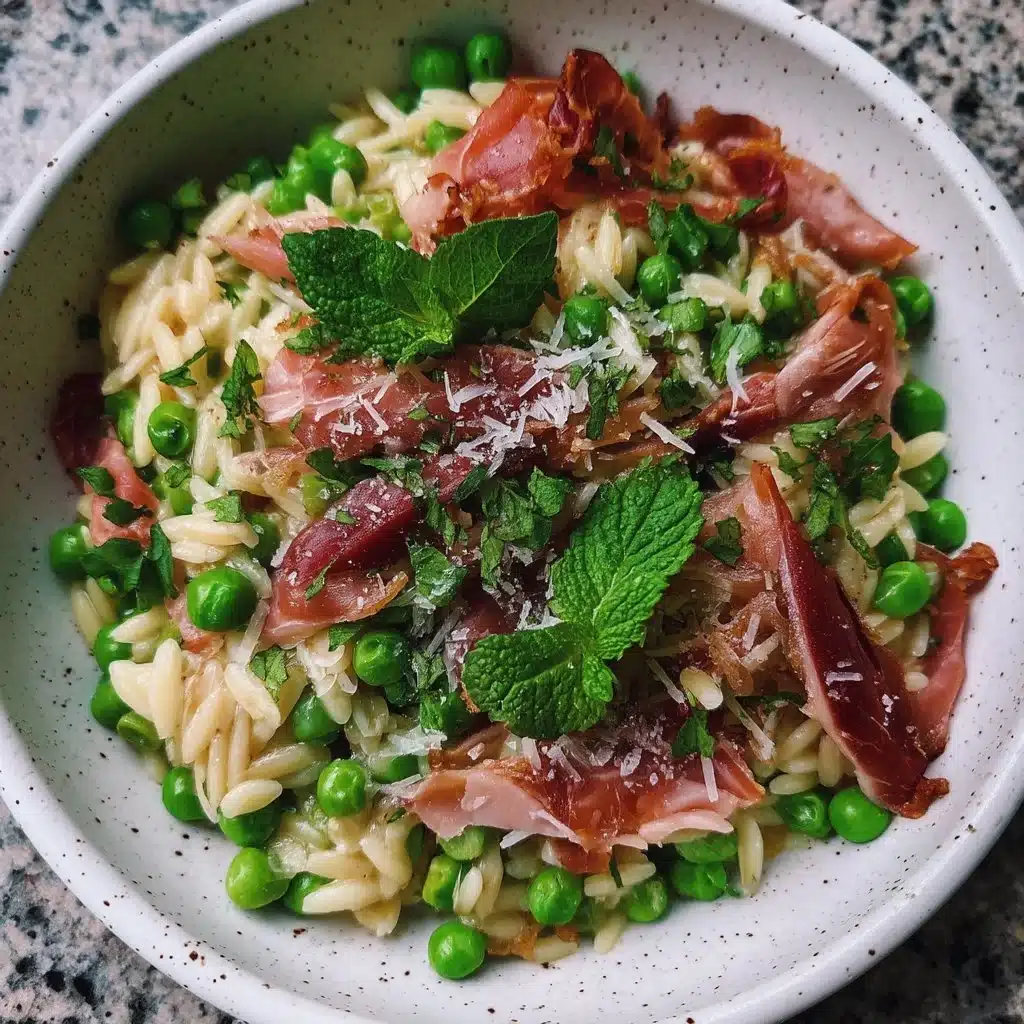
Spring nights bring a particular kind of hunger — not for something fussy or complicated, but for a dish that tastes like home and comes together without a fuss. This Spring Orzo with Peas and Prosciutto hits that sweet spot: it feels bright and seasonal from the peas and herbs, reassuring and savory from the prosciutto and Parmesan. I picture a sunlit kitchen table, a shallow bowl steaming in the center, the sweet pop of peas against the nutty bite of orzo, and a few scattered fresh mint leaves that make everyone at the table smile. That’s the kind of comfort this recipe serves — familiar, quick, and easy enough that it becomes a weekday habit rather than a special-occasion stressor.
I first made this recipe on a weekday when I wanted something faster than pasta but just as comforting. The orzo cooks quick, the prosciutto crisps in a skillet while the pasta drains, and the whole thing comes together in one pan once you toss everything. There’s no overthinking: keep the broth flavorful, don’t overcook the peas, and stir in the Parmesan off the heat so the sauce stays silky. It’s a little bright, a little indulgent, and perfectly portioned for two to four people depending on sides.
At DishGrub, we test recipes until they feel effortless in a real home kitchen. We favor cozy flavors and clear steps so you can get dinner on the table with confidence. If you’re in the mood for more cheesy baked comfort to pair with this light pasta, try our baked mac and cheese for a heartier side that complements spring vegetables and salty prosciutto: DishGrub’s Baked Mac and Cheese. We keep techniques simple, pantry-friendly, and reliably delicious so you can cook more and worry less.
Why this recipe stands out
This orzo dish strikes a balance between spring freshness and satisfying richness. Orzo cooks faster than traditional pastas, so you go from pantry to plate quickly. Using broth to cook the orzo adds depth without long simmering, and folding in Parmesan at the end gives the grain a glossy, saucy finish without heavy cream. Prosciutto plays two roles: it adds savory, salty crunch when crisped and contributes an aromatic, almost smoky flavor that pairs beautifully with sweet peas. A scatter of fresh mint or basil finishes the dish with lift and aroma. Altogether, the textures and flavors feel intentional but effortless — exactly what home cooks want on busy evenings.
How to prepare Spring Orzo with Peas and Prosciutto
This recipe keeps steps straightforward and timing forgiving. Start the orzo first since it takes the longest, then crisp the prosciutto while the pasta cooks. Sautéing peas briefly preserves their bright color and snap. The final toss happens off the heat so the cheese melts into a silky coating rather than clumping. With basic tools — a saucepan, a skillet, a colander — the whole meal comes together in about 20 minutes, which makes it ideal for weeknight cooking or a relaxed weekend lunch.
Ingredients
- 1 cup orzo pasta
- 2 cups vegetable or chicken broth
- 1 cup fresh peas (or frozen)
- 4 ounces prosciutto, sliced
- 2 tablespoons olive oil
- 1/4 cup grated Parmesan cheese
- Salt and pepper to taste
- Fresh mint or basil for garnish (optional)
Instructions
- Bring broth to a boil in a saucepan then add orzo and cook according to package instructions until al dente.
- Heat olive oil in a separate skillet over medium heat.
- Add prosciutto to the skillet and cook until crispy.
- Add peas to the skillet and sauté until tender, about 2 to 3 minutes.
- Drain the orzo and combine it with the prosciutto and peas in the skillet.
- Stir in Parmesan cheese and season with salt and pepper.
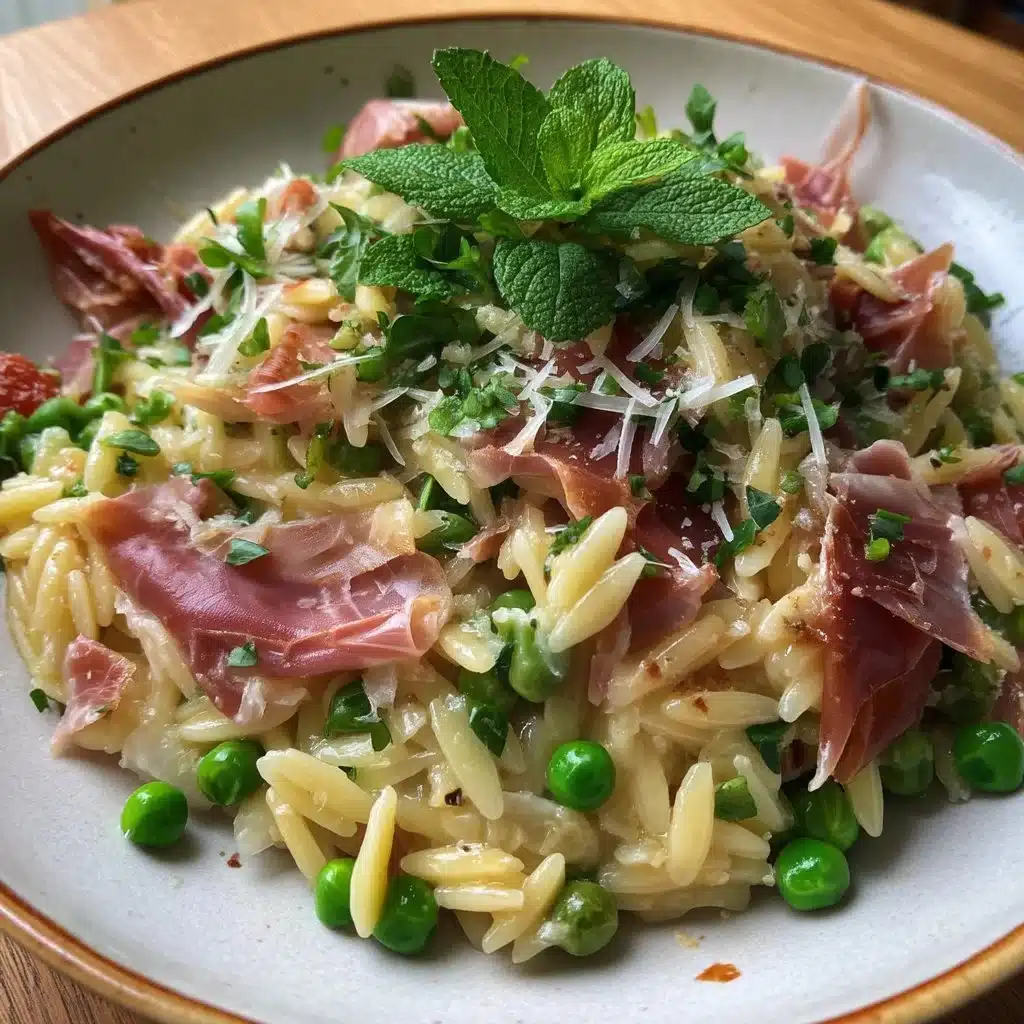
- Garnish with fresh mint or basil and serve warm.
How to serve this dish
Serve this orzo warm in shallow bowls so the flavors and textures present nicely. Offer a simple green salad dressed with lemon and olive oil to cut through the saltiness of the prosciutto. A wedge of lemon on the side gives diners the option to brighten the dish further. If you want a heartier table, a small scoop of something creamy — like a dollop of ricotta or a side of oven-browned vegetables — pairs well. For casual dinners, serve family-style straight from the skillet and let people help themselves; the prosciutto keeps its crunch best if served immediately, so plan plating to maximize texture.
How to store it properly
Cool the leftovers quickly to keep the peas from turning mushy and the orzo from absorbing all the sauce. Transfer the cooled orzo to an airtight container within two hours of cooking. Refrigerate up to three days; after that, the texture degrades and flavors dull. Reheat gently on the stovetop over low heat with a splash of broth or water to loosen the grains and revive creaminess. Avoid microwaving straight from cold, which can dry the pasta; if you use a microwave, add a tablespoon of water or broth and cover loosely to steam briefly. For longer storage, freeze in a freezer-safe container for up to one month, but expect slightly softer peas when thawed.
DishGrub Kitchen Tips
- Use hot broth to speed cooking and impart flavor: heating the broth before adding orzo shortens the overall time and prevents the grain from tasting bland.
- Crisp prosciutto instead of frying pancetta for a lighter texture: prosciutto renders quickly and becomes delightfully crisp in just a couple of minutes, and it won’t release as much fat as some cured meats, which keeps the dish clean-tasting.
- Finish off heat to keep Parmesan creamy: stirring the cheese in off the heat prevents it from seizing into clumps and gives the orzo a glossy finish.
- If you love one-pan dinners, pair this with a baked pasta for a weekend spread — our tried-and-true baked mac makes a perfect companion that keeps the whole meal feeling homey: DishGrub’s Baked Mac and Cheese.
Make it your own
This recipe welcomes small swaps. Swap peas for asparagus tips or sugar snap peas in spring for a more pronounced vegetal bite. Replace prosciutto with pancetta or thick-cut bacon if you want smokier notes. For vegetarian eaters, omit the prosciutto and sauté sliced mushrooms with a pinch of smoked paprika to introduce savory depth. Stir in a spoonful of ricotta or mascarpone for an extra creamy finish, or fold in lemon zest and a little white wine while deglazing the pan for brightness. If you like more herb flavor, toss in chopped chives, tarragon, or a handful of arugula at the end so they wilt slightly into the warm orzo.
Frequently asked questions
Q: Can I make this dish with frozen peas?
A: Yes. Frozen peas work well and make the recipe even more convenient year-round. Add them straight from the freezer to the skillet with the prosciutto and sauté a minute longer than fresh peas so they heat through and regain a pop. Avoid overcooking; you want them bright and tender, not mushy. When using frozen peas, taste for seasoning at the end because frozen vegetables sometimes need a little more salt to bring out their sweetness.
Q: How do I prevent the orzo from becoming gluey?
A: The key is to stop cooking the orzo at al dente and drain it promptly. Rinse briefly only if you plan to use it cold in a salad; otherwise, draining is enough. Combine the orzo into the skillet with a bit of the reserved broth or a splash of olive oil so the grains remain separate and glossy. Stir the Parmesan in off the heat rather than while the pan stays over high heat; that helps the cheese coat the orzo smoothly instead of clumping.
Q: Can I make this ahead for a dinner party?
A: You can prepare many elements in advance: crisp the prosciutto and hold it on a paper towel-lined tray at room temperature, and par-cook the orzo about a minute shy of al dente and shock it under cold water. Reheat the orzo in a skillet with a splash of warm broth and finish by adding the prosciutto, peas, and Parmesan just before serving. This approach keeps textures fresh while letting you relax before guests arrive.
Q: What pairings work best with this orzo?
A: Light, bright salads and roasted vegetables complement the orzo nicely. A citrusy arugula salad or lemony green beans balances the savory prosciutto, while roasted tomatoes or mushrooms add an earthy contrast. For wine, a crisp Sauvignon Blanc or a light Pinot Grigio pairs well with the herb and pea notes.
Q: Is there a dairy-free version?
A: Yes. Omit the Parmesan and finish with a drizzle of good olive oil and a squeeze of lemon to create a silky coating. For a dairy-free creaminess, blend a spoonful of silken tofu with a little broth and lemon, then stir it in off the heat to mimic the Parmesan’s body without dairy.
Conclusion
If you want a quick, seasonal one-pan meal with bright flavors and comforting texture, this Spring Orzo with Peas and Prosciutto is a reliable weeknight winner; for an alternate one-pot method and extra inspiration, see Sweet Savory and Steph’s Easy One Pot Orzo with Peas.