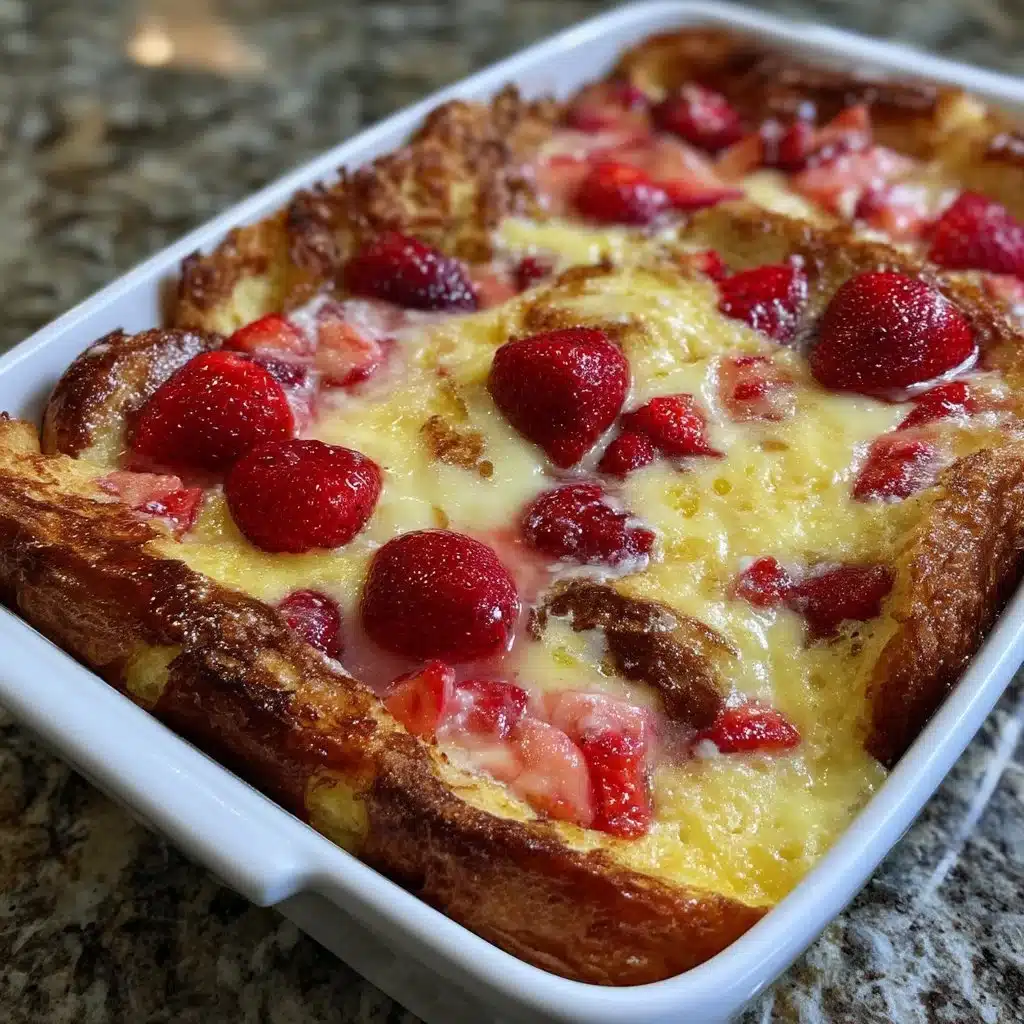
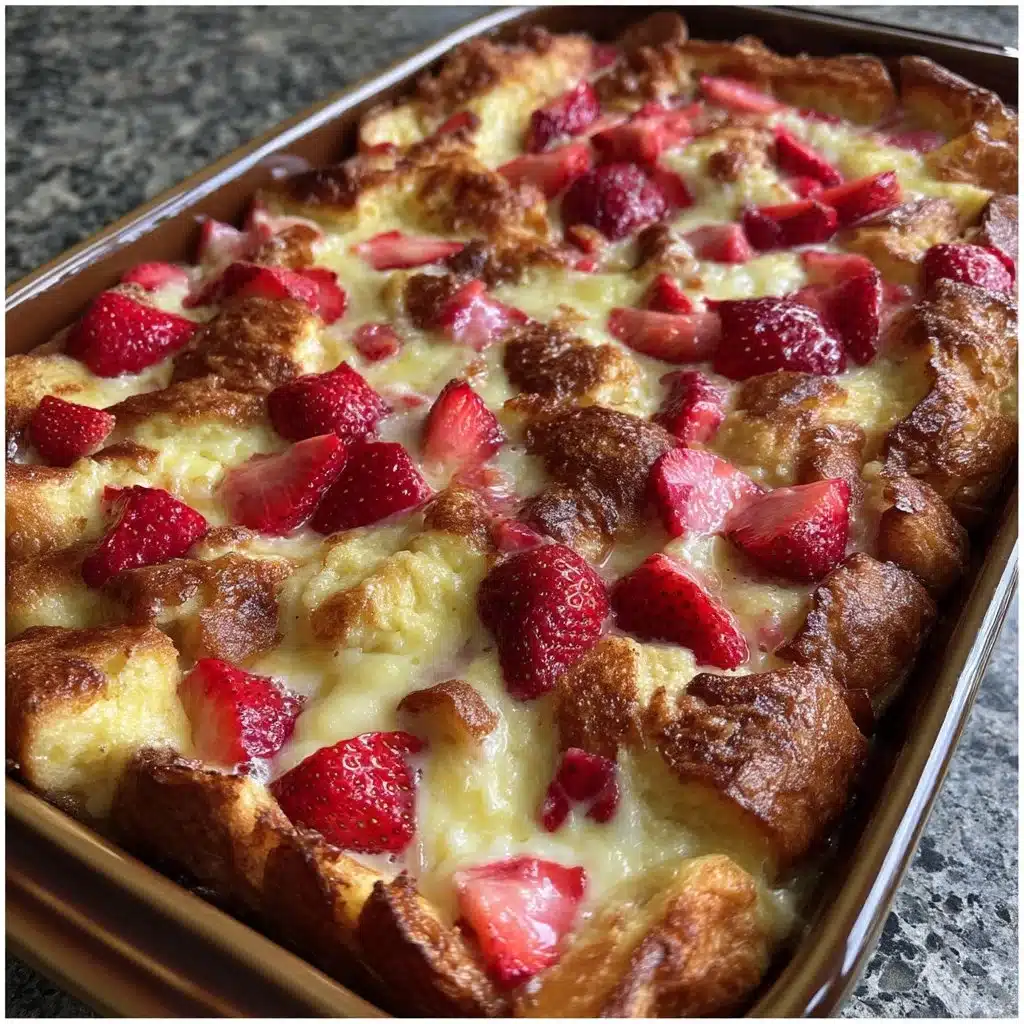
Morning light, a lot of butter, and the sweet scent of strawberries caramelizing at the edges—that’s the kind of breakfast that makes a house feel like home. This Vanilla Bean Strawberry Overnight French Toast Bake fits that feeling perfectly: it sits in the fridge overnight doing the easy work, and it turns into a warm, fragrant morning centerpiece by breakfast. I love recipes like this because they let you sleep in a little longer while still pulling together something that tastes considered, cozy, and a little indulgent. It serves a crowd without fuss, and it invites people to gather around the table with mugs of coffee and slow smiles.
You can build this casserole in less than 20 minutes the night before, and the next morning the oven does the finishing. The bread soaks up the custard, the vanilla bean paste lifts the flavor beyond plain vanilla, and the strawberries add a bright, slightly tangy counterpoint to the rich custard. This dish works for lazy Sunday mornings, holiday brunches, or any time you want to give breakfast a celebratory feel without standing over the stove. If you’ve ever hesitated about making French toast for a group, this casserole removes that stress—you assemble once and serve many.
At DishGrub we test recipes for real home kitchens. We focus on simple steps, dependable results, and flavors that remind you of family meals. We’ve adapted this overnight French toast bake so it uses common pantry staples and an affordable loaf of French bread. We also include practical tips that help this casserole come out golden and custardy, not soggy. If you enjoy make-ahead breakfasts, you might also like our take on a classic French toast casserole that uses similar, time-saving ideas.
Why this recipe works
The structure of this overnight bake makes success likely even for busy cooks. Cubes of French bread create lots of surface area so the custard soaks in evenly. Vinegar or any acid isn’t necessary here because the strawberries and vanilla bean paste already provide bright, aromatic flavor. Refrigerating the assembled dish overnight gives the custard time to penetrate the bread fully; that step means you get a tender, custardy center and a slightly crisp top when baked.
Using vanilla bean paste rather than extract gives a visibly speckled, aromatic custard that tastes like bakery-style French toast without extra effort. The sugar and cinnamon balance the strawberries’ brightness and gently caramelize in the oven, creating a glossy top. Because the recipe calls for a 9×13-inch dish, it scales easily for a family or a potluck. If you want to adapt it, the technique remains the same: cube the bread, whisk the custard, soak overnight, and bake until set.
How to prepare Vanilla Bean Strawberry Overnight French Toast Bake
Ingredients
- 1 loaf of French bread
- 4 large eggs
- 2 cups milk
- 1 cup strawberries, sliced
- 1 tablespoon vanilla bean paste
- 2 tablespoons sugar
- 1 teaspoon cinnamon
- Butter for greasing the baking dish
Instructions
- Grease a 9×13 inch baking dish with butter.
- Cut the French bread into cubes and place them in the baking dish.
- In a bowl, whisk together the eggs, milk, vanilla bean paste, sugar, and cinnamon.
- Pour the egg mixture over the bread cubes, making sure to evenly coat them.
- Add the sliced strawberries on top.
- Cover the dish with plastic wrap and refrigerate overnight.
- In the morning, preheat the oven to 350°F (175°C).
- Remove the plastic wrap and bake for 35-40 minutes until the top is golden and the custard is set.
- Serve warm with syrup, if desired.
Serving ideas
Serve this casserole straight from the oven while steam still rises from the custard. Offer warm maple syrup and a dusting of powdered sugar for a classic presentation. For extra richness, serve with whipped cream or a scoop of vanilla ice cream for a brunch that feels like dessert. Fresh berries, lemon curd, or a spoonful of orange marmalade brighten every bite if you prefer a slightly tangy contrast.
Make this dish into a brunch board by plating slices alongside fried or poached eggs, roasted breakfast potatoes, and a fruit salad. For a simpler weekday serving, slice and toast leftover pieces lightly in a skillet to crisp the edges and warm the center. A drizzle of warmed honey or a sprinkle of toasted sliced almonds adds texture and an upscale finish without extra fuss.
Storage tips
Cool the casserole completely before storing to avoid soggy leftovers. Cover the baking dish tightly with plastic wrap or transfer individual portions to airtight containers. Store in the refrigerator for up to three days. Reheat in a 350°F oven for 10–15 minutes or microwave single servings for 45–90 seconds, depending on your microwave wattage. If you reheat in the oven, cover with foil for the first few minutes to prevent the edges from over-browning, then remove the foil to let the top regain a little crispness.
You can also freeze portions for up to two months. Wrap individual slices in plastic wrap and place them in a freezer bag. Thaw in the refrigerator overnight before reheating in the oven. If you plan to freeze the entire casserole, cool it completely, wrap tightly with plastic wrap and foil, and label the package with the date. Thaw before baking and add a few extra minutes to the bake time if the casserole returns to the oven cold.
DishGrub Kitchen Tips
Use slightly stale day-old bread for the best texture; it soaks up custard without turning to mush. If your bread feels too fresh, dry the cubes on a baking sheet in a 300°F oven for 8 to 10 minutes before assembling. That quick step creates the ideal sponge for the custard.
Measure your milk and eggs carefully for a consistent custard; too much liquid can produce a loose center. Stir the custard gently—avoid whipping horsepower that adds air bubbles, which create an uneven bake. When you add the strawberries, distribute them evenly so each slice gets a bit of fruit; if you prefer the berries more integrated, fold them into the bread cubes before pouring the custard.
If you like a crunchier top, add a thin streusel or sprinkle coarse sugar across the surface before baking. Keep an eye on the oven in the last 5 minutes so the top browns but does not burn.
Recipe variations
Swap the strawberries for other fruits depending on season and preference. Blueberries, peaches (peeled and sliced), or thinly sliced apples tossed with a teaspoon of lemon juice and a pinch of nutmeg work beautifully. For a richer custard, replace half the milk with half-and-half or heavy cream.
Add a streusel topping made from brown sugar, flour, butter, and chopped pecans for a more dessert-like bake. For a nutty twist, fold a half cup of toasted chopped walnuts or pecans into the bread cubes. If you want to cut back on sugar, reduce the added sugar to one tablespoon and let ripe fruit provide sweetness.
To make this recipe more savory, skip the sugar and cinnamon, omit the strawberries, and add shredded Gruyère and chopped chives to the bread cubes. Use a savory custard with a pinch of salt and bake until golden for a brunch-friendly strata.
Common questions
Q: Can I use a different type of bread?
A: Yes. Brioche and challah give an extra-rich texture because of their higher butter and egg content, which yields a custardy interior and tender crumb. A sturdy sourdough or country loaf also works well; if the bread lacks sweetness, consider increasing the sugar by one tablespoon or adding a sprinkle of brown sugar on top before baking. Avoid super-thin sandwich bread because it can turn overly soft and fall apart during soaking.
Q: How do I tell when the casserole is done?
A: The center should look set and not liquid or jiggly; the top should display a golden brown hue. If a knife inserted into the center comes out mostly clean with a few moist crumbs, the casserole is ready. Keep in mind the casserole will firm slightly as it rests. If the top browns too quickly before the center sets, tent the dish loosely with foil and continue baking until set.
Q: Can I skip the overnight soak?
A: You can, but the texture will change. A shorter soak—30 minutes to 1 hour at room temperature—still allows the custard to reach the bread’s interior, but the bake might lack the same uniform custardy texture that an overnight soak produces. The overnight step is the easiest way to ensure the custard penetrates fully and results in that melt-in-your-mouth center.
Q: Can I make this gluten-free or dairy-free?
A: For gluten-free, use a sturdy gluten-free loaf or day-old gluten-free bread; the structure can differ, so dry the cubes slightly before soaking. For dairy-free, replace milk with an unsweetened nut milk like almond or oat milk and use a dairy-free butter for greasing. Be aware that flavor and texture will vary slightly; you might add an extra egg or a splash of coconut cream for richness if you go dairy-free.
Q: How do I prevent soggy bottoms?
A: Use day-old or lightly dried bread so it absorbs without collapsing. Don’t overpour the custard—pour until the bread looks saturated but not swimming. Let the assembled casserole rest in the refrigerator so the bread can absorb evenly; this step prevents the bottom layer from remaining raw after baking.
Conclusion
If you want another luscious but easy bake with rich vanilla flavor, try the Very Vanilla French Toast Bake with Butter Pecan Topping for a delightful twist on breakfast casserole.