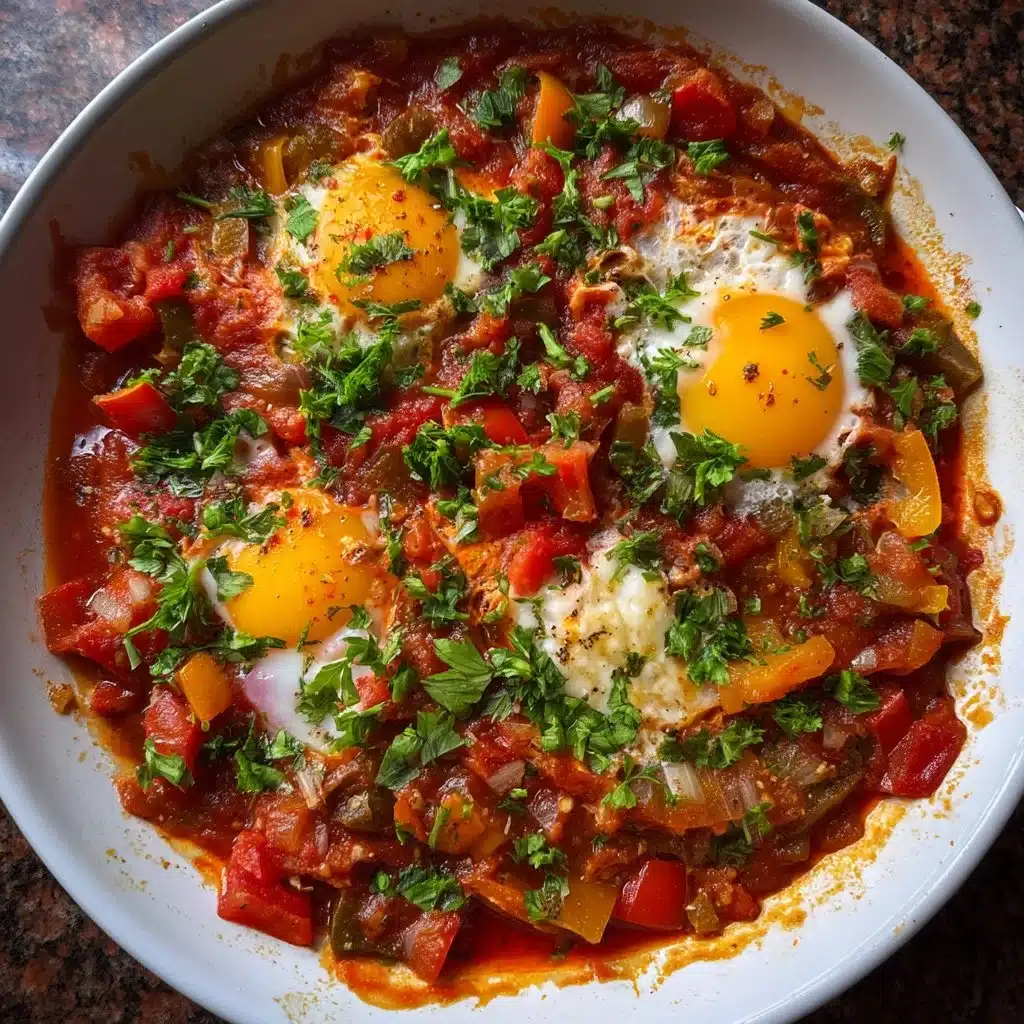
Warm, bubbling tomato sauce. Ripped sunlight on the table. The hiss of a skillet and the satisfying pop when a spoon meets a perfectly set yolk. That’s the kind of evening this vegetarian shakshuka invites: unpretentious, homey, and built for sharing. It started as a weekday rescue—an empty fridge, a can of tomatoes, and a handful of eggs—but it quickly graduated into a ritual. One pan takes center stage, everyone dips in with crusty bread, and conversation flows easily. In busy households, that simplicity becomes a quiet luxury: fewer dishes, more connection.
I remember making this for friends after a long hike. We spilled sauce on our boots, laughed through the steam, and ate straight from the skillet. The dish felt honest and immediate; it asked only for a few pantry staples and returned warmth in abundance. Vegetarian shakshuka works the same way in winter or summer, at brunch or a late dinner—its spices wake up canned tomatoes and coax layers of flavor out of humble ingredients. It’s forgiving, too: swap peppers, shred in spinach, or add a pinch more cumin to steer it where your palate wants to go. The eggs give it a comforting richness that feels like a hug on a plate.
At DishGrub we test recipes until they behave predictably in real kitchens—no trendy techniques that need a sous-vide machine or a pantry full of obscure jars. We aim for cozy, practical dishes you can put on the table tonight with confidence. Our recipes use accessible ingredients and straightforward methods, and we tweak them so flavor and timing work for busy cooks. If you like bold, satisfying vegetarian meals, you might also enjoy our take on vegetarian buffalo cauliflower wings, a great appetizer or snack to pair with shakshuka for a full-flavored spread. We keep directions clear, portions sensible, and flavor always at the forefront so you can focus on the people you’re feeding.
Why you’ll love this dish
This vegetarian shakshuka turns pantry staples into a meal that feels celebratory without the fuss. The tomato base simmers down into a thick, savory sauce that clings to the eggs and any bread you use to scoop it up. Ground cumin and smoked paprika add warmth and a slight smokiness that balances the acidity of canned tomatoes. The peppers and onions soften into sweetness, making every spoonful layered and comforting. Because it cooks in one skillet, you cut down on cleanup and keep the meal casual—perfect for weeknight dinners or a relaxed weekend brunch that still feels special.
Beyond convenience, the dish scales easily. Make it for two or stretch it for a group. Leftovers—if you have any—reheat well and make a hearty breakfast the next day. The eggs poached in the sauce give you creamy yolks that mingle with the seasoned tomatoes, creating a texture and flavor profile that feels both rustic and refined. And when you want to vary the meal, this recipe welcomes additions like leafy greens, feta, or spicy harissa without losing its core identity.
How to prepare Vegetarian Shakshuka
Ingredients
- 2 tablespoons olive oil
- 1 onion, diced
- 1 bell pepper, diced
- 2 cloves garlic, minced
- 1 teaspoon ground cumin
- 1 teaspoon paprika
- 1 can (14 oz) diced tomatoes
- Salt and pepper to taste
- 4-6 eggs
- Fresh parsley or cilantro for garnish

Instructions
- Heat olive oil in a skillet over medium heat.
- Add the onion and bell pepper; sauté until soft.
- Stir in the garlic, cumin, and paprika; cook for an additional minute.
- Pour in the diced tomatoes with their juice; season with salt and pepper.
- Simmer for about 10 minutes until the sauce thickens.
- Create wells in the sauce and crack the eggs into the wells.
- Cover the skillet and cook until the eggs are set to your liking.
- Garnish with fresh parsley or cilantro before serving.
Serving ideas
Serve this shakshuka straight from the skillet with rustic bread for tearing and dipping. Thick slices of crusty sourdough or a warm pita work beautifully and catch the sauce and runny yolks. For a heartier breakfast or brunch, add a bowl of roasted potatoes or a simple green salad dressed with lemon and olive oil. If you want to stretch the meal into a dinner spread, pair shakshuka with a platter of olives, sliced cheese, and raw vegetables for contrast.
You can also build a weekend brunch board around the skillet: include labneh or yogurt for cooling contrast, pickled red onions for brightness, and a small bowl of sautéed mushrooms for an earthy side. For colder nights, serve the skillet alongside a creamy polenta to soak up the sauce.
If you like bold pairings, try a warming side like our recipe for hearty vegetarian chili for extra protein and deep flavor. A ladle of chili in a separate bowl complements the tomato-forward shakshuka without overwhelming the skillet’s soft eggs.
How to keep leftovers
Cool leftover shakshuka to room temperature within two hours and transfer it to an airtight container. Store refrigerated for up to three days. When you reheat, warm it gently in a skillet over low heat so the sauce loosens evenly; add a splash of water if it feels too thick. If you prefer, reheat individual portions in the microwave in 30-second bursts, stirring between intervals to heat uniformly.
If you expect to keep it longer, freeze the sauce without the eggs in a freezer-safe container for up to three months. Thaw overnight in the refrigerator and reheat, then poach fresh eggs into the warmed sauce just before serving. Avoid freezing the finished dish with the eggs, as the yolks will change texture when frozen and thawed.
DishGrub Kitchen Tips
- Use a broad, oven-safe skillet if you have one. It makes it easy to move from stovetop to oven if you want the eggs slightly more set or want to brown the top under the broiler for a minute.
- Taste the sauce before adding eggs and adjust seasoning. Canned tomatoes vary in acidity and salt, so add a pinch of sugar if the sauce tastes too sharp, or a squeeze of lemon for brightness.
- Keep the heat moderate while simmering so you reduce the sauce without burning it. Stir occasionally and scrape the bottom to prevent sticking.
- If you prefer firmer whites and creamy yolks, cover the skillet and cook over low heat for 6 to 8 minutes. For runnier yolks, cook 4 to 5 minutes, depending on egg size.
- Fresh herbs at the end make a big difference. Sprinkle parsley or cilantro right before serving to add color and freshness.
Make it your own
This shakshuka reacts well to personality. Add crumbled feta or goat cheese for a salty tang that melts into the sauce. Toss in a handful of spinach or chopped kale during the last few minutes of simmering for extra greens. For smoky heat, swirl in a spoonful of harissa or a pinch of chili flakes. For a Middle Eastern twist, stir in a tablespoon of tomato paste while sautéing the onions for deeper umami.
For a meatless but substantial option, fold in a cup of cooked lentils or chickpeas when you add the tomatoes. Those pulses soak up the spices and bulk up the meal without adding meat. If you want to explore more vegetarian mains with bold flavor, our tested vegetarian buffalo cauliflower wings offer a great contrast of spice and crunch for a full table.
Common questions
Q: Can I make shakshuka without eggs?
A: Yes. Replace the eggs with firm tofu cubes or add cooked chickpeas for protein. If you use tofu, gently fold it into the sauce toward the end of cooking so it warms through without breaking apart. Chickpeas add texture and keep the dish hearty; add them in step 4 with the tomatoes so they absorb flavor as the sauce simmers.
Q: What can I use instead of canned diced tomatoes?
A: Fresh tomatoes work if they are in season and ripe. Chop about 2 pounds of tomatoes and cook them down until they break down into a saucy consistency. You may need to add a teaspoon of tomato paste to deepen the flavor. If you use crushed tomatoes, reduce simmering time slightly because crushed tomatoes already create a thick base.
Q: How do I get the eggs to cook evenly?
A: Create even-size wells and crack the eggs at room temperature if possible. After cracking, cover the skillet so the steam cooks the tops gently while the direct heat cooks the bottoms. If one side of the pan cooks faster, rotate the skillet occasionally or finish the pan under a preheated broiler for a minute or two—watch closely to avoid overcooking.
Q: Is shakshuka spicy?
A: The base recipe uses cumin and paprika, which give warmth and mild smokiness rather than heat. You can control spice by adding chopped fresh chiles, red pepper flakes, or harissa. Start with a small amount and taste as the sauce simmers to reach your preferred level of heat.
Q: Can I make shakshuka in advance for a brunch gathering?
A: Prepare the tomato sauce up to a day ahead and refrigerate. Reheat gently, then make wells and add eggs 10–15 minutes before serving so they poach fresh. This approach saves time while keeping the eggs tender and freshly cooked.
Conclusion
For a deeper look at a classic take on shakshuka and inspiration you can adapt in your own kitchen, try this excellent guide from Downshiftology for a traditional approach to the dish: Downshiftology’s classic shakshuka recipe.