I remember the first time I served a pavlova at a family Sunday dinner. The oven hummed like a steady heartbeat while I coaxed egg whites into glossy peaks, and the house smelled faintly sweet. Around the table, conversations leaned closer and forks paused as that crisp shell gave way to a soft, marshmallow center. A simple dessert can do that — it invites people to slow down and notice the small pleasures: a bright berry, a cool spoonful of cream, a shared smile. Pavlova feels like celebration and comfort at once, the kind of dish you bring out when you want everyone to linger a little longer.
This pavlova became my go-to when I wanted an impressive-looking dessert that didn’t demand a pastry degree. It rewards a little patience with dramatic results: a fragile-looking meringue that stands tall and proud, a cloud of whipped cream, and a scatter of juicy berries. I like that it reads fancy but mostly asks for basic kitchen confidence. You don’t need a blowtorch or complicated tools; you just need steady hands, a clean bowl, and a full cup of generosity. Serve it warm from the oven, or plan to assemble right before guests arrive — either way, it highlights the season’s fruit and makes dessert feel like a communal moment.
At DishGrub, we test each recipe until it behaves predictably in a home kitchen. We focus on cozy, practical recipes that fit into busy lives while still feeling special. Our testers play with timing, oven quirks, and pantry swaps, so you get a version that works without reinventing your weeknight routine. If you like comforting bakes with bright results, you might also enjoy our blueberry muffins post, a simple breakfast-or-snack recipe that shares the same spirit of easy, reliable baking. Share this pavlova at holidays and backyard gatherings alike — it brings a little theater to the table without fuss.
Why this recipe works
Pavlova succeeds when it balances textures: a crisp outer shell, a soft interior, airy whipped cream, and bright, juicy berries. This recipe uses four egg whites and a full cup of granulated sugar beaten slowly to build a stable meringue structure. The white vinegar adds a touch of acid that stabilizes the protein network in the egg whites, helping the meringue maintain volume while it bakes low and slow. Baking at 275°F dries the meringue gently so the outside becomes crisp without browning excessively, while the interior retains a tender, marshmallow-like texture.
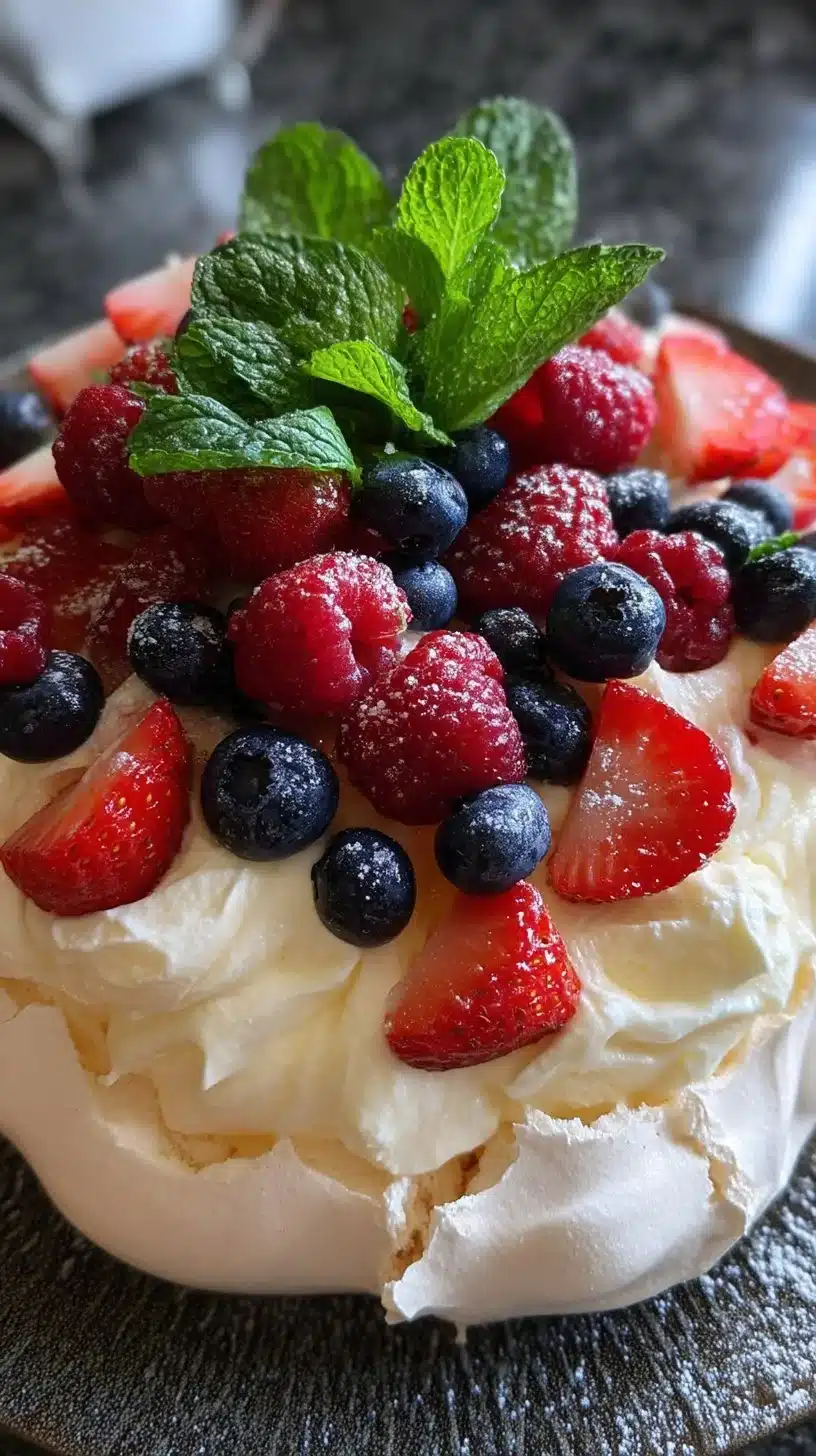
Whipping the cream with a small amount of powdered sugar keeps the topping light and slightly sweet, so it complements rather than overpowers the fruit. Mixed berries bring acidity and color, and a few torn mint leaves add freshness and a little perfume. The recipe’s simplicity lets each component shine: no complicated syrups or layers, just a few well-executed steps that deliver big payoff.
How to prepare Whipped Cream Berry Pavlova
Ingredients
- 4 large egg whites
- 1 cup granulated sugar
- 1 teaspoon vanilla extract
- 1 teaspoon white vinegar
- 2 cups heavy whipping cream
- 2 tablespoons powdered sugar
- Mixed berries (e.g., strawberries, blueberries, raspberries)
- Fresh mint leaves (for garnish)
Instructions
- Preheat your oven to 275°F (135°C). Line a baking sheet with parchment paper.
- In a large bowl, beat the egg whites until soft peaks form.
- Slowly add granulated sugar, one tablespoon at a time, beating until the mixture is thick and glossy.
- Mix in vanilla extract and vinegar.
- Spread the meringue mixture into a circle on the prepared baking sheet, creating a slight well in the center.
- Bake for 1 hour or until the meringue is firm and dry. Turn off the oven and let it cool completely inside.
- In a separate bowl, whip the heavy cream with powdered sugar until stiff peaks form.
- Once cooled, carefully transfer the meringue to a serving plate.
- Fill the center with whipped cream and top with mixed berries and mint leaves.
- Serve immediately and enjoy!
Serving ideas
Serve pavlova right after you top it so the meringue keeps its crisp edge while the center stays soft. For a simple Sunday treat, slice strawberries and toss them with a teaspoon of sugar and a squeeze of lemon for five minutes before topping; that maceration brings out extra juice and brightness. For a brunch twist, add a spoonful of Greek yogurt beneath the whipped cream for tang and creaminess that pairs well with honey-drizzled berries.
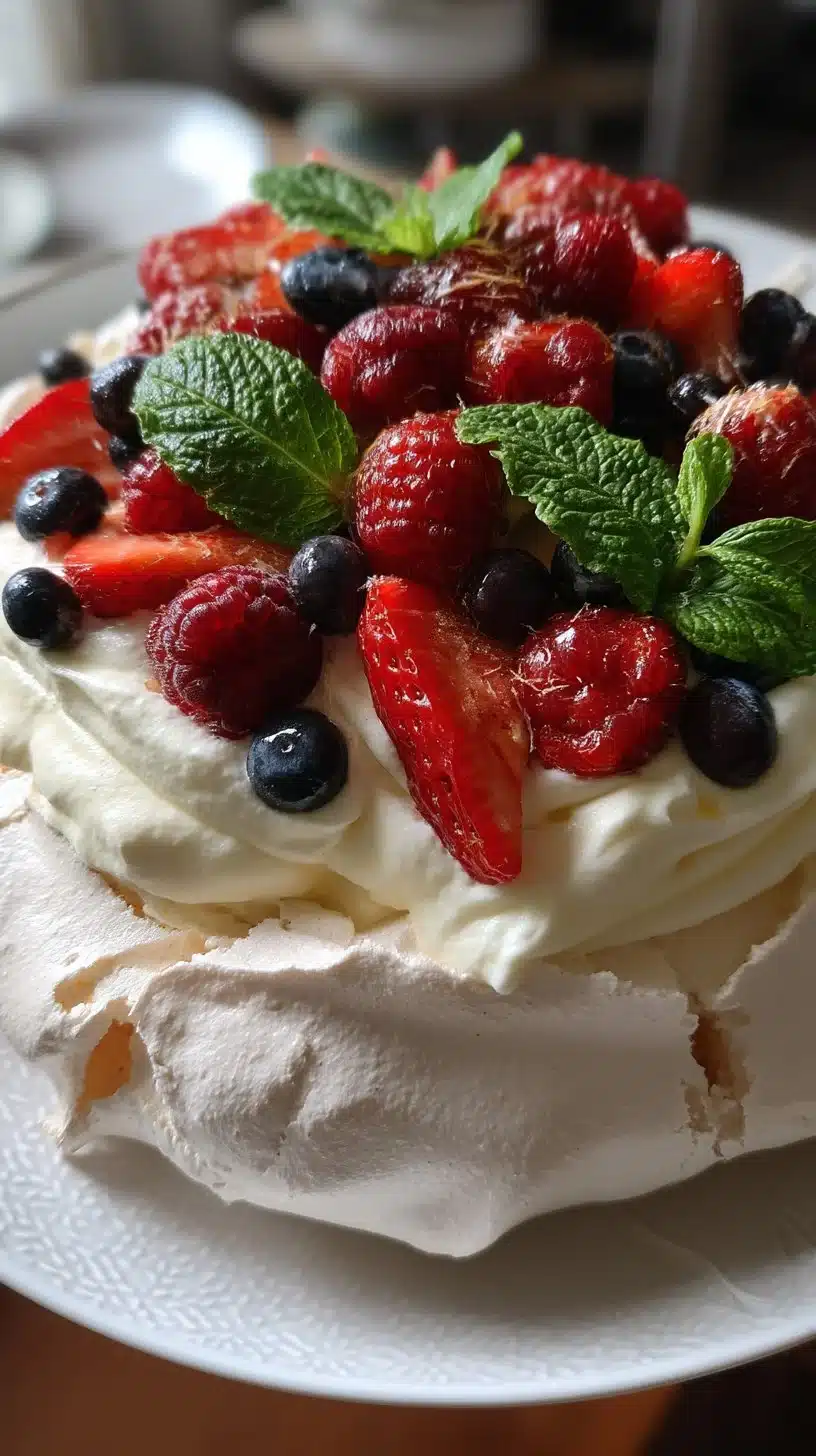
If you want to make elegant individual portions, pipe smaller meringue nests onto the baking sheet and bake the same way; they make charming single-serve desserts for dinner parties. Consider serving with a mixed fruit compote warmed slightly, or scatter toasted almonds and a light drizzle of dark chocolate for a richer finish. A few mint leaves or thin lemon zest threads add color and a fresh scent that ties the whole dish together.
How to store it properly
Store components separately to preserve texture. Keep leftover meringue in an airtight container at room temperature for up to two days; humidity will soften it faster, so avoid the refrigerator for storage. Keep whipped cream refrigerated in a covered container and use within one day. Refrigerate fresh berries and any cut fruit in a single layer on paper towels in a container for up to three days.
If you must prepare ahead, bake the meringue the day before and cool it completely in the turned-off oven. Assemble the pavlova no more than an hour before serving to prevent the whipped cream from making the meringue soggy. If leftovers sit assembled, the meringue will soften, but the flavors will still taste lovely — just expect a different texture.
DishGrub Kitchen Tips
Wash and dry bowls and beaters thoroughly before whipping egg whites; any grease will prevent them from reaching full volume. Let your egg whites come to room temperature for about 20 minutes; they whip up more quickly and yield more volume. Add sugar a tablespoon at a time and continue beating so the sugar dissolves fully; rub a small bit between your fingers to check for grit.
Use superfine sugar if you have it for a silkier meringue, or pulse granulated sugar in a food processor for a few seconds. For even more stability, you can add a pinch of cornstarch with the vinegar, but this recipe performs well without it. When spreading the meringue, create a shallow well in the center to cradle the cream and berries. If you want a picture-perfect sparkle on top, sift a little powdered sugar before serving.
For other wholesome, home-tested bakes that behave in real kitchens, see our take on blueberry muffins, which follow the same practical approach to reliable results.
Recipe variations
Add citrus: fold a teaspoon of lemon or orange zest into the whipped cream for a bright, aromatic lift. Chocolate lovers can grate bittersweet chocolate over the top or drizzle a warm chocolate sauce right before serving. Make a tropical version by topping with sliced kiwi, mango, and toasted coconut.
For a nuttier profile, sprinkle toasted pistachios or chopped almonds on the whipped cream. Swap the heavy cream for a stabilized coconut whipped cream to make the pavlova dairy-free — chill a can of full-fat coconut milk overnight, scoop the firm cream, and whip with powdered sugar and vanilla.
If you prefer smaller portions, create mini pavlovas; they bake faster, so watch them closely and reduce baking time by 10–15 minutes, checking for dryness. For a citrus curd twist, spread a thin layer of lemon or passion fruit curd in the well before adding whipped cream and berries.
Common questions
Q: Can I make pavlova ahead of time?
A: You can bake the meringue ahead of time and store it at room temperature in an airtight container for up to two days. Keep the whipped cream and fruit separate in the refrigerator and assemble close to serving time. If you assemble the pavlova too far in advance, the cream will start to release moisture and the meringue will soften. Planning assembly an hour before guests arrive keeps the outer shell crisp while the center stays tender.
Q: Why did my meringue weep or weep after baking?
A: Weeping or syrupy liquid can appear when moisture migrates from the whipped cream or fruit into the meringue, or when sugar doesn’t dissolve completely and draws out liquid. You can minimize weeping by ensuring you beat the egg whites to full glossy peaks and that the sugar dissolves as you add it. Assemble the pavlova just before serving and keep fruit drained of excess juice. If the meringue weeps after baking because the oven temperature fluctuated, try using an oven thermometer to verify your oven maintains a steady low heat during the long bake.
Q: How do I know when the meringue is done?
A: The exterior should feel dry and firm to the touch and lift cleanly from the parchment paper. The center will remain slightly soft — that marshmallow texture gives pavlova its signature contrast — but you should not see any wet, glossy patches on the surface. After an hour, turn the oven off and leave the pavlova inside to cool completely; cooling slowly helps prevent cracks and ensures an even texture.
Q: Can I make a dairy-free version?
A: Yes. Replace heavy cream with chilled, full-fat coconut cream. Refrigerate a can of coconut milk overnight, scoop the solidified cream, and whip it with powdered sugar and vanilla until light and fluffy. Keep in mind that coconut cream has a different flavor profile and slightly different texture, but it pairs nicely with tropical fruits like mango and passion fruit.
Conclusion
If you want a lemony variation with step-by-step photos and a slightly different whipped cream option, consult Berry Pavlova with Lemon Whipped Cream – A Beautiful Plate for inspiration and visual guidance.