Spring always nudges me toward bright, green bowls that feel like a little celebration of the season. I picture a backyard table, sunlight slanting through leaves, and a simple salad laid down the center that everyone can dig into. This Easy Spring Pea and Pasta Salad does that work: it keeps things casual, colorful, and, most importantly, delicious enough to make people linger over the table. It shines at potlucks, pairs perfectly with grilled chicken, and makes weekday lunches feel like something more than reheated leftovers.
Comfort food still matters when it leans fresh. I make this salad on Sunday for a week of lunches and on days when I want something that feels light but satisfying. The peas give a sweet pop that kids love, the cherry tomatoes bring juicy acidity, and the lemon-olive oil dressing keeps the flavors bright without weighing anything down. I often double the batch for a picnic or halve it for two; it adapts easily and stays reliable.
At DishGrub, we test recipes until they work for real kitchens and real schedules. We test with inexpensive tools and common pantry staples so you don’t need specialty gear to get great results. Our recipes favor clean, straightforward techniques so you can focus on family and friends rather than a long ingredient list. That practicality shows up here: cook the pasta, toss in peas and tomatoes, whisk a quick dressing, chill, and serve. We developed this salad to behave well on a buffet, hold up in meal prep containers, and earn smiles from picky eaters and grown-ups alike. If you like spring vegetables in lighter preparations, you might enjoy the bright flavors in our spring vegetable pasta primavera, which leans on the same seasonal spirit but adds a few different textures.
Why this recipe works
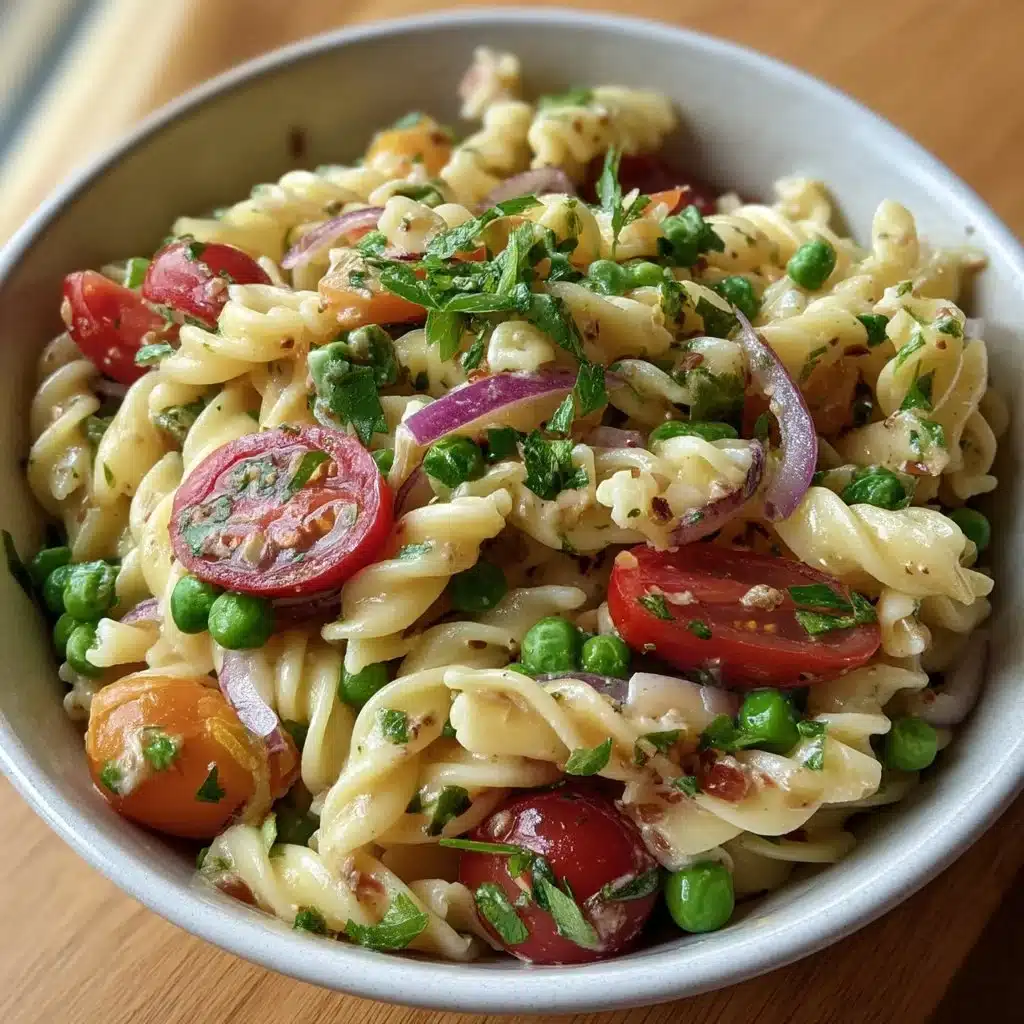
This salad balances texture, temperature, and flavor to feel both comforting and fresh. The pasta provides a neutral, starchy base that soaks up the bright lemony dressing while the peas offer bursts of sweetness and a tender snap. Cherry tomatoes add juicy acidity that keeps the dish from tasting flat, and red onion gives a sharp note that melds with the dressing. Parsley brings an herbaceous lift that residents of busy kitchens always appreciate.
The dressing uses simple ingredientsolive oil and lemon juiceso you taste the produce rather than a heavy sauce. Rinsing the cooked pasta under cold water stops the cooking instantly and prevents the salad from turning mushy, which matters for make-ahead meals. Chilling the salad lets flavors mingle and mellow; the onion softens and the dressing penetrates the pasta. This recipe scales well, which makes it perfect for weeknight dinners, potlucks, and meal prep.
How to prepare Easy Spring Pea and Pasta Salad
This method stays deliberately simple so you can build confidence as you cook. Start with your favorite short pastafusilli and penne hold dressing and peas wellthen move quickly to cool the pasta so it won’t steam the vegetables. Use fresh peas when they’re in season and taste their sweetness; frozen peas work great too and save prep time since they blanch quickly. Whisk the dressing by hand in a small bowl so it emulsifies just enough to coat the pasta.
Taste as you go: if the salad feels too blunt after chilling, add a little more lemon juice for acidity or an extra pinch of salt to open up flavors. If you want creaminess, fold in a spoonful of ricotta or a handful of grated Parmesan at the end. When you toss, do so gently so the tomatoes keep their shape and the peas don’t get crushed.
Ingredients
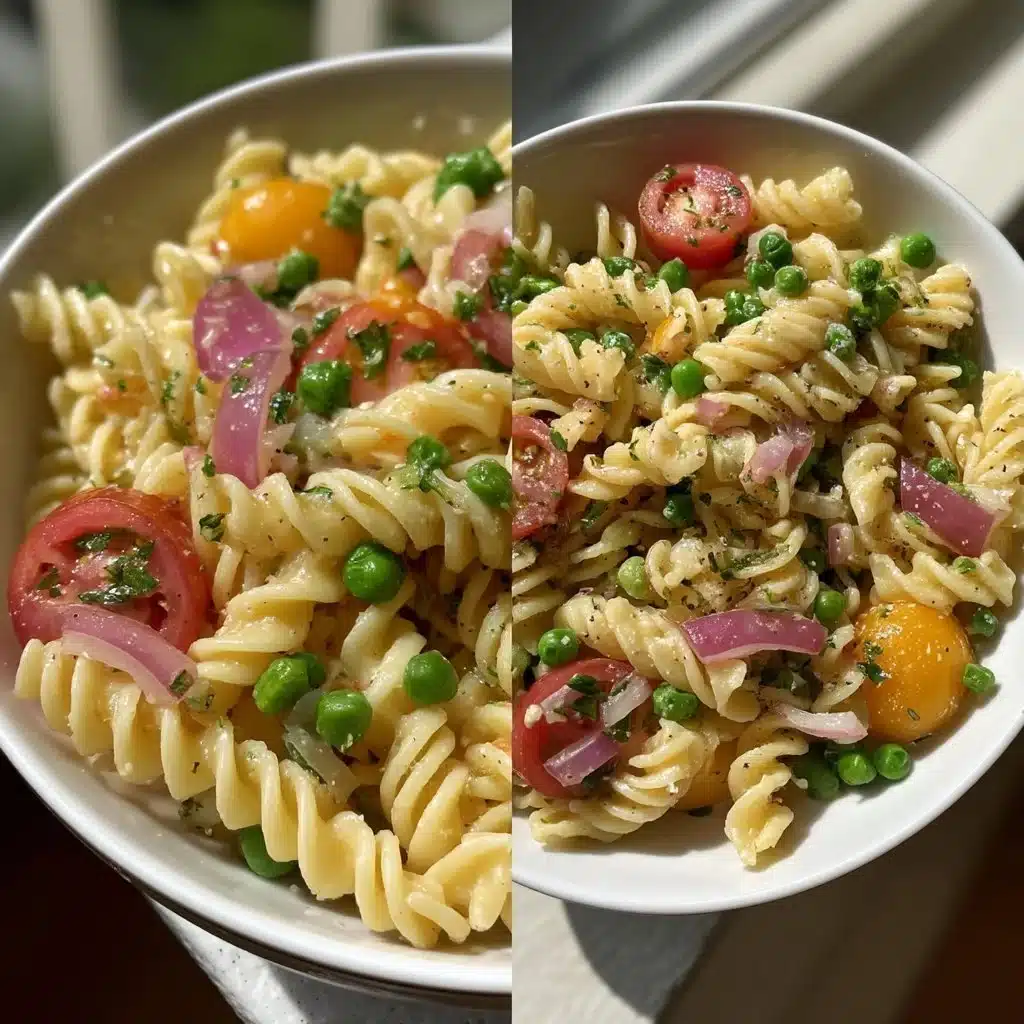
- 8 oz pasta (e.g., fusilli or penne)
- 1 cup fresh or frozen peas
- 1/2 cup cherry tomatoes, halved
- 1/4 cup red onion, diced
- 1/4 cup fresh parsley, chopped
- 1/4 cup olive oil
- 2 tablespoons lemon juice
- Salt to taste
- Pepper to taste
Instructions
-
Cook the pasta according to package instructions.
-
Drain and rinse under cold water.
-
In a large bowl, combine the cooked pasta, peas, cherry tomatoes, red onion, and parsley.
-
In a small bowl, whisk together the olive oil, lemon juice, salt, and pepper.
-
Pour the dressing over the pasta salad and toss to combine.
Serving ideas
Serve this salad cold or at room temperature alongside grilled proteins, roasted vegetables, or a simple roasted salmon. Plate it as part of a buffet where diners can add more toppings like crumbled feta, toasted pine nuts, or sliced olives. For a picnic, pack it in a shallow container and keep it chilled until ready to eat; it travels well because the dressing stays light and the pasta holds its shape.
If you want a heartier plate, spoon this salad over a bed of baby arugula or mixed greens and top with grilled shrimp. For brunch or a light supper, add a soft-boiled egg on top; the creamy yolk makes a lovely, rich contrast to the lemon dressing.
Storage tips
Store the salad in an airtight container in the refrigerator for up to three days. Keep any add-ins that get soggysoft cheeses, nuts, or fresh greensseparate and add them just before serving. If the salad seems dry after chilling, stir in a splash more olive oil or lemon juice to freshen it.
Freeze avoided: avoid freezing the prepared salad because the tomatoes and fresh parsley lose texture and the pasta can become mushy. If you need to prep early, keep the dressing separate and toss it with the pasta and vegetables shortly before serving.
DishGrub Kitchen Tips
Use salted water when you cook the pasta so the noodles taste seasoned from the start. Reserve a small cup of the pasta cooking water before draining; if you want to loosen the dressing later, a tablespoon of that starchy water helps the oil and lemon cling to the pasta without thinning the flavor.
For the peas, briefly blanch fresh peas in the boiling pasta water for 1 minute, then shock them in ice water to lock in color. If you use frozen peas, let them thaw in a sieve or run them under cold water until not icy. If red onion feels too sharp for your crowd, soak the diced pieces in cold water for 5 minutes and drain before adding; this mellows the bite without losing flavor.
Recipe variations
Swap the parsley for basil and fold in a spoonful of pesto to turn this into a vibrant pesto pasta salad. Add chopped artichokes and olives for Mediterranean vibes, or stir in diced cucumbers and radishes for extra crunch. If you want protein, canned white beans or shredded rotisserie chicken blend into the salad easily and keep lunch satisfying.
For a creamy version, whisk 2 tablespoons of Greek yogurt into the dressing or sprinkle grated Parmesan over the toss. If you want a dinner that leans richer, serve this alongside our baked mac and cheese for a crowd-pleasing contrast between bright and indulgent dishes and to build a menu that covers all tastes baked mac and cheese.
Common questions
Q: Can I use a different pasta shape?
A: Yes. Choose short, ridged shapes that trap dressing and peas, like fusilli, penne, rotini, or gemelli. Elbow macaroni works in a pinch but offers less surface for the dressing to cling to. Aim for an al dente cook so the pasta keeps some bite after chilling.
Q: Do I need to blanch fresh peas?
A: Blanching fresh peas for 30–60 seconds brightens their color and softens them slightly while keeping a pleasing snap. If you prefer a crisp texture, you can add raw peas; the lemon dressing pairs nicely with their natural sweetness. Use frozen peas without blanching if you want minimal prep; thaw them and pat dry before tossing.
Q: How can I make this salad ahead for a party?
A: Prepare the pasta and dressing a day ahead and refrigerate each separately. Chop the vegetables and store them in sealed containers; assemble about 30–60 minutes before serving so the tomatoes stay firm and the parsley remains bright. If you must combine earlier, toss gently and add a splash of olive oil or a squeeze of lemon just before serving to revive the flavors.
Q: Can I make this vegan or dairy-free?
A: This recipe already meets dairy-free and vegan needs as written, since it uses olive oil and lemon for the dressing. If you add cheese in any variation, use a plant-based substitute or omit it entirely for a light, plant-forward dish.
Q: How do I adjust seasoning for a larger batch?
A: When scaling up, scale olive oil and lemon juice roughly by volume and adjust salt and pepper by taste. Start with the proportions in the recipe and add more acid or salt incrementally; citrus and salt will amplify all other flavors, so add them in small steps and taste as you go.
Conclusion
For a twist on pea-forward pasta salads, try this take inspired by seasonal flavors and simple technique; if you want a pesto-forward variation with similar springtime brightness, check out this Spring Pea Pesto Pasta Salad Recipe – The Pioneer Woman.